From lead capture to full-funnel self-service
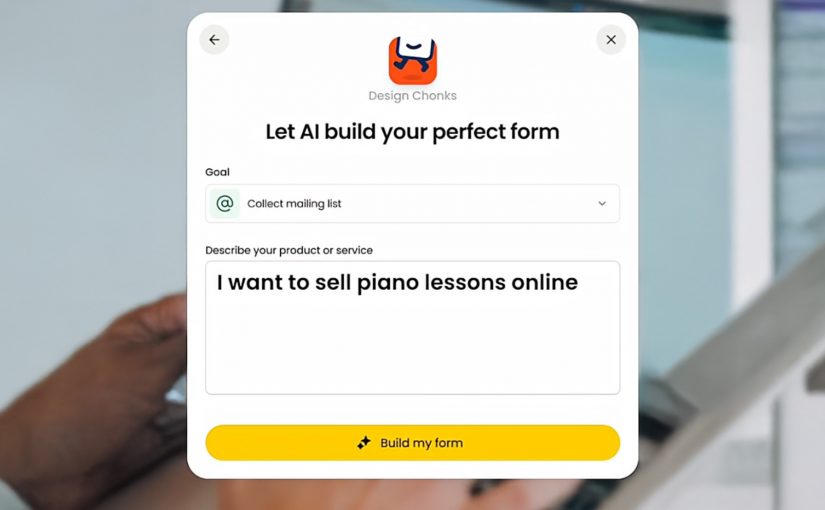
In December, I used Nas.io as an example of AI shrinking one specific acquisition job: describe the offer, generate a simple lead-capture page, and give a non-technical user a working front door to demand. Four months later, the proposition is materially bigger and rebranded as Nas.com, which now presents a workflow that starts with a photo and expands into storefront setup, listing creation, marketing content, ad creation, and customer acquisition support from the same system.
The mechanism is more important than the brand story. Nas describes onboarding from a prompted idea or photo, then layers in content generation for visuals, ads for campaign creation, lead discovery, and direct outreach, so the user is not just building a page but moving from product image to market-facing execution inside one operating environment. Its own documentation frames that environment as the place to create products, set up the website, run marketing tools, and manage the business in detail.
That is a meaningful expansion from their narrower self-service example from December.
It lands because it compresses several steps that normally sit across separate tools and handoffs. The same workflow helps a user move from product image to storefront, assets, and first activation steps, which is exactly what the live demo below shows.
What Nas is really signaling
What Nas is really signaling is a photo-to-market self-service workflow in which a simple image or prompt triggers page creation, asset generation, activation setup, and early demand capture inside one platform.
That is the important shift. The story is no longer that AI can make content. The more important move is that work which normally sits across separate tools and specialist queues, storefront setup, creative production, ad launch, lead discovery, and outreach, is being compressed into one connected operating layer. On Nas’s own marketing assets, the promise is clear: build the store, generate the listings and content, help with marketing, and move directly into customer acquisition from the same environment. That same positioning is paired with a scale claim that 350,000 people across 150+ countries are already selling on the platform.
Enterprise teams should treat this as an operating-model signal about how marketing work will increasingly be expected to function.
The real question is whether your brand, content, CRM, and commerce stack can let non-technical teams do the equivalent safely, quickly, and with governance.
No serious enterprise is going to replace its CMS, PIM, DAM, CIAM, consent layer, analytics stack, or media controls with a creator platform. That would miss the point. The real enterprise implication is expectation shift. Once people see more of the path from offer to activation compressed into one guided flow, they stop accepting ticket queues, repeated re-entry, and tool switching as normal for work that should already be semi-automated.
Why this matters for consumer experience platforms
For enterprise teams, this is less about storefront software and more about workflow design. A consumer experience platform only becomes commercially useful when it can turn brand intent into live, measurable market activity without making every step depend on specialist mediation.
That is why the Nas example matters. It does not just simplify creation. It pulls creation and activation closer together. The page, the assets, the ad setup, the lead discovery, and the outreach logic sit near each other in the same operating layer. That proximity matters because every extra handoff slows launch speed, raises coordination cost, and makes self-service impossible in practice.
This is where many large organisations are still weak. They may own all the component systems, but the systems do not behave like one usable operating model for non-technical teams. Capability exists. Flow does not.
What the enterprise should copy, and what it should not
The lesson is not to let anyone prompt anything. The lesson is to package complexity behind automated, governed workflows.
That means approved prompts, approved source data, brand-safe templates, channel rules, claims controls, embedded legal checks, human review thresholds, role permissions, and measurement wired into one non-technical, low-friction flow. If that wiring is missing, self-service becomes rework, inconsistency, and compliance debt dressed up as speed.
The practical target is not more AI content. The target is governed prompt-enabled execution across the journey, asset creation, landing-page setup, product-page enrichment, lead capture, paid activation, and performance measurement, all with clear ownership and auditability built in.
The move to make now
If you run a consumer experience platform, start by choosing one repeatable workflow where speed matters, governance is manageable, and value is visible. Product-detail enhancement, campaign landing pages, local paid-social creative, and email variant creation are better starting points than broad AI transformation programmes because they force workflow clarity, ownership, and measurable outcomes.
Takeaway: remove tech complexity and enable brand teams to create and activate their own assets through AI prompts inside governed workflows now, or be ready to play catch-up when competitors make this level of self-service feel normal.
A few fast answers before you act
Is Nas.com just another storefront builder?
No. Nas is positioning the product more broadly than storefront hosting. Its own marketing assets describe store setup plus content generation, ad launch, lead discovery, and outreach from the same environment.
What is the most important shift in this example?
The shift is that creation and activation are being compressed into one guided workflow, which reduces the gap between having something to sell and being able to put it in front of demand.
Is this fully automatic marketing?
No. The help documentation describes tools that simplify creation, ad setup, lead finding, and outreach, but the user still chooses goals, reviews outputs, and decides what to run.
What should enterprise teams copy first?
Copy the workflow logic first. Pick one repeatable use case where a non-technical team should be able to move from idea to approved market output with minimal handoffs.
What has to be true for this to work in an enterprise?
You need approved data sources, prompt guardrails, template logic, review thresholds, permissions, and measurement embedded in the workflow, not bolted on later.
Why act now instead of waiting?
Because once this interaction model becomes normal outside the enterprise, internal teams will stop accepting fragmented execution models as inevitable. The firms that win will be the ones that hide complexity without giving up governance.