
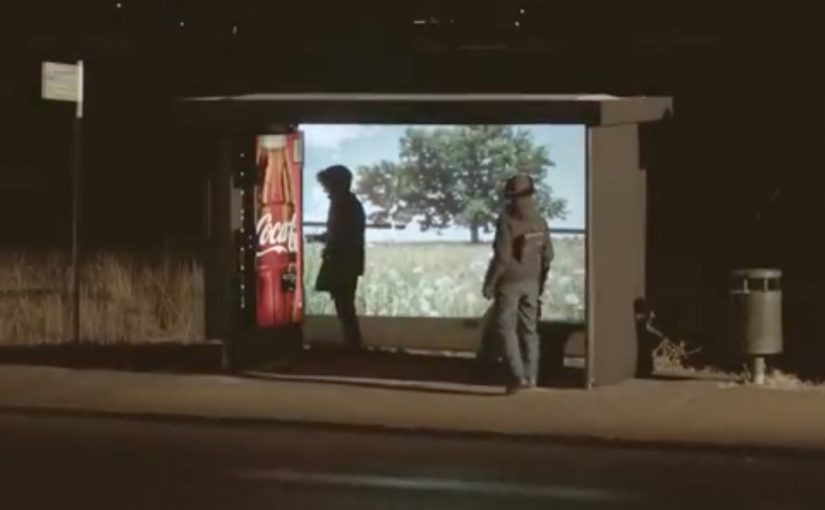
Coca-Cola is at it again, this time unleashing happiness in Sweden. A special Coke machine sits at a bus stop to spread some summer happiness in the middle of the cold and dark Nordic winter. The results…
Why the bus stop is the perfect stage
A bus stop is pure waiting time. That makes it a natural canvas for surprise, generosity, and shared reactions. When the environment is grey and cold, the contrast of “summer happiness” lands even harder, because it flips the mood of the moment instantly.
Extractable takeaway: Waiting time is a pre-built attention state. Pair it with a simple, generous interruption and you get a shared reaction people want to retell.
What this activation proves in one simple move
You do not need a complex mechanic to create a strong brand experience. Here, “mechanic” simply means the one interaction rule that triggers the surprise. Put the idea in the right place, at the right time, and make the reward feel unmistakably human. Because the moment is public and immediate, people experience it together, and that is why it spreads on its own.
In European cities, transit touchpoints like bus stops are one of the few places where strangers reliably share the same small moment of time.
The real question is whether your idea turns that routine pause into a shared reaction people will retell.
This kind of work wins when simplicity and placement do the heavy lifting, not explanation.
Stealable patterns from a bus-stop surprise
- Borrow “waiting time” as attention. Start where people are already paused and open to distraction.
- Design for contrast. Put warmth and play into a cold, routine context so the shift is instantly legible.
- Keep the rule simple. A single, human-feeling reward beats a complicated interaction people have to learn.
Click here to see other Coca-Cola Happiness campaigns from around the world.
A few fast answers before you act
What is the Coca-Cola Happiness Machine concept?
It is a series of experiential campaigns where a Coca-Cola machine behaves unexpectedly, giving people a surprise that feels generous and shareable in public.
Why does placing it at a bus stop work so well?
Because waiting amplifies attention. People are already paused, watching, and open to distraction. The setting turns a small surprise into a social moment.
What makes “happiness” activations feel authentic instead of gimmicky?
The reward has to be simple, immediate, and emotionally clear. If the moment reads as kindness or delight first, the branding can stay light and still win.
What is the main design lesson here?
Engineer contrast. Put warmth where people expect cold. Put play where people expect routine. That is how a short interaction becomes a memorable story.