What if someone bottled the water that millions in developing countries drink every day and offered it on the streets of New York?
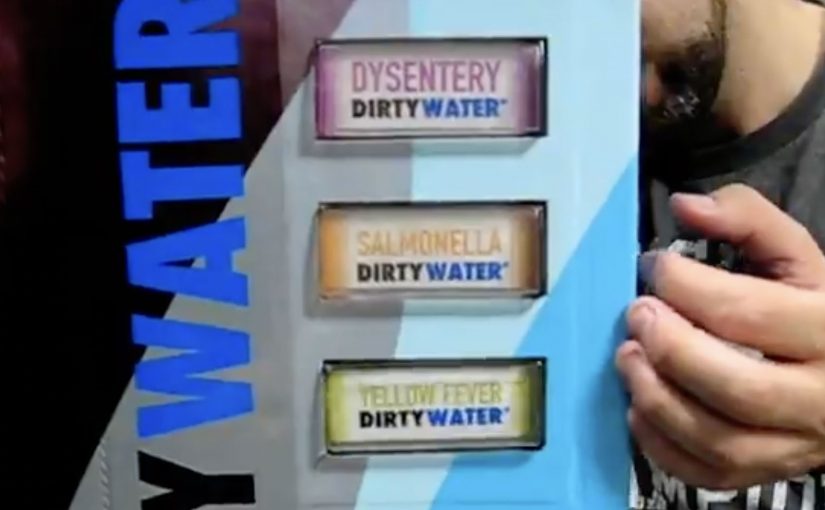
For just a buck, during World Water Week (March 22-29), New Yorkers in the Union Square Park area are invited to “enjoy” the benefits of Dirty Water. It comes in a range of choices like Malaria, Cholera, or Typhoid Dirty Water, and is described as having 900 million consumers.
Dirty Water is not an actual product, but a real problem for millions of children around the world.
A vending machine that sells disgust
The mechanism is a classic reversal: a familiar vending machine is repurposed to dispense bottles labeled with water-borne diseases. The point is not to get anyone to drink it. The point is to make the problem visceral and immediate for people who normally never have to think about it. By keeping the interaction familiar, the reversal lands because it turns moral distance into a physical reaction in seconds.
In global cause marketing, turning an abstract statistic into a physical choice can move more people from awareness to action than another informational poster ever will.
The real question is whether you can turn a distant, abstract problem into a personal encounter that makes action feel unavoidable.
Why “nobody drinks it” is the message
New Yorkers are startled to see options like Yellow Fever or Hepatitis Dirty Water. They look at the machine in disgust. And that disgust is the creative payload, meaning the emotional reaction the campaign is designed to deliver, because it mirrors the reality that millions of families do not have the option to refuse unsafe water.
Extractable takeaway: When the barrier is “I cannot feel this problem,” engineer a harmless encounter that triggers the right emotion on contact, then attach one immediate action that turns that emotion into help.
The donation promise that makes the $1 meaningful
The idea of “selling” dirty water is framed as being inspired by UNICEF’s promise that every dollar donated provides safe drinking water to 40 children for a day. Even if the bottle is never purchased as a “product”, the transaction becomes a small, concrete unit of impact.
How the campaign stays active beyond the street
This Dirty Water initiative is positioned as ongoing, with continued donation options online at tapproject.org or via text message. Text TAP or AGUA to UNICEF (864233) to make a $5 donation.
Steal the Dirty Water pattern
- Use reversal with familiar UX. Put the message inside an everyday interaction so the emotional hit lands before the rational debate starts.
- Make the abstract a physical choice. Let people “choose” the problem in front of them, then offer one simple action to refuse it for someone else.
- Price the action as a unit. Frame the donation as a small, concrete purchase so the person feels immediate impact, not vague virtue.
A few fast answers before you act
What is the “Dirty Water” vending machine in one line?
A public vending machine that dispenses “dirty water” bottles labeled with diseases to shock passers-by into donating for clean water.
Why price it at $1?
Because $1 is a friction-light ask that feels like a purchase, not a pledge, and it maps to a clear “unit” of impact in the campaign story.
What is the main creative trick that makes it work?
Reversal: it sells something no one wants, so the emotional response is disgust, and that response reframes clean water as a privilege rather than a given.
What should brands learn from this without copying the cause?
If the problem is invisible, make it physically encounterable, and tie the encounter to one simple action that feels immediately meaningful.
What is the lowest-risk way to adapt this pattern?
Keep the reversal honest and harmless, avoid sensational claims, and make the action as clear as the emotion: one step, one outcome, no hidden complexity.