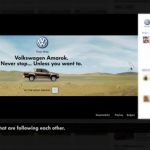
October seems to be a month of innovative test drive campaigns. In this campaign, ad agency AlmapBBDO Brazil has created a neat interactive meets experiential campaign.
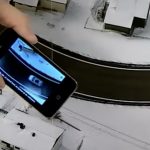
The idea was to create a virtual test drive for Volkswagen’s new Amarok that people could experience live from their home or office. Here, “virtual test drive” does not mean a screen-only simulation. It means remote input controlling a real vehicle on a real outdoor track. So a huge outdoor test track was setup, along with an automated car that takes your virtual test drive directions over the phone while you watch it live on your computer.
The campaign had 327 live test drives, 500,000+ unique site visitors and generated 7,392 online purchase intentions during the campaign period.
Why this “virtual test drive” feels real
The smart move is that the interaction is not simulated on a screen. The driving happens in the real world, on a physical track, with a real vehicle. Your input is remote, but the outcome is tangible and visible live. That makes the experience feel more like participation than advertising because your input creates an immediate, visible consequence in the real world.
Extractable takeaway: When remote input produces a live, physical outcome, the experience feels credible because people are judging a real product response, not a simulated promise.
In automotive marketing, the hard part is making remote interest feel credible enough to trigger real purchase consideration.
What makes it a strong test drive pattern
This is a stronger test-drive idea than most digital demos because it turns product proof into a live behavior, not a rendered claim. The real question is whether a remote experience can create enough confidence to move someone from curiosity to purchase intent. The business value is that the same interaction generates attention, product understanding, and a measurable hand-raise in one flow.
- Real-time control. Phone directions turn passive viewing into active steering.
- Live proof. Watching the vehicle respond on a real track builds trust fast.
- Measurable intent. “Online purchase intentions” connects the spectacle to business outcomes.
What to steal for remote test drive campaigns
- Make the proof physical, not simulated. A real car on a real track instantly raises trust versus a screen-only demo.
- Design one clear control loop. Simple input (phone directions) and immediate live response keeps the experience intuitive.
- Turn “watching” into “doing”. Viewer control is the difference between a stunt film and a product experience.
- Capture intent at the peak moment. If the experience feels like a true test, the follow-up CTA can be direct without feeling salesy.
A few fast answers before you act
What is the Volkswagen Amarok Live Test Drive?
A virtual test drive experience where people remotely guided an automated Amarok on a real outdoor track via phone instructions while watching live online.
Who created the campaign?
AlmapBBDO Brazil.
What made it different from a normal online test drive?
Instead of a digital simulation, a real vehicle drove a real track live, responding to the user’s directions.
What results were reported?
327 live test drives, 500,000+ unique site visitors, and 7,392 online purchase intentions during the campaign period.
What’s the transferable lesson?
If you can combine remote control with live, physical proof, you can turn “watching” into “doing” and generate measurable intent.