
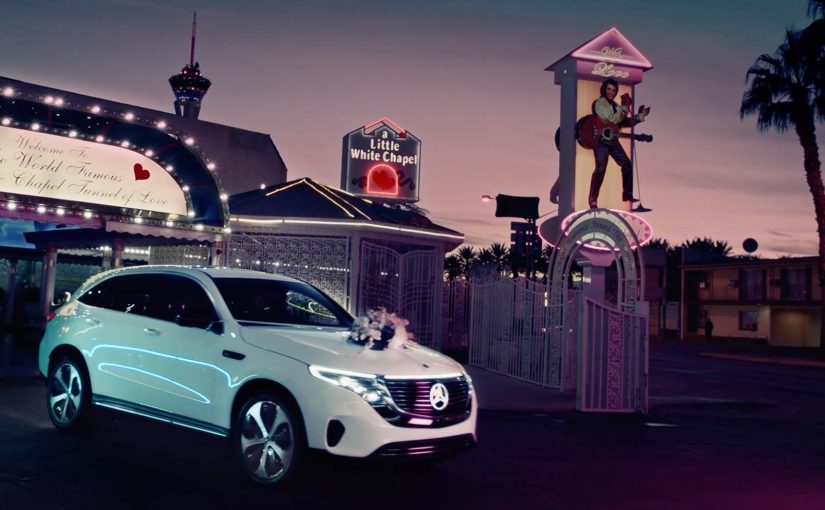
Mercedes-Benz: Yes, A.I. Do

Mercedes-Benz: Yes, A.I. Do

For the world premiere of their new Mercedes-Benz EQC at CES 2019 in Las Vegas, Mercedes transformed their new model into a wedding carriage. Four lucky couples were invited to test drive the new Mercedes-Benz EQC on the roads of Las Vegas and experience its special A.I. features first hand. In this context, “A.I. features” refers to the in-car intelligent functions Mercedes chose to demonstrate during the drive.

The real question is how you make a new, tech-heavy product feel experienceable in minutes, not explainable in slides.

Why this launch twist works

By wrapping a CES tech premiere in a wedding ritual and putting couples behind the wheel, Mercedes turns abstract capability into visible behavior. The ritual creates instant stakes and attention, so the A.I. moments are noticed as part of a real drive, not as claims.

Extractable takeaway: If your features are hard to describe, borrow a human ritual people already recognize so the experience carries the technology.

  • It turns a product reveal into a story. A “wedding carriage” reframes a tech premiere into an experience people immediately understand.
  • It makes A.I. tangible. Instead of describing features on a stage, it puts them into a real drive where reactions matter.
  • It earns attention without shouting. The setup is unusual enough to travel, while still keeping the car at the center.

In consumer-tech and automotive launches where attention is fragmented and skepticism is high, familiar rituals help audiences grasp “what is happening” before they judge “what it does”.

Steal the ritual frame for launches

Wrap a launch moment in a simple, human ritual. Then invite a small group to experience the product in-context so the story carries the technology, not the other way around.

  • Pick a ritual that already means something. Use a simple human frame to make the launch instantly legible.
  • Let real use do the persuading. Put the product into an in-context experience so reactions carry more weight than narration.
  • Keep the product as the stage. The theme should guide attention toward the product experience, not away from it.

A few fast answers before you act

What happened in the Mercedes-Benz “Yes, A.I. Do” activation?

For CES 2019 in Las Vegas, Mercedes used the EQC premiere as a wedding-carriage themed experience and invited four couples to test drive the car and experience its A.I. features first hand.

Why use couples and a wedding theme for a car launch?

It creates an instantly recognizable narrative frame, which makes the activation easier to remember and easier to share than a standard demo.

What is the main takeaway for product launches?

Give the viewer a clear story hook, then let the product prove itself through a real experience rather than through claims.

How do you keep a stunt from overshadowing the product?

Make the product the “stage”. The theme should guide attention toward the experience of the product, not away from it.
MINI: We Tow You Drive

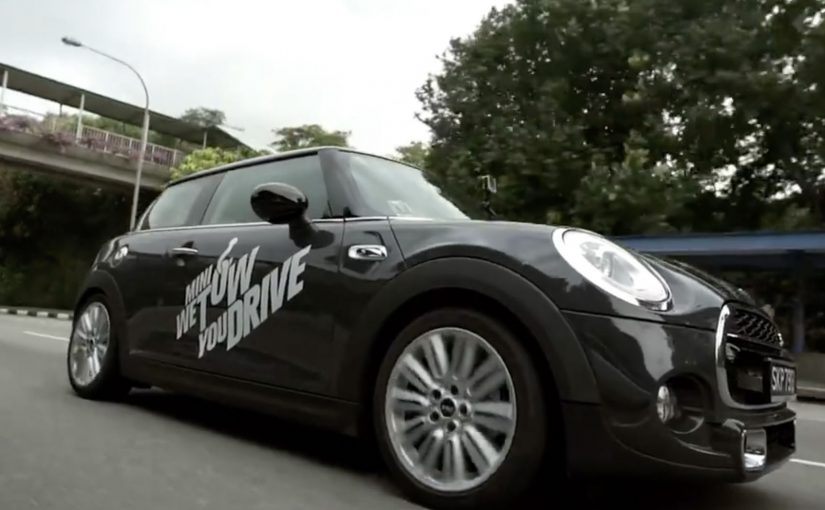
MINI: We Tow You Drive

Driving a MINI is addictive. Which is why drivers who test drive are more likely to buy one. So to get prospective customers to test drive, MINI decides to help drivers stranded by their own cars.

MINI partners with a tow service company and responds to breakdown calls in real time throughout Singapore. The campaign not only takes the test drive out of the showroom and onto the streets. It also turns an annoying situation into a pleasant surprise.

A test drive that arrives exactly when you need a lift

The mechanism is the point: instead of asking people to come to MINI, MINI shows up when a driver has an immediate mobility problem. The tow moment becomes the conversion moment, because the customer is already thinking about reliability, comfort, and what it feels like to be back in motion.

In urban automotive acquisition, the strongest test drives happen when the product solves a real, present problem, not when it is scheduled as a chore.

Why this is more than a stunt

This idea works because the brand is doing something useful first. The “surprise” is not a discount. It is relief. That usefulness makes the experience feel earned, and it also makes the story more shareable. Brands should earn attention by delivering utility before they ask for consideration. The real question is whether your operations can make the promise true in real time, not whether your creative can make it look clever.

Extractable takeaway: When your acquisition moment solves an urgent problem, the product benefit lands as lived proof, and the customer tells the story for you.

A similar play from Brazil

A Brazilian Chevrolet dealership in 2012 reportedly ran a very similar “breakdown to test drive” promotion in Brazil with the Chevrolet Cobalt.

What to steal from tow-to-test-drive

  • Move the product moment into real life. A test drive is more persuasive when it is embedded in a situation that matters.
  • Use real-time operations as marketing. The experience is the message when the service delivery is visible.
  • Turn frustration into gratitude. Solving a pain point creates a stronger memory than any feature list.
  • Design for talk value without forcing it. Talk value is the retellable detail someone repeats to friends. If the help is genuine, sharing happens naturally.

A few fast answers before you act

What is “We Tow You Drive” in one line?

A test drive activation where MINI partners with a tow service and turns real breakdown moments into an unexpected opportunity to drive a MINI.

Why is roadside assistance a smart acquisition moment?

Because the customer has immediate need. They are receptive to a solution and they feel the product benefit in the exact moment mobility is restored.

What is the main risk in copying this idea?

Operational failure. If response times are slow or the handoff feels messy, the “rescue” story flips into frustration.

How do you keep this from feeling opportunistic?

Lead with help, not pitch. The driver should feel rescued first, and only then invited to try the car, with an easy opt-out.

What is the most transferable lesson?

Stop treating test drives as appointments. Put the product into a real situation where it solves a real problem, and let the experience do the persuasion.

Pepsi Max: Test Drive

Pepsi Max: Test Drive

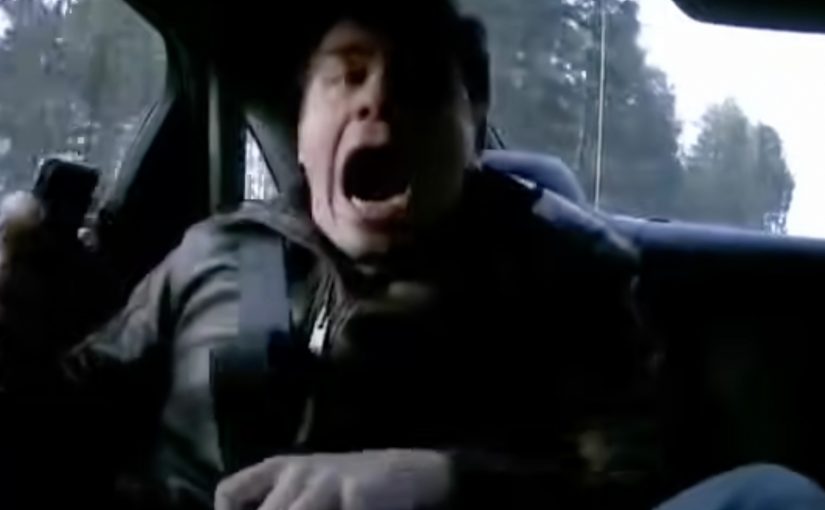
Last year in March, Pepsi Max along with professional stock car racing driver Jeff Gordon performed a prank on an unsuspecting car salesman by taking him on a test drive of his life. Here, a “prank” is a designed real-world setup filmed to capture reactions, not a fully scripted spot.

The video since then got over 41 Million views on YouTube. Despite its viral success, automotive journalist Travis Okulski was not impressed and was pretty vocal in pointing out inconsistencies in the viral ad and calling it a fake.

So Jeff Gordon teamed up again with Pepsi Max to pull a similar prank on unsuspecting Travis Okulski, just to prove the authenticity of the original test drive video…

But even after all of that Travis Okulski is still not convinced and the video since its release last week has already gotten over 13 Million views on YouTube.

The real question is what you do when a viral stunt becomes a public authenticity debate.

Why this became a two-part story

The first video worked because the premise is simple, the escalation feels real, and the payoff is pure reaction. But the moment it went viral, it also invited scrutiny. Because the setup looks “too good to be true”, it triggers a verification instinct, which is why people rewatch, share, and interrogate the details. That is what makes the follow-up so interesting. The brand turned criticism into content by making the skeptic part of the narrative.

Extractable takeaway: When your entertainment idea can be framed as “real or staged”, plan a proof-driven sequel path up front, so the debate extends the platform instead of draining trust.

  • Viral hook. A familiar setting, then a sudden reveal of unexpected capability.
  • Credibility challenge. A public critique that reframed the conversation as “real or staged”.
  • Response as sequel. A second execution aimed at the critic to re-earn belief.

In mass-reach consumer campaigns, “real or staged” scrutiny is part of distribution, so the sequel has to protect credibility without changing the core promise.

What to learn from the backlash

If doubt becomes the headline, leaning in with credible proof beats going quiet. When stunts travel, authenticity becomes part of the product. If the audience starts debating “is it real”, the brand can either go silent or lean in. Pepsi Max leaned in and used the debate as fuel, which extended the lifecycle and kept attention anchored to the same brand platform.

  • Design for verification. Build in moments that can withstand frame-by-frame scrutiny.
  • Turn skeptics into structure. If a credible critic challenges you, make the response the next chapter, not a defensive footnote.
  • Keep the platform constant. Address doubts without drifting into a different promise or tone.

A few fast answers before you act

What is Pepsi Max “Test Drive” with Jeff Gordon?

It is a prank-style stunt video where Jeff Gordon takes an unsuspecting car salesman on an extreme test drive, created as part of Pepsi Max’s viral entertainment approach.

Why was there controversy around the first video?

An automotive journalist publicly pointed out inconsistencies and argued it was staged, which sparked debate about authenticity.

Why did Pepsi Max do a second video?

To address the credibility debate directly by repeating a similar stunt and making the outspoken critic part of the execution.

What is the transferable pattern for viral campaigns?

Expect scrutiny, especially when the content looks “too good”. If doubt becomes the story, design a credible sequel that engages the criticism rather than ignoring it.