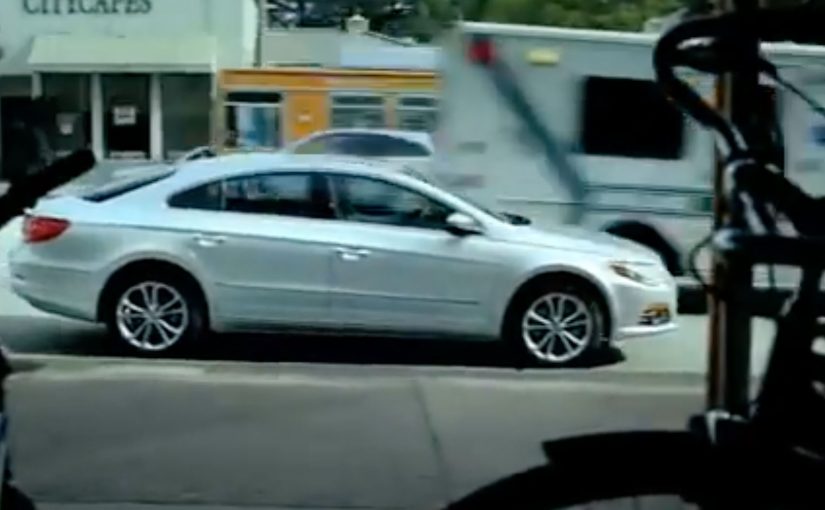
You spot a VW, call it out, and punch your friend. That old road-trip ritual gets a fresh twist when Volkswagen reframes it as “PunchDub” and expands the target from one iconic model to the full lineup. PunchDub is the name for this car-spotting punch game applied to any Volkswagen model you see.
The mechanic is simple. The moment you see a VW, the “game” triggers. With 13 different VW models in play, every sighting becomes a reason to react again, and the brand quietly teaches you that Volkswagen is more than one car.
In automotive marketing, reworking a familiar cultural habit into interactivity is a fast way to refresh how people think about a full product family.
The real question is whether your brand can turn passive noticing into an automatic, repeatable reaction loop.
It is playful. It is slightly ridiculous. And it is effective brand education disguised as a joke, because you remember what you repeatedly do in real life.
Why the “13 models” twist matters
The original game logic is narrow. It is usually about spotting a Beetle. By broadening the trigger to 13 vehicles, Volkswagen turns a niche in-joke into a scalable framework that can support an entire lineup. That is the point. You stop thinking “VW equals one car” and start thinking “VW equals a range.”
Extractable takeaway: If you have a product family, design the trigger so variety is the reason the loop keeps restarting.
What the campaign is really optimizing for
This is less about immediate conversion and more about mental availability. The brand wants to show up in the everyday, in-car moments where games happen naturally. When that happens, the campaign earns repeated exposures without asking for repeated media.
Steal the habit-hijack loop
- Hijack a habit. If people already do something, reframe it instead of inventing a new behaviour.
- Turn variety into a feature. The “13 models” detail makes the brand’s range the reason the game improves.
- Keep the trigger obvious. Spot. Call. React. The loop has to be instant, or it will not spread.
- Make the brand the punchline. A joke people repeat is often a message they remember.
A few fast answers before you act
What is PunchDub?
PunchDub is Volkswagen’s twist on the “Punch Buggy” style car-spotting game, expanding the target from one VW model to a broader set of Volkswagen vehicles.
Why does expanding to multiple models change the impact?
It converts a single-model association into lineup awareness. The “game” repeatedly reinforces that Volkswagen has many models, not just one iconic car.
What makes this kind of idea spread?
A clear trigger and a fast reaction loop. People can play it without instructions, so it travels by imitation.
Is this about product features?
Not directly. It is about brand memory. The goal is to make the lineup feel present in everyday moments, so the brand becomes easier to recall later.
What is the main risk with habit-based campaigns?
If the mechanic feels forced or complicated, it dies. The best versions feel like a natural extension of something people already do.