Last year Lacta Chocolates came up with a web-based interactive love story called Love at first site. Now Jung von Matt and Film Deluxe take the same “viewer participation” impulse into a darker genre with an interactive horror experience designed for cinemas. Here, viewer participation means the audience can influence what happens on screen instead of only reacting to it.
The movie is called Last Call by 13th Street, and it is billed as the first interactive horror movie in the world.
How the film turns a screening into a live conversation
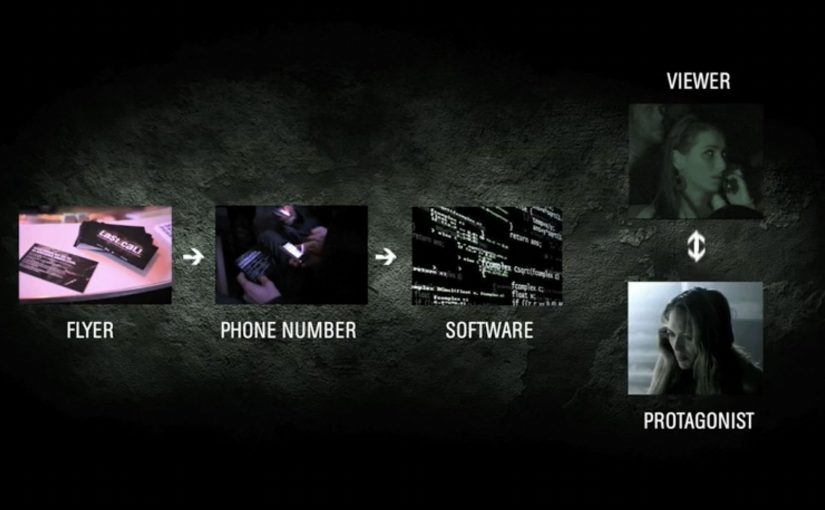
The core mechanic is simple and high-stakes. The audience can communicate with the protagonist through specially developed speech recognition that turns one participant’s answers, delivered via mobile phone, into on-screen instructions.
Instead of passively watching a character make bad decisions, one viewer gets pulled into the story and has to direct what happens next, under pressure, in front of a room full of people.
In European entertainment marketing, the strongest channel ideas are the ones that turn passive viewing into a shared physical experience.
Why it lands: it converts fear into responsibility
Horror is already interactive in your head. You are constantly thinking “don’t go in there” or “run”. Last Call makes that internal commentary explicit, then gives the viewer control at exactly the moment when tension is highest. That works because it turns private fear into public responsibility, which intensifies tension instead of interrupting it.
Extractable takeaway: If you want interactivity to feel meaningful, make the choice time-critical and socially visible. When a whole room watches one person decide, even simple branching choices feel heavier.
The intent: make a channel brand feel like an event
This is not interactivity for its own sake. It is a positioning play. The real question is whether the interaction makes 13th Street feel like the only place this kind of horror experience could happen.
The phone call is the hook, but the real product is the shared story people retell afterwards: “someone in our screening got the call”.
What to steal for your own interactive storytelling
- Choose one decisive moment: interactivity works best when it happens at a peak, not throughout.
- Keep the command vocabulary tight: yes or no, left or right, stay or flee. Clarity beats cleverness.
- Make the interaction legible to spectators: the audience should understand what the caller chose without needing explanation.
- Design for group emotion: the collective tension and reaction is part of the value.
- Build the “retellable” sentence: “the character called an audience member” is stronger than any tagline.
A few fast answers before you act
What makes Last Call “interactive”?
A participant receives a mobile phone call and speaks choices that are translated via speech recognition into commands, which trigger different follow-up scenes.
Why use a phone call instead of a web interface?
A phone call feels personal and urgent, which matches horror. It also keeps the participant’s hands free and the interaction fast enough for a live screening.
Is this a real branching film or a gimmick?
It works like a branching structure with pre-produced scenes, selected based on a small set of recognized commands. The novelty is the live calling mechanic in a cinema context.
What is the biggest risk when copying this format?
Latency and ambiguity. If recognition is slow or choices are unclear, tension collapses. The interaction has to feel instantaneous and unmissable.
What is the transferable principle beyond horror?
Put the audience in a single, decisive role at a high-emotion peak. One clear decision, delivered fast, can create a stronger memory than many shallow interactions.