January in Sweden is when gyms and health clubs go loud, chasing everyone who made the classic New Year’s resolution to start exercising. Stockholm-based health club Friskis&Svettis is no exception.
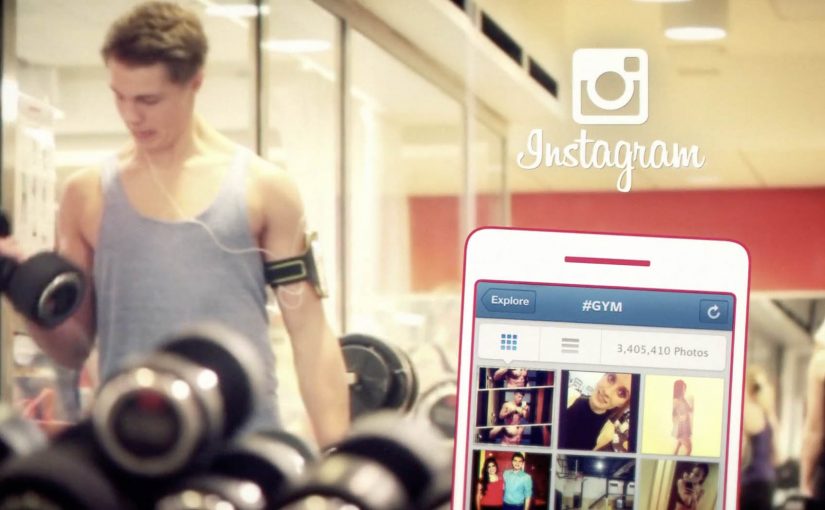
Because Friskis&Svettis is a non-profit association owned by its members, they and their agency Volt build a campaign where members inspire the wider community. A hashtag, #friskissthlm, invites people to work out, photograph the moment, and tag their pictures, so the members themselves become the creative running “around Stockholm”.
How the member-driven mechanic scales
The mechanism is participation as media: member actions create the content and also help distribute it. Instead of producing a single hero ad, the brand defines one simple behavior: train, post, tag. The hashtag becomes the aggregation layer, a single place where the posts collect and stay discoverable, and every new image becomes both proof and invitation. The campaign’s distribution is powered by the same thing gyms want more of in January: visible momentum.
In member-owned fitness communities, letting real members supply the proof tends to land harder than brand-led messaging, because the social permission comes from peers rather than from advertising.
The real question is not how to make a louder January gym ad, but how to make visible member momentum easier to join. The stronger move here is to make member behavior the campaign, not to outshout every other club in January.
Why it lands
It turns the most fragile moment in fitness, starting, into something public and shareable without making it complicated. The posts do two jobs at once. They show variety (different workouts, different people, different branches) and they reduce intimidation, because the “campaign face” is not a model, it is your neighbor.
Extractable takeaway: If you want community growth, choose one repeatable participation unit and one clear tag, then let volume and variety do the persuasion. Your members become the credibility layer.
What to borrow for your own January push
- Make the ask behavioral. “Work out, post, tag” is easier to follow than “join our movement”.
- Let variety do the selling. Many small proofs beat one polished claim, especially in fitness.
- Turn members into the creative. It is cheaper, more credible, and naturally localized.
- Design for aggregation. One hashtag, one place to browse, one loop that keeps filling itself.
A few fast answers before you act
What is #friskissthlm in one sentence?
A member-powered Instagram hashtag campaign where workouts posted and tagged by members become the campaign content for Friskis&Svettis Stockholm.
Why is this stronger than a typical January gym ad?
Because the proof is peer-generated. People trust “someone like me did this” more than they trust a brand saying “you should”.
What is the key design decision?
Keeping the participation unit tiny and repeatable, so the barrier to contributing stays low while the content volume stays high.
What is the main risk with hashtag-led campaigns?
If the tag is not actively adopted, the feed looks empty and the idea collapses. You need early seeding from members and staff so momentum is visible from day one.
How would you adapt this outside fitness?
Keep the pattern, not the category. Pick one repeatable action people are already willing to do, give it one clear tag or container, and make the resulting proof easy for others to browse and copy.