Second screen usually broadcasts at you. This one lets you write back.
Right now, most second screen experiences push content to the user but do very little by way of two-way interactivity. That however is slowly changing and can already be seen in the TV based second screen experiences from Heineken and Chevy.
Now in one of the first examples of second screen experiences that I have seen with radio, Swedish ad agency Forsman & Bodenfors attempts to make the whole radio experience more visual, interactive, and shareable.
The mechanic: a radio timeline you can enrich in real time
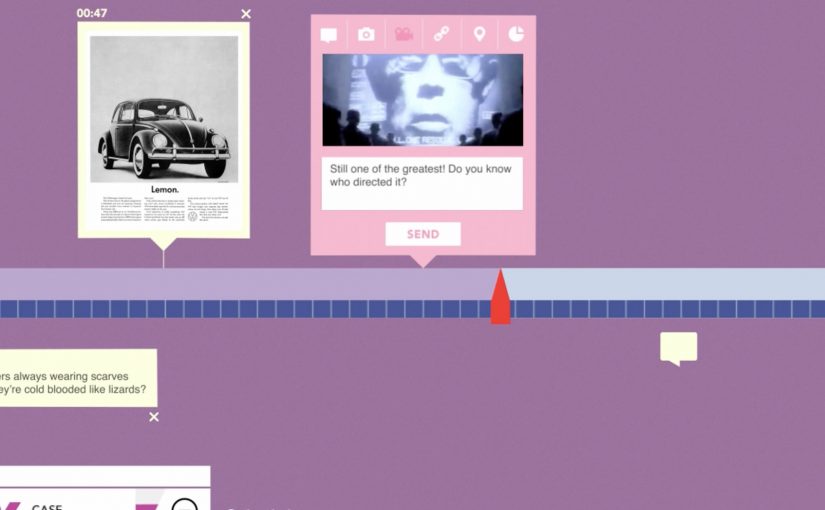
With a new player called “Swedish Radio Plus”, listeners on computers and mobile devices can follow a program and simultaneously add videos, pictures, comments, maps, and polls to the radio timeline. Posts made on this custom timeline are also shared to the user’s Facebook profile, linking back to that exact moment in the program.
The player itself was reported as an HTML5-first build, designed to treat radio like a stream with attachable context instead of a one-way feed.
In public service media, second-screen design only earns attention when it adds context without breaking the core listening habit.
Why it lands
This shifts the second screen from “companion content” to “companion conversation”. By companion conversation, I mean a shared layer where listeners can attach their own context to a live moment instead of only consuming publisher-supplied extras. The timeline makes the program feel like a living object. Something you can annotate, react to, and re-enter at a precise point later. It also turns sharing into a utility rather than a vanity action, because the shared link is anchored to a specific timestamp, not a generic show page. That works because a timestamped timeline gives every contribution a precise place, which makes interaction feel useful instead of noisy.
The real question is whether added context deepens listening or simply competes with it.
Extractable takeaway: If you want genuine interactivity, give listeners one shared artifact. A timeline. Then let them attach context to it in the moment, and make every contribution deep-link back to the exact point that triggered it.
What broadcasters can borrow
- Make interaction additive, not distracting. Users should enrich the experience without being forced to stop listening.
- Anchor everything to time. Timestamped posts are what make the experience replayable and shareable.
- Let the audience do the contextual work. Photos, links, and comments often explain a moment faster than official companion content.
- Design sharing as navigation. A shared post that jumps to the exact moment is more useful than “here’s the show”.
A few fast answers before you act
What is Swedish Radio Plus?
It is an interactive radio player concept that lets listeners add media and comments to a program timeline while listening, then share those timeline moments socially with deep links.
What makes it different from typical second screen experiences?
It supports two-way contribution. Listeners do not just receive extras. They can publish context into the timeline as the show plays.
Why is the timeline format important?
Because it creates a shared structure. Every comment, image, or poll has a precise home in time, which makes the experience navigable and re-usable.
What is the main benefit for broadcasters?
It increases engagement without needing more programming. The audience generates context and distribution around the existing show.
What is the main risk if you copy this model?
If the interaction flow is heavy or noisy, it competes with listening. The best version feels lightweight and optional, not mandatory.