
Banrock Station: 100K Live Bees Billboard

Banrock Station: 100K Live Bees Billboard

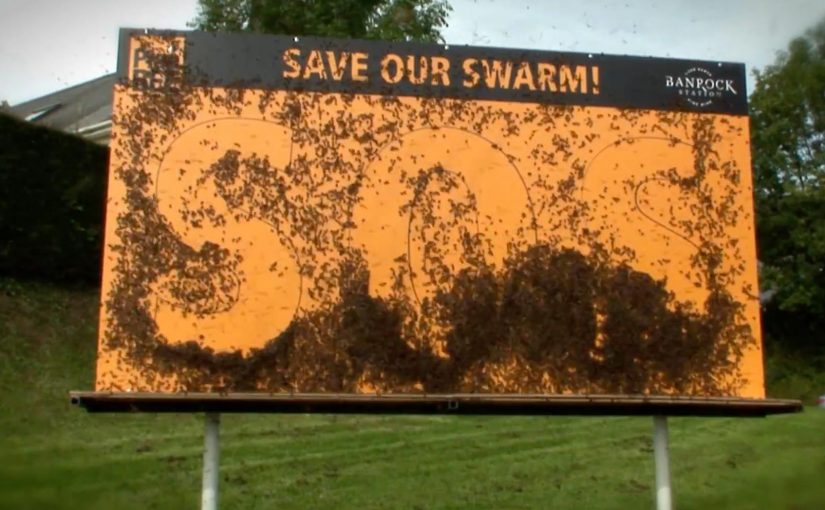
An SOS written by a living swarm

Honey-bee populations are mysteriously dwindling worldwide. In England, the Banrock Station winery created what it described as the world’s first ad with live bees to call attention to the problem.

Using queen-bee pheromones, the team attracted a giant swarm of bees, as many as 100,000, from a nearby honey farm to spell out an “SOS” message on a billboard.

Queen-bee pheromones are chemical signals that draw worker bees toward what they perceive as the queen’s location, making it possible to guide where a swarm clusters.

How it works: make the message unavoidable

The mechanism is blunt and brilliant. Use the medium itself as proof. A billboard about bees becomes a billboard made of bees, so the problem is not explained. It is witnessed.

In UK cause marketing, a conservation message that becomes a public spectacle can travel faster because it creates a stoppable moment people feel compelled to verify and share. A stoppable moment is one that makes people pause long enough to look twice or pull out a phone.

In European consumer brands and other enterprise marketers, cause messages break through fastest when the proof is visible in the same moment as the claim.

Why it lands: it turns concern into a physical reaction

This works because it compresses a complex topic into one immediate sensation. Surprise first, meaning second. You see the swarm, you read “SOS”, and only then do you connect it to the decline story.

Extractable takeaway: The most effective cause marketing often turns an abstract problem into a physical moment, then ties that moment to a simple action that funds or advances the cause.

The real question is whether your cause message can be proven in the same glance it is read.

Because the billboard is literally formed by the subject of the campaign, the message feels less like persuasion and more like evidence, which increases attention and recall.

The business intent: build salience and fund the cause

The film earns awareness, but it also links the stunt to action. Banrock Station also donates 5p to the honey-bee cause for every bottle sold, turning attention into a measurable contribution. Proof-first cause marketing is strongest when it is paired with a simple give-back mechanism, meaning a clear, fixed contribution that turns attention into funding.

Steals for cause marketing that feels real

  • Make the medium the proof. If you can embody the issue in the execution, you do not need long explanation.
  • Design for a “verify it” reaction. Meaning people want to confirm it is real before they repeat it.
  • Connect attention to a concrete contribution. Pair the story with a simple, trackable give-back mechanism.
  • Keep the message legible at a glance. “SOS” works because it is instantly readable even before context arrives.

A few fast answers before you act

What is Banrock Station’s “live bees billboard” in one sentence?

An out-of-home awareness piece that uses a real, visible “live bees” element to make the environmental message feel tangible rather than symbolic.

What is the core mechanism?

The medium becomes the proof. The execution embodies the issue in a way passers-by can immediately see, which makes the story inherently shareable.

Why does this kind of cause marketing earn attention?

Because it triggers a “verify it” reaction. People are more likely to share something they feel others need to see to believe.

What business intent does it serve beyond awareness?

It links brand meaning to a concrete, memorable moment, and can be paired with a trackable give-back or action mechanic to convert attention into contribution.

What is the most transferable takeaway?

If you can turn a cause into a physical, legible proof-point, you reduce explanation and increase both recall and retellability.
Chang Soda: Fizzy Billboard

Chang Soda: Fizzy Billboard

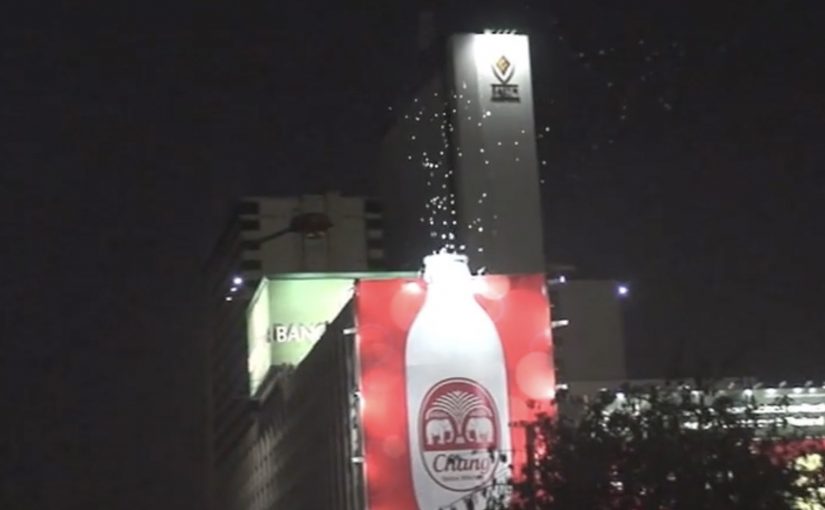
A giant Chang Soda bottle towers over a busy Bangkok shopping area. At the right moment, the cap “pops” and a burst of white balloons shoots out like carbonation escaping from a freshly opened drink.

Seeking new ways to create an impact in today’s sea of daily ad bombardment while taking into account shrinking budgets is quite a challenge. Chang’s Fizzy Billboard did just that, described as a reminder of how effective a great billboard idea can be when it turns a product truth, a single attribute the product can credibly own, into a public spectacle.

This is an outdoor activation that uses a physical effect, balloons released from the bottle, to dramatize “fizz” in a way that can be understood in a single glance.

The mechanism that makes it memorable

The creative leap is not the billboard. It is the “fizz”. Balloons are cheap, visible from far away, and they behave like bubbles in motion. Because of that, the claim becomes tangible even for people who only catch the moment in passing.

In FMCG categories where products are hard to differentiate at shelf, a single unmistakable physical metaphor in public space can outperform a week of polite messaging.

Why it lands as a shareable street moment

The payoff is time-based. People hear that “something happens” and they wait. When the burst comes, it reads instantly and creates a crowd reaction that becomes part of the communication. The effect also photographs well, which helps the idea travel beyond the street.

Extractable takeaway: If you want OOH to earn sharing, build a visible cause-and-effect that people can describe in one sentence, then make the payoff repeatable enough to be worth waiting for.

What the brand is really buying

This is a salience play. The goal is to make “Chang equals fizzy” stick through a short, repeatable spectacle, and to borrow the credibility of a real-world stunt rather than relying on a purely filmed illusion. The real question is whether you can turn one attribute into a repeatable moment people will stop for and retell. If you have to choose, back one literal, repeatable effect instead of spreading budget across polite static placements.

Steal-worthy rules for spectacle OOH

  • Make one product truth physical. Choose the one attribute you want remembered and build the effect around it.
  • Design for distance. If it does not read from across the street, it will not earn attention.
  • Use a predictable moment. A scheduled payoff creates anticipation and word of mouth.
  • Keep the metaphor literal. People should get it before they think about it.

A few fast answers before you act

What is Chang’s “Fizzy Billboard”?

An outdoor activation for Chang Soda where a giant bottle billboard appears to “pop” and release balloons like fizz, turning carbonation into a public spectacle.

Why use balloons for a soda message?

Balloons are inexpensive, highly visible, and they move like bubbles. That makes “fizzy” readable in one second from a distance.

What makes this kind of billboard more effective than a standard print-only OOH?

It creates a moment, not just an image. A time-based spectacle earns attention, crowd reaction, and secondary sharing that static posters rarely trigger.

What business outcome is this designed to influence?

Brand salience and attribute ownership. It aims to make the brand strongly associated with “fizz” versus competitors.

What is the biggest execution risk with spectacle billboards?

If the payoff is unclear or inconsistent, people feel tricked. The effect must be obvious, repeatable, and easy to explain in one sentence.

Volkswagen Polo GTI: Fast Lane

Volkswagen Polo GTI: Fast Lane

Fast Lane: turning routine into a shortcut you choose

Volkswagen is soon going to launch its new Polo GTI. To create awareness and generate buzz, it built a “Fast Lane” in subways, malls and elevators around Germany. In this campaign, “Fast Lane” means a playful, faster-feeling alternative route placed beside the normal one, dedicated to everyone who likes to go beyond the regular, who is curious for new stuff, and who enjoys speeding it all up a little.

How it works: add a faster option that feels like play

The mechanism is simple. Place an obvious “normal” route next to an unexpected alternative that is quicker and more fun. Then let people self-select into it. The viewer controls the switch by choosing the fast lane, and that choice becomes the story.

In German urban commuting environments, small design changes in high-footfall spaces can shift behaviour quickly because routine is strong and the contrast is instantly visible.

The real question is whether you can turn “fast” from a spec into a shortcut people choose in public.

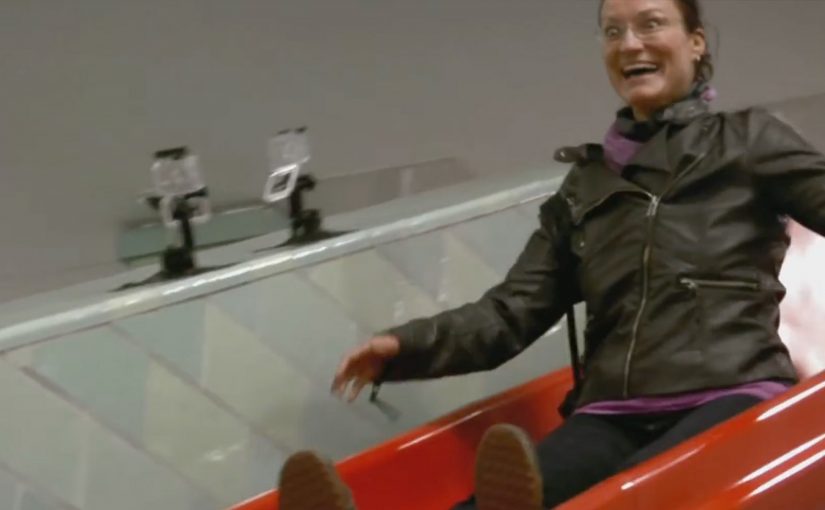
Fast Lane 1: The Slide

Long staircase. Next to it a slide. Which way would you go?

Fast Lane 2: The Shopping Carts

Some carts are pimped with a skateboard. Up for some extra shopping fun?

Fast Lane 3: The Elevator

A sound system turns the ride into a rocket take-off. Welcome on-board.

Why it lands: speed becomes a feeling, not a spec

The campaign does not explain performance. It lets people experience a mindset. Faster. Lighter. A little rebellious. Because the “fast” option is obvious and self-selected, it feels earned, which makes the idea stick without needing specs. Each execution creates a moment where the “fast” choice feels like a reward, not just efficiency.

Extractable takeaway: If you want people to believe a feature, design a situation where they can choose it and feel it, not just read about it.

The business intent: borrow everyday behaviour as proof

For a GTI launch, “fast” can easily become generic language. This is stronger than repeating performance adjectives. Fast Lane makes it concrete. It attaches the idea of speed to real-world micro-decisions, and turns the resulting participation into shareable proof that travels beyond the physical placements.

What to steal if you want to turn a feature into a behaviour

  • Build the contrast into the environment. Normal route next to the fun shortcut.
  • Make the faster choice self-evident. People should understand it in one glance.
  • Let viewer control do the persuasion. Choosing it is more convincing than being told.
  • Create a story per location. Each execution is a complete, watchable moment on its own.

A few fast answers before you act

What is Volkswagen’s “Fast Lane” for the Polo GTI?

A set of playful public-space installations (slide, skate carts, rocket-sound elevator) that let people choose a “faster” option, designed to build buzz for the Polo GTI.

What is the core mechanism?

Put a normal route next to an unexpected shortcut that is quicker and more fun. People self-select, and the choice becomes the story.

Why does this work better than talking about performance specs?

It turns “fast” into a felt experience. Participation makes the feature believable without needing explanation.

What business intent does it serve?

It makes the GTI’s positioning concrete and talkable, then relies on the resulting participation moments to travel beyond the physical placements.

What is the most transferable takeaway?

If you want people to believe a feature, design a situation where they can choose it and feel it, not just read about it.