
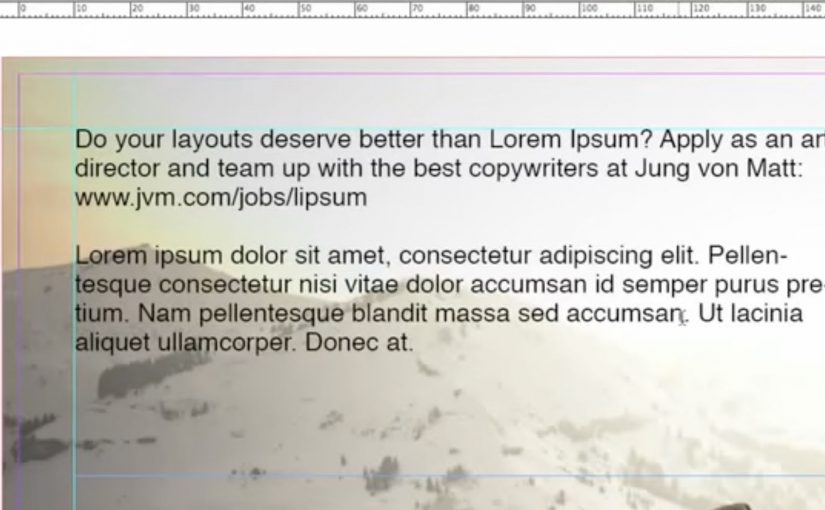
Jung von Matt: Lorem Ipsum Recruitment

Art Directors in agencies use Lorem Ipsum (dummy text) as a placeholder when creating layouts. A de facto place to generate that dummy text is Lipsum.com, described as drawing tens of thousands of creatives from around the world each day.

So for one week in January, Jung von Matt slipped a recruitment message into the flow. When anyone copy and pasted Lorem Ipsum from Lipsum.com into their layouts, a Jung von Matt recruitment line came along with the dummy text.

Recruitment that hides inside the tool, not the feed

The mechanism is a Trojan insertion into a daily workflow. Here, “Trojan insertion” means placing a message inside a routine working asset so it gets discovered during real task flow rather than through paid media. Instead of buying attention where creatives scroll, the message shows up exactly where creatives build. Inside the placeholder text that sits in the middle of real work. That works because the recruitment line appears when designers are already focused on layout work, which makes the interruption feel relevant rather than random.

In agency talent markets, the most efficient recruitment messages appear inside the tools and rituals creatives use every day.

Why it lands

This idea earns its attention rather than demanding it. The surprise is subtle. You spot it only if you are doing the job, which makes the message feel targeted and insider. It also travels naturally. Layouts get shared for feedback, reviewed, and iterated, so the line can surface in multiple contexts without additional media. This is smarter than a generic job ad because it uses working context as targeting.

Extractable takeaway: If you want to reach specialists, place the recruitment message inside a high-frequency workflow artifact, so the moment of discovery feels personal and relevant.

The real question is how to place a hiring message inside a creative ritual without making the brand feel intrusive.

What Jung von Matt is really optimizing for

The obvious goal is applications. The deeper goal is employer brand positioning. The agency is signalling that it understands how creatives work, and that it will recruit with the same craft it expects in the job.

What recruitment teams can steal from this

  • Target the workflow, not the platform. Start from where your talent produces, not where they consume.
  • Use a low-friction carrier. Dummy text is copied at scale, which makes distribution effortless.
  • Make the message context-native. A recruitment line should look like it belongs in the artifact it hijacks.
  • Design for second-hand discovery. Make it likely to be noticed in reviews, sharing, or handoffs.
  • Keep it respectful. The best hacks feel clever, not invasive.

Previously Jung von Matt have recruited creatives via the Trojan Recruitment campaign.


A few fast answers before you act

What is Lorem Ipsum Recruitment in one sentence?

It is a recruitment tactic where a Jung von Matt hiring message was embedded into Lorem Ipsum text so it appeared when creatives copied dummy text into layouts.

Why is Lipsum.com a smart place to do this?

Because dummy text generation is a repeated, habitual step in layout work, so the message shows up at high frequency in a relevant context.

What makes this more effective than a normal job ad?

It reaches the right audience while they are actively designing, and the discovery feels targeted rather than broadcast.

What is the main risk?

Trust. If the audience experiences it as tampering rather than wit, the stunt can harm employer brand instead of helping it.

What should you measure if you run a similar idea?

Qualified applications, referral quality, portfolio traffic, and whether employer brand perception improves among the specific roles you are targeting.

Jung von Matt: Trojan Art Director

Jung von Matt is looking for talent again, this time art directors. Staying true to its creative reputation, the agency devised a cheeky way of recruiting from the same places competitors recruit from.

This time the “Trojan horses” were 15 well-known photographers whose work is regularly shown to top creative agencies in Germany. Here, “Trojan horses” means recruitment messages hidden inside portfolio work that creative departments already review. Jung von Matt’s job message was integrated into the photographers’ portfolios. An inscription on a bus. A graffiti on a wall. A stitchery on a pullover. The job ad appears inside the work, right where art directors and creatives are already paying attention.

Recruitment as a stealth placement inside creative culture

The mechanism is elegant. Instead of pushing job ads outward, the agency inserts them into a trusted distribution channel. Photographers’ portfolios are already a legitimate reason to visit creative departments. By embedding the hiring message into those images, the job ad arrives with credibility and surprise built in.

In agency recruitment, the most effective messages often travel through peer-to-peer channels where creative people already look for inspiration.

Why it lands

It respects the audience. Art directors do not want HR language. They want ideas. The recruitment message shows up as an idea. The “spot it” moment also creates a small status game. If you notice it, you feel like an insider, which is exactly the emotion you want associated with joining a top creative shop. This is a smart recruitment idea because it proves the agency’s creative standard in the act of recruiting.

Extractable takeaway: If you recruit creative talent, do not only describe the culture. Deliver the culture as a recruiting experience. The medium should prove the message.

What Jung von Matt is really doing here

Beyond hiring, this is reputation maintenance. The campaign reinforces the belief that the agency thinks differently, even about recruitment. The real question is whether your recruiting message proves the kind of culture and craft the role promises. It also targets a very specific context. The moment when competitors are reviewing portfolios and looking for talent. That is when the message is most likely to be acted on.

What to borrow from this recruitment play

  • Place your message in a trusted channel. Borrow the legitimacy of a format your audience already values.
  • Integrate, do not interrupt. Embedding the ad inside the creative work makes it feel like discovery, not spam.
  • Make the message audience-native. Speak in the language of the craft, not corporate templates.
  • Target the decision moment. Put the offer where hiring intent already exists.
  • Keep it simple. One clear role, one clear next step, no clutter.

A few fast answers before you act

What is the “Trojan Art Director” idea in one sentence?

It is a recruitment tactic where Jung von Matt embeds job messages inside photographers’ portfolio images that are regularly shown to top agencies, reaching art directors in-context.

Why are photographers’ portfolios a powerful distribution channel?

Because they are already viewed by creative departments and talent decision-makers. The audience is qualified and attention is high.

What makes this feel credible rather than gimmicky?

The message is integrated into real creative work and appears in a context where creativity is the currency. That makes the format match the audience expectation.

What is the main risk with stealth recruiting?

It can be perceived as hostile or disrespectful by peers if the tone is too aggressive. The balance is “cheeky” rather than “petty.”

How do you measure success for a recruitment stunt like this?

Qualified applications for the specific role, referral volume from the creative community, and whether employer brand perception improves among the target talent pool.