
Radio Geister: When the Crash Site Talks Back

When you drive past a crash site, the warning follows you

One of the most chilling awareness ideas in recent memory does not start on a screen. It starts at the roadside.

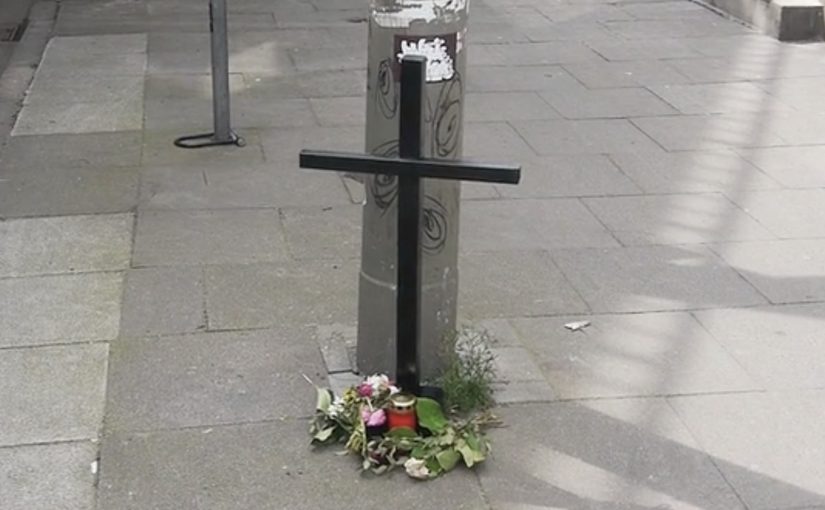
For “Radio Geister” (Radio Ghosts), small radio stations in the shape of wooden death crosses are placed around Hamburg at sites where alcohol-related car accidents had happened. As young drivers approach, these mini transmitters interrupt the signal of popular radio stations. In place of music, the driver hears a radio spot voiced from the perspective of someone who died in a drunk-driving crash.

The mechanic: audio interruption tied to the exact location

The project combines two moves. First, it uses physical markers that already mean something in the real world. The roadside cross. Second, it turns radio into a proximity medium by briefly overriding a station’s signal at the moment a driver is physically passing the place where something irreversible happened.

The radio spots themselves are written as first-person accounts from fatal accident victims, which makes the interruption feel less like an ad and more like a presence.

In European road-safety communication, the fastest way to break through denial is to connect a real place, a real habit, and a real consequence into one unavoidable moment.

Why it lands

This is a stronger road-safety intervention than a conventional awareness spot because it weaponizes context. The message does not arrive while someone is “in awareness mode.” It arrives while they are driving, listening to the stations they actually use, in a location that proves the stakes. The interruption is also proportionate. It is brief, but it is intrusive enough to create a jolt, which is exactly what complacency needs.

Extractable takeaway: If you need to change risky behavior, deliver the warning inside the behavior, not around it. Tie it to a specific place and a familiar channel, and the mind cannot file it away as generic advice.

What the campaign is trying to change

The framing used in campaign write-ups is stark. “One out of eleven deaths caused by car accidents has to do with drinking and driving.” Whether or not you accept the exact ratio, the creative intent is clear. Replace abstract statistics with a felt experience that young drivers will remember the next time they consider driving after drinking.

The real question is not whether young drivers know the rule, but whether the warning can reach them inside the exact driving moment when denial still feels safer than restraint.

What road-safety campaigns can steal from this

  • Use the environment as proof. A crash site is a more credible media placement than any billboard.
  • Interrupt the comfort loop. If the risky habit is paired with entertainment, break the entertainment briefly.
  • Write from a human perspective. First-person voice makes consequences feel immediate, not theoretical.
  • Keep it simple, keep it sharp. One moment of shock can beat a long lecture.

A few fast answers before you act

What is “Radio Geister” (Radio Ghosts)?

It is a road-safety awareness project that places cross-shaped mini transmitters at crash sites to interrupt popular radio stations with warnings voiced from the perspective of drunk-driving victims.

What is the core mechanic?

Location-triggered audio interruption. As drivers pass the crash site, their radio station is briefly overridden by the campaign message.

Why use radio for this instead of posters or video?

Because radio is already in the car, already on, and already trusted as a companion. The message arrives in the exact medium the driver is using in the moment that matters.

Why is the crash-site placement so important?

The location turns the warning into evidence. It signals that this happened here, to someone real, not in a hypothetical scenario.

What is the transferable lesson for behavior-change campaigns?

Do not ask people to imagine consequences later. Insert consequences into the live context where the decision is being made.
Volkswagen: Talking Newspaper Ad

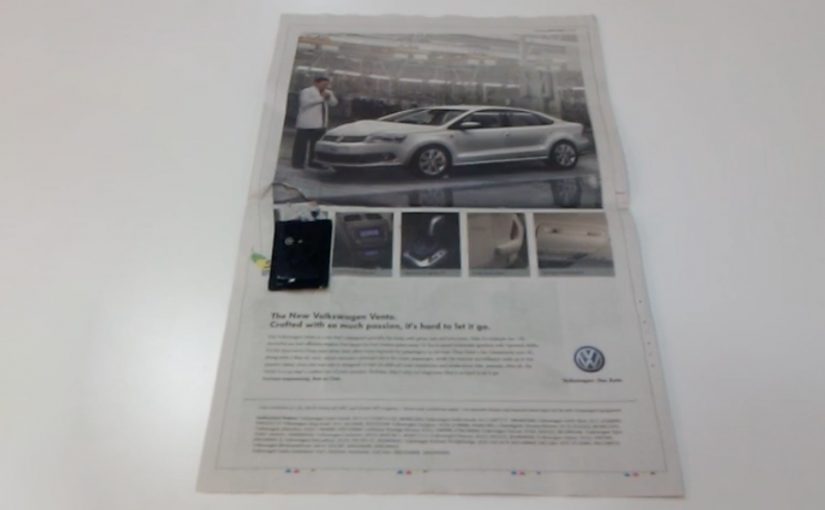
In India, Volkswagen has created a “talking” press ad that makes a newspaper behave like a greeting card. Reports described it as one of the most talked about topics of the day on Facebook and Twitter, because the ad does something print is not supposed to do. It speaks.

If you bought the Times of India edition carrying the special wrap, you would have seen a clutter-breaking execution with a built-in audio module. When you open the newspaper, a light-sensitive sensor acts like a switch and the message starts playing. Fold the paper and the audio shuts off.

The activation is widely reported as part of Volkswagen’s launch push for the Vento, executed at massive scale in India’s daily press.

Print that behaves like a device

The genius here is not the audio file. It is the interface. Open equals on. Close equals off. That single rule makes the experience feel magical, because it requires no instructions and no “tech literacy”. The paper itself becomes the power button.

It also creates a physical moment of surprise in an environment that is normally predictable. You expect ink. You do not expect a voice.

In mass-circulation newspaper markets, turning a silent medium into a sensory one is a reliable way to earn attention, as long as the mechanic is instant and self-explanatory.

Why this spread so fast

The format does the distribution work. People do not share “a new car ad”. They share “my newspaper started talking”. That is the difference between a message and a story.

Extractable takeaway: If the mechanic can be demonstrated in a repeatable loop, the audience becomes your distribution by showing it to other people.

It also turns the reader into a demonstrator. Once you discover it, you want to show someone else by repeating the action. Open. Close. Open again. That loop is built for office desks, breakfast tables, and social feeds.

What Volkswagen is really buying

The business intent is to make “arrival” unmissable. A new model launch needs attention in a crowded category, and this format forces a moment of engagement even if someone is only half-reading the paper.

The real question is whether your format makes the story self-propagate before you pay for reach.

This pattern works when the surprise is tightly coupled to the product story you want retold, not just the novelty of the mechanic.

It also signals “German engineering” through the medium itself. The ad does not just claim innovation. It performs it.

What to steal from a talking newspaper

  • Build a one-rule mechanic. A one-rule mechanic is a single on and off trigger people can explain and repeat in one sentence.
  • Make discovery physical. The more “showable” the action, the faster it spreads.
  • Let the medium carry the proof. If you are selling engineering, make the communication feel engineered.
  • Design for repeat demonstration. A loopable experience gets re-played and re-shared.

A few fast answers before you act

How does a “talking newspaper” ad work?

A small audio module is attached to the printed wrap or page. A light-sensitive sensor detects when the paper is opened and triggers playback. Closing or folding the paper stops the audio.

Why is this more effective than a normal print ad?

Because it forces a moment of attention through surprise, and it creates a story people repeat. The format itself becomes the message.

What kind of campaign is this best suited for?

Launch moments, announcements, and “new arrival” messaging, where the job is to break through clutter and get people talking immediately.

What is the biggest risk with sensory print executions?

Annoyance. If the audio is too loud, too long, or hard to stop, the novelty flips into irritation. The on and off behavior must feel fully under the reader’s control.

What should you measure if you run something like this?

Earned mentions, correct retelling of the mechanic, and immediate brand linkage to the intended message. If people talk about the talking paper but forget the brand, you paid for novelty, not impact.