
Porsche: Interactive Hologram Print Ad

Porsche: Interactive Hologram Print Ad

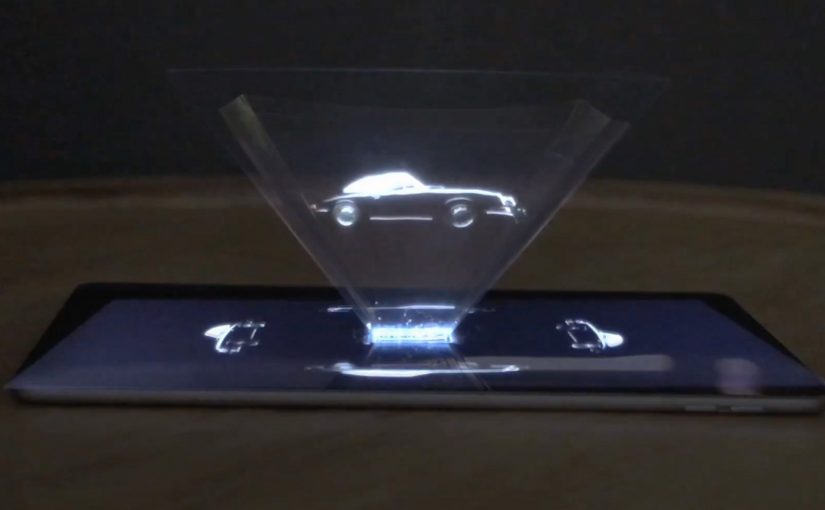
To launch its latest 911, Porsche created a print ad that behaves like a device. Working with agency Cramer-Krasselt, Porsche placed a small acetate sheet into Fast Company’s April issue, turning a magazine spread into a build-it-yourself prism and an interactive “hologram” experience. In this context, “hologram” refers to a prism illusion created from tablet-screen content.

The execution ran as a four-page spread inserted into around 50,000 copies, complete with assembly directions. Porsche billed it as the world’s first interactive hologram print ad.

When a magazine page turns into a viewing tool

The mechanic is the whole point. You fold the acetate into a small prism, place it on top of a tablet, then use the screen content to create the floating 3D-style illusion inside the prism. Print does not “show” the car. Print enables the car to appear.

That shift matters. Instead of asking a reader to imagine innovation, the ad makes them assemble it, which turns curiosity into action.

In premium automotive marketing, making print behave like a device is a fast way to earn attention from audiences who think they have seen every format.

Why the prism matters more than the hologram

The hologram effect is a spectacle, but the prism is the message. It signals precision, engineering, and fascination through the act of building. It also gives the reader a reason to keep the insert, show someone else, and replay the experience, which is exactly what print needs when attention is scarce. The real question is whether the build step makes “innovation” feel earned rather than claimed.

Extractable takeaway: If you want a print unit to signal modernity, make it an enabling tool the viewer assembles, so the interaction itself becomes the proof.

What Porsche is really buying

The business intent is to make a high-end model launch feel as advanced as the product story. A conventional print page can carry features and beauty. This format carries a proof point. Porsche can credibly say, “We pushed the medium,” and that halo transfers to “we pushed the car.”

This is a smart launch move because it turns medium innovation into a product halo without adding more copy.

Steal this print-as-device pattern

  • Make the reader do one small action. Folding beats scanning when you want ritual, not convenience.
  • Let print enable the experience. The page becomes the trigger, not the canvas.
  • Keep the rules idiot-proof. If assembly fails, the entire idea fails.
  • Use scarcity and selectivity. A targeted drop can feel more premium than mass coverage.

A few fast answers before you act

What is an “interactive hologram print ad”?

It is a print ad that includes a physical component, in this case an acetate prism, that turns a tablet screen into a hologram-style viewing effect. The print unit is the enabling tool.

How does the prism create the hologram effect?

The prism reflects and refracts imagery from the screen into a floating illusion. The viewer sees the content “inside” the prism rather than flat on the tablet.

Why put this in a business magazine like Fast Company?

Because the audience expects innovation and is more likely to try a format experiment. It also gives the stunt credibility as “design and tech”, not just “advertising.”

What is the biggest execution risk?

Friction. If instructions are unclear, materials are flimsy, or setup takes too long, people drop the experience before the payoff.

What should you measure for a print-to-device activation?

Completion rate of the build, repeat views, sharing behavior, and brand recall lift versus a standard print placement. The real KPI is whether the mechanic gets retold accurately.
Playable Music Posters: Tap to Hear

Playable Music Posters: Tap to Hear

Borders between media are blurring. Books are being swiped, magazines digitally scrolled and even in print one can today occasionally navigate. So it is no surprise when regular paper posters come to life on being combined with bluetooth, conductive ink, sensors and speakers.

Paper as an interface, not a surface

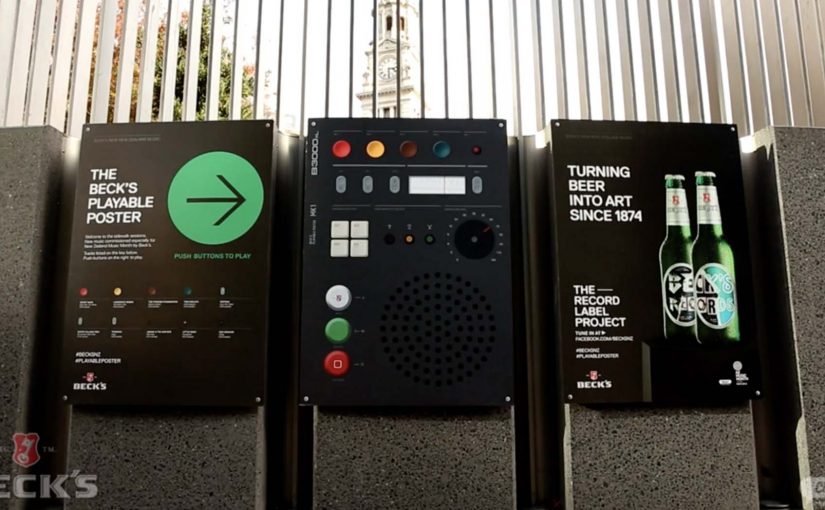
The mechanism is straightforward. Conductive ink turns parts of a poster into touch-sensitive zones. Sensors detect taps, knocks, or touch patterns. Bluetooth and small speakers, or a paired phone, provide the audio output. The poster stops being an image and starts behaving like a controller.

In public retail and event environments, touch-based posters only work when people feel safe and permitted to interact.

In consumer marketing and live environments, interactive print means print that senses touch and triggers a digital response. It is a way to turn passive out-of-home into a touchpoint that behaves like a device.

Beck’s Playable Poster

Looking for an innovative way to mark New Zealand’s Music Month, Beck’s partnered with Shine to design a playable poster. Using conductive ink and speakers the posters were made playable with a simple tap of the finger.

The Sound of Taste

Herb and spice brand Schwartz is all about flavour. So to dramatise flavour which was invisible and silent, they got print tech collective Novalia and ad agency Grey London to collaborate on an interactive poster. The poster used conductive ink to turn the surface area of the paper into an interactive interface that also connected to the viewers smartphone to deliver a richer experience.

Change the tune

Agency Republic from UK created a poster with an embedded sensor which when knocked changed the song being played on the agencies shared sound system.

Why these work: the demo happens in your hands

Each example keeps the interaction legible. Tap to trigger sound. Touch to explore flavour as audio. Knock to skip a track. The poster does not ask people to learn a new behavior. It hijacks an existing one, touching a surface, and rewards it instantly.

Extractable takeaway: When you want print to feel alive, make one obvious gesture trigger one immediate reward, and let the brand message ride on that moment of viewer control.

The real question is whether the interaction earns enough memorability to justify the added production. If the payoff is not instant and on-message, do not build it. Because the audience causes the outcome with a simple touch, the message sticks.

Practical patterns for interactive print

  • One interaction, one reward. Do not overload the surface with too many modes.
  • Make the “how” obvious. A tap zone, a knock cue, a simple instruction. Then deliver instantly.
  • Use phones as infrastructure. If pairing adds depth, let the phone do what paper cannot, audio, saving, sharing.
  • Design for public confidence. People will only touch a poster if it feels safe, clean, and socially acceptable.

A few fast answers before you act

What is “conductive ink” doing in these posters?

It creates touch-sensitive paths on paper, so taps or touches can be detected and mapped to actions like playing audio.

Do these posters need special printing like QR codes?

They still require specialist production, but the interaction can be integrated invisibly into the design. The poster itself becomes the control surface rather than carrying visible codes.

Why add Bluetooth to print?

Bluetooth allows paper to trigger sound through a phone or external speaker, which is essential when the content is audio or when you want richer layers than print can carry.

What makes an interactive poster feel “worth it” to a passer-by?

Immediate payoff and low friction. If the result is instant and satisfying, people will try it. If setup or pairing is slow, they walk past.

Where does this format fit best?

In environments where people have dwell time and curiosity, festivals, transit hubs, retail windows, office interiors, and brand experiences where interaction is socially normal.

Coca-Cola: FM Magazine Amplifier

Coca-Cola: FM Magazine Amplifier

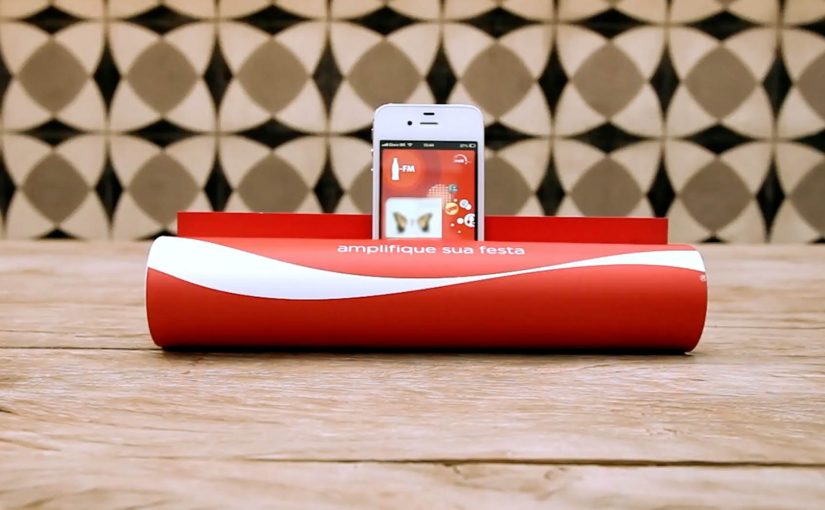
Coca-Cola to promote its FM app in Brazil allowed readers of the Capricho magazine to simply roll up the magazine and transform it into a portable amplifier for their iPhones. All the readers had to do was insert the iPhone into the spot indicated and tune into the Coca-Cola FM application. By “portable amplifier” here, I mean passive acoustic amplification from rolled paper, not electronics.

Why this is clever

The idea turns print into a functional accessory. No electronics. No QR-code dependency. Just smart physical design that rewards curiosity and makes the app the natural next step. Because the rolled magazine forms a simple acoustic horn, it directs the phone’s speaker output and makes the sound feel louder right away.

Extractable takeaway: When a piece of media becomes a working object, the “ad” turns into a demo and the digital step feels inevitable.

  • One simple action. Roll the magazine, insert the iPhone, hit play.
  • Instant utility. Louder sound is a real, immediate benefit.
  • Media becomes product. The magazine is not only a channel. It is the device.

In global consumer brands, analog-to-mobile bridges like this help when you need an obvious path into an app without adding new tech.

What to learn from it

This is a strong reminder that “mobile activation” does not always need a screen-first mechanic. When you can create a physical trigger that is obvious and satisfying, you reduce friction and increase shareability. People demonstrate it to others because it is surprising, and because it works.

The real question is how to make the next mobile step feel like a continuation of what people are already doing in the moment.

The strongest activations put physical utility first and let the app be the immediate follow-on.

  • Start with utility. Give people a benefit they can feel instantly, then invite the app as the next step.
  • Design one obvious move. Keep the interaction to a single action people can copy and demonstrate.
  • Make it easy to show. If it reliably “works”, people will hand it to someone else and replay the moment.

A few fast answers before you act

What is the Coca-Cola FM Magazine Amplifier?

It is a Capricho magazine execution in Brazil designed to be rolled into a tube that passively amplifies iPhone audio, used to promote the Coca-Cola FM app.

Why does a paper amplifier work at all?

The rolled shape acts like a simple acoustic horn, directing and concentrating the phone’s speaker output so it sounds louder.

What makes this effective as an app promotion?

The app is not advertised as a feature list. It is experienced. The physical utility creates a reason to open the app immediately.

What is the transferable pattern?

Turn media into a usable object, then connect that object to a single, obvious mobile behavior that completes the experience.