
Nissan NISMO Watch

To say the smartwatch industry is on the verge of exploding would be an understatement. Consumer electronics companies and chip makers are not the only players entering the wearable tech space. Nissan recently announced it is joining the fray too, with what it bills as the first smartwatch concept to connect the car and driver.

There are already a number of smartwatches on the market, including Pebble, i’m Watch, Sony SmartWatch 2 and Samsung Galaxy Gear. But out of all of them, this is the coolest looking and it actually maps to a real use case for Nissan performance fans.

Nissan is scheduled to show off the device, dubbed the Nissan NISMO Watch, at the Frankfurt Motor Show. From the video it looks pretty awesome, so I cannot wait to see it when I visit the Frankfurt Motor Show next week.

What the NISMO Watch is trying to do

Nissan positions the watch as a bridge between driver and car. The concept is designed to connect via a smartphone app using Bluetooth Low Energy, a low-power wireless connection, and surface data that drivers and track-day fans care about, such as average speed and fuel consumption, plus broader vehicle telematics, meaning sensor and usage data from the car, and performance information.

It also leans into biometrics. The concept includes a heart rate monitor, framing the watch as a way to understand not only the car’s performance, but the driver’s state too.

In automotive performance culture, wearable concepts like this are as much about brand signaling as they are about immediate product rollout.

Why this is a smart brand move

NISMO is Nissan’s performance identity. A watch is a compact, always-visible object that can carry that identity beyond the car itself. If you can make “performance data” feel personal and wearable, you turn a brand into a daily habit, not only a purchase decision.

Extractable takeaway: When your differentiator is performance data, make it personal and habitual by packaging it as something people wear between driving moments.

The concept also stretches beyond driving. Nissan’s own materials describe a “social performance” layer, where the watch can track activity across major social networks. Even if that is more provocative than practical, it makes the point: the watch is meant to be a connected lifestyle object, not only a dashboard mirror.

The real question: usefulness vs distraction

The real question is whether this becomes useful insight or a new source of distraction. Anything that surfaces data while driving needs restraint. The best version of this idea is “track-day and post-drive insight”, not “more screens in motion”. If the watch becomes a reason to look away from the road, the concept backfires.

Steal-worthy moves for performance-product marketers

  • Export the benefit into a new object. If your differentiator is hard to demo, move it into something people can touch and wear.
  • Combine machine data with human data. “Car telemetry plus biometric state” is a stronger story than either alone.
  • Make the design do half the selling. If it looks like performance gear, people will want to try it before they understand the spec sheet.
  • Keep the experience context-safe. Design interactions for before and after driving, not during critical moments.

A few fast answers before you act

What is the Nissan NISMO Watch?

It is a smartwatch concept Nissan unveiled for its NISMO performance brand, positioned as a way to connect driver and car by showing vehicle performance data and driver biometric data.

How does the watch connect to the car?

Nissan’s release describes connecting via a smartphone app using Bluetooth Low Energy, so the watch can receive telemetry and performance information.

What kind of data does it show?

Reported features include average speed and fuel consumption, access to vehicle telematics and performance data, and biometric capture via a heart rate monitor.

Why would an automaker build a smartwatch concept?

Because it signals innovation, extends the brand into daily life, and creates a tangible way to talk about connected-car data and performance identity beyond the vehicle.

What is the biggest risk with wearables tied to driving?

Distraction. Any design that encourages glances during driving can be unsafe, so the value needs to skew toward track use and post-drive insights.
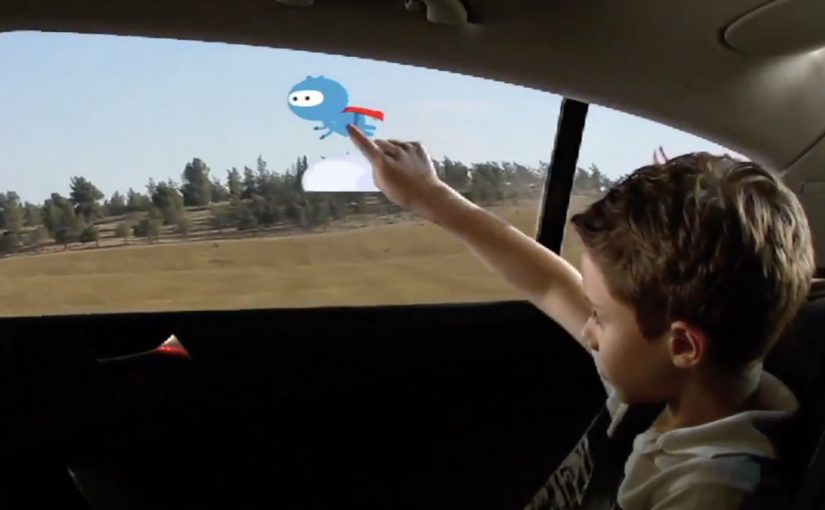
Windows of Opportunity: Smart Car Windows

Got backseat boredom? DVD players and Game Boys are so five years ago, but a concept in rear-seat entertainment that uses the windows themselves could replace squirming and snoozing with interactive scribbling, sweeping, and pinching.

General Motors Research and Development put up a challenge to researchers and students from the Future Lab at Bezalel Academy of Art and Design in Israel. The task was to conceptualize new ways to help rear-seat passengers, particularly children, have a richer experience on the road.

The outcome is shown below, even though GM is described as having no immediate plans to put this smart glass technology into vehicles. Here, “smart glass” means the window can act as a display surface and detect touch or gestures.

When the window becomes the interface

The mechanism is simple to grasp. Treat the rear side window as a transparent display surface, then add touch and gesture interaction so passengers can draw, play, and manipulate content directly on the glass while still looking out at the world passing by. Because it is the same surface passengers already look through, the interaction stays outward-facing rather than becoming another head-down screen.

In family car journeys, rear-seat attention is a hard constraint, and experiences that keep kids engaged without isolating them from the ride reduce friction for everyone.

What the brief is really asking for

This is not “more screens”. It is a different relationship between passengers and their surroundings. The concept is described as using the outside view as the canvas. Instead of escaping the trip, you interact with it.

The real question is whether you can turn the outside world into content without disconnecting passengers from the journey.

Why it lands

The idea feels fresh because it upgrades a dead surface into something active without adding another device to hold or another head-down screen to stare at. It also creates a shared backseat dynamic. Multiple passengers can point, draw, and react together, which changes the feel of long trips. This is the right direction for in-car entertainment because it replaces device-based distraction with shared, context-linked play.

Extractable takeaway: The best in-car entertainment does not only distract. It connects passengers to the context they are already in, and makes the journey itself part of the experience.

What GM is buying by running a concept challenge

Even without production intent, the exercise is useful. It expands the idea space around “smart glass” and passenger experience, and it generates prototypes and interaction patterns that can later inform other interfaces, materials, and interior design decisions.

Practical steals for smart-glass passenger UX

  • Use the environment as content. Overlay and interact with what is already outside rather than inventing a separate world.
  • Design for low instruction. If it cannot be understood in seconds, kids will abandon it and parents will ignore it.
  • Favor shared play. Multi-user interactions create calm through engagement, not through isolation.
  • Keep interaction lightweight. Short loops beat long missions in a moving vehicle.
  • Prototype early. Concepts like this live or die on latency, glare, and ergonomics, not on storyboard polish.

A few fast answers before you act

What is “Windows of Opportunity” in one sentence?

It is a GM concept project that turns rear side windows into interactive “smart glass” displays so passengers can draw, play, and explore during the ride.

Why use windows instead of adding more screens?

Because windows are already where passengers look. Turning them interactive can keep attention outward and shared, rather than head-down and isolated.

What makes this feel useful for families?

It targets the real pain point, keeping children engaged on long journeys, while preserving a sense of connection to the trip and to each other.

What are the biggest practical risks?

Glare and readability in daylight, touch accuracy on glass, latency, durability, and avoiding distraction for the driver through reflections or overly bright visuals.

What would you measure in a pilot?

Engagement duration, repeat use, whether it reduces restlessness and conflict, and whether it avoids unintended driver distraction in real driving conditions.