
Lexus LFA: Scrollbroaaaar

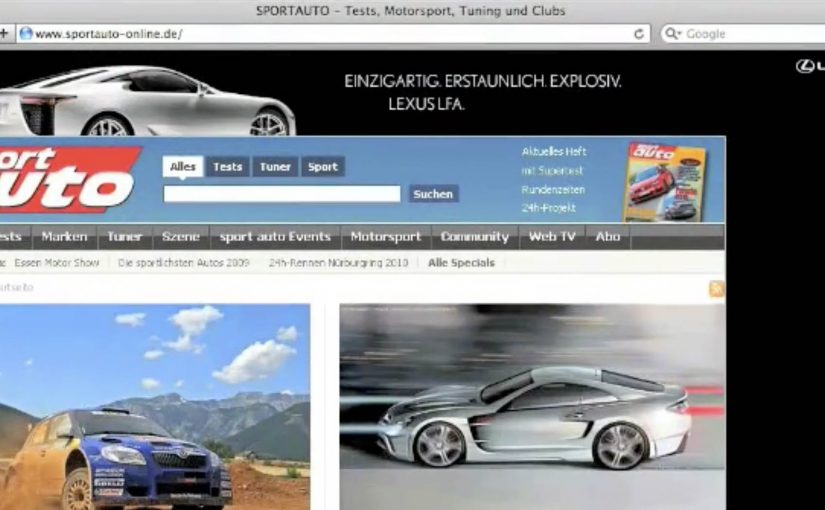
Saatchi & Saatchi Germany has created a clutter-breaking execution for the Lexus LFA on the Sport Auto website by turning a familiar interface element into the ad itself.

When the ad is the interface

The idea is disarmingly simple. Instead of fighting for attention inside a banner slot, the execution is described as a custom scrollbar experience on Sport Auto, shifting the user’s focus to the one thing everyone touches when they move through a long page.

How “Scrollbroaaaar” works

Mechanically, the work hijacks the expected behavior of scrolling and reframes it as a brand moment for a high-performance car. The name “Scrollbroaaaar” signals the point. Here, “Scrollbroaaaar” means the scrollbar itself becomes the branded ad unit. Scrolling becomes a sensory cue for speed and engine attitude, not just a way to navigate content.

In performance automotive marketing, using interface behavior as media can outperform traditional display formats because the user triggers the moment themselves.

The real question is whether you can turn a default UI habit into branded sensation without stealing time from the content.

Why it lands as clutter-breaking

This works because it does not ask for permission. It meets the user inside muscle memory. A scrollbar is invisible until it changes. The second it does, attention spikes. That moment of surprise is the whole value exchange.

Extractable takeaway: If you can attach your product truth to a UI habit the audience already performs, you get attention without demanding a click.

What the brand is really buying here

Beyond impressions, the intent is distinctiveness. Lexus gets a “did you see this” story that is native to the environment where car enthusiasts already browse. The experience also borrows the credibility of a specialist publisher context while keeping the brand in control of the punchline. This is a smarter bet than buying another standard display slot and hoping anyone notices.

What to steal for your own digital creative

  • Make the interaction the media. If a user action triggers the payoff, recall tends to be higher than passive formats.
  • Choose the smallest possible hack. One altered UI element can be more powerful than a page full of widgets.
  • Design for surprise, then exit fast. The novelty works best when it is immediate and does not overstay.
  • Match the mechanic to the product truth. Speed, sound, and control cues belong to a halo performance car.

A few fast answers before you act

What is “Scrollbroaaaar” in one line?

A web takeover that turns the page’s scrollbar into the ad, so scrolling itself becomes the Lexus LFA moment.

Why is it considered clutter-breaking?

Because it bypasses banner blindness by changing a core interface behavior users already rely on, creating instant surprise and attention.

What is the main creative principle behind it?

The principle is viewer control. The user’s action triggers the brand payoff instead of asking them to click away from what they came to do.

When should you use this pattern?

When you have a simple product truth that can be expressed through a single behavior change, and you want memorability more than message density.

What is the biggest risk with interface-as-ad?

If the mechanic slows the page, breaks expected controls, or feels like it traps the user, the surprise turns into frustration and the brand pays for it.
ŠKODA Superb Estate: Remote-Controlled Boot

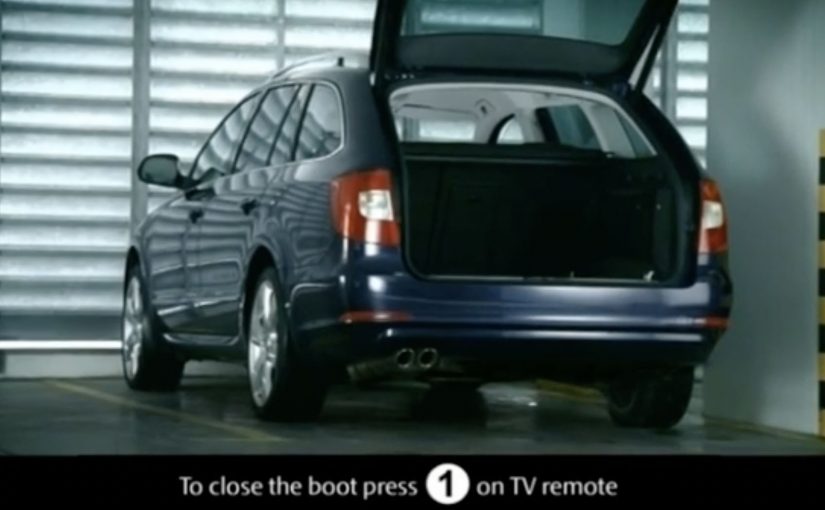
A first-of-its-kind TV commercial lets viewers experience the remotely controlled boot of the ŠKODA Superb Estate. Instead of watching a feature, you try it from your sofa.

How the TV mechanic makes the feature feel real

As described in campaign write-ups, the idea took advantage of a Polish viewing habit: TVP1 sits on channel 1 and TVP2 on channel 2. Two complementary spots were aired simultaneously, so switching between channels with the remote effectively becomes the “control” that opens and closes the boot on screen. Here, the “TV mechanic” is the paired, simultaneous airing that turns a familiar remote action into a visible open/close response.

In European automotive marketing, turning a feature demo into a familiar at-home interaction is a fast way to convert passive viewing into remembered proof.

The real question is whether you can turn a convenience claim into something the audience actively triggers.

Why this lands better than a standard feature film

The creative does not ask people to understand the engineering. It makes them feel the benefit. Remote-controlled boot becomes “I can operate this without effort,” because the viewer’s own hand is already doing the controlling. It also makes the demo inherently retellable. People do not describe it as “an electrically operated tailgate.” They describe it as “I controlled the boot with my TV remote.”

Extractable takeaway: If you can map a product benefit to an everyday action people already perform, the benefit shifts from explanation to felt experience.

What the brand is really buying

This is not just awareness. It is embodied comprehension. In other words, the viewer takes a small action, sees a result, and the feature moves from claim to experience. That shift is valuable when the product benefit is convenience, because convenience is easiest to believe when you have just felt it.

Steal this TV-remote feature demo pattern

  • Make the audience perform the benefit. If the action is theirs, the memory sticks longer.
  • Use an existing habit. Channel switching is already learned. No instruction burden.
  • Keep the mapping literal. One action. One visible response. No abstraction.
  • Design for one-sentence retell. If people can explain it instantly, they will share it.

A few fast answers before you act

What is the core idea of this commercial?

To let viewers “try” the Superb Estate’s remote-controlled boot from home by turning a TV viewing action into a simulated control action.

Why use two channels at the same time?

Because switching channels is a natural remote-control behavior. Running paired spots simultaneously makes that behavior feel like operating the feature.

What makes this different from a normal product demo?

The viewer is not only watching. They are causing the on-screen change, which makes the convenience benefit easier to believe.

What kind of features work best with this pattern?

Features with a clear, binary outcome that can be shown instantly, open versus closed, on versus off, locked versus unlocked.

What is the biggest risk when copying this approach?

If the interaction mapping is unclear, people miss the trick and the work becomes just two confusing ads. The “how” must be obvious within seconds.

Volvo C70: The Wife-Swapping Parody Spot

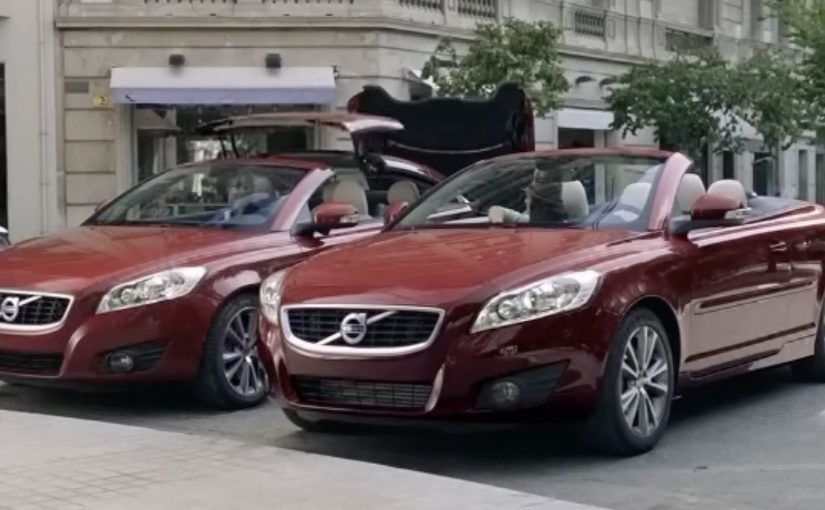
Volvo’s new C70 comes with an available “wife-swapping feature”. That is the joke this video runs with, presented in the familiar language of a premium car commercial, then pushed into outright parody.

The gag: take the feature list seriously, then break it

The mechanism is simple. Use the polished grammar of an automotive feature demo, then introduce one outrageous “benefit” that clearly does not belong. The contrast does the work. It is recognizably a car ad in format, and obviously not a car ad in intent.

In premium automotive marketing, parody “feature demo” films can be a fast way to generate word-of-mouth when the real product story risks blending into category sameness.

Why it lands as a shareable clip

It is short, instantly legible, and built around one line people can repeat. It also plays on a familiar consumer pattern: most of us have seen enough car advertising to recognize the tropes, so the subversion is easy to process and easy to pass on.

Extractable takeaway: If your category is saturated with similar promises, a single sharp subversion can earn more recall than ten more seconds of conventional feature narration.

What this kind of spoof is really useful for

This is not about explaining the car. It is about attention and memory.

The real question is whether the joke reinforces the brand you want to be remembered for, or just the joke.

Satire can do that well because it gives people a reason to share that is social, humor, surprise, and “you have to see this,” rather than “here is a product message.”

How to borrow the spoof “feature demo” safely

  • Use a familiar format. Parody works best when the audience recognizes the template immediately.
  • Anchor it in one repeatable line. If people can quote it, they can share it.
  • Keep the craft “too good” for the joke. High production language makes the twist hit harder.
  • Know your boundary. Satire travels fast, but it can also polarize. Decide what you will not joke about.

A few fast answers before you act

What is this Volvo C70 video actually doing?

It uses the structure of a premium car commercial, then inserts an absurd “feature” to turn the entire piece into satire.

Why does parody often outperform a straight product film online?

Because the share incentive is emotional and social. People share what makes them laugh or surprises them, not what feels like a brochure.

What is the main creative risk with spoof ads?

Confusion and brand harm. If the joke reads as mean-spirited or unclear, people remember the controversy instead of the point.

When is parody a bad idea?

When your product requires trust-first communication, or when the joke could be interpreted as targeting a group of people rather than a marketing trope.

What is the transferable lesson for marketers?

Format hacking. Start with a template the audience already understands, then flip one element to create surprise and talkability.