IKKI.be: The Crying Invoice

IKKI.be: The Crying Invoice

USG People, one of the world’s biggest outsourcing companies, launched ikki.be. A portal for freelancers in search of new projects. The mission was to build awareness among freelancers and get them to sign up.

What they learned is simple. One of a freelancer’s biggest concerns is getting paid on time. Which they usually do not. So instead of another feature-led pitch, they created a physical reminder that lets freelancers “recall” the accounts department of late payment, with a little smile. Here, “recall” means prompting the payer to act by making the delay impossible to ignore.

An invoice that complains for you

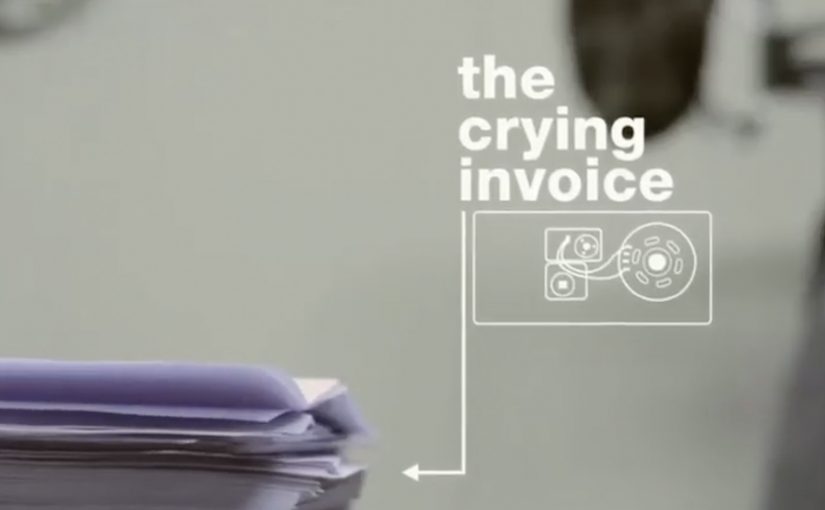
The execution is the product truth turned into a prop. A mailed invoice that starts to cry when the envelope is opened. Case write-ups describe the trigger as a simple sensor reacting when the invoice is exposed, so the sound becomes unavoidable in the moment the payment decision is made. That matters because the trigger turns a forgettable invoice into an unavoidable emotional cue at the exact moment payment is being processed.

In European B2B lead generation for freelance marketplaces, the fastest attention often comes from solving a cash-flow anxiety rather than talking about platform features.

Why it lands

It lands because it reframes a painful, familiar workflow into a moment of social pressure that feels playful rather than aggressive. The invoice does the awkward part, and the person opening it becomes the one who has to explain why it is “crying”. That flips the emotional burden away from the freelancer chasing and onto the payer delaying.

Extractable takeaway: If your audience shares a recurring frustration, build a small object or mechanic that creates a socially visible cue at the exact decision point, then let that cue do the persuasion instead of your copy.

What the business intent really is

This is awareness built on relevance. It ties ikki.be to a pain point that every freelancer recognizes immediately, and it makes the brand memorable through a single, repeatable story people will retell. This is the right kind of B2B awareness work because it earns memorability by dramatizing a real freelancer pain instead of dressing up a feature list. The real question is how to make your brand useful at the moment the pain is felt, not just visible before it happens.

What to borrow from this payment-pressure idea

  • Start from a shared anxiety. Build the message around what keeps your audience up, not what your roadmap shipped.
  • Move the moment to where decisions happen. Here, the reminder appears at envelope-open time, not in a banner.
  • Use humor as a pressure valve. Playful discomfort can be more effective than aggressive escalation.
  • Make it explainable in one line. “It cries when you open it” is instant word of mouth.

A few fast answers before you act

What is “The Crying Invoice”?

A physical invoice that audibly cries when opened, designed to nudge late payers and spark conversation around paying freelancers on time.

Why does this work better than a standard awareness ad?

Because it appears inside a real payment workflow and turns a private delay into a socially noticeable moment, without needing confrontation.

What problem is the campaign solving for ikki.be?

It makes the portal relevant by anchoring it to the most common freelancer concern. Getting paid on time.

What is the main risk with this approach?

If the gimmick feels mean-spirited or humiliating rather than playful, it can trigger backlash and reduce goodwill.

How can another B2B platform copy the pattern?

Identify the shared operational pain, then create a lightweight intervention that shows up at the decision point and makes the issue easy to talk about.
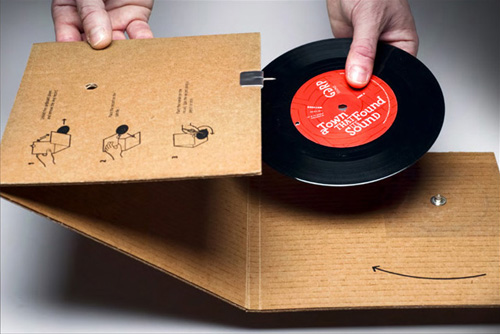
GGRP: Cardboard Record Player Mailer

GGRP: Cardboard Record Player Mailer

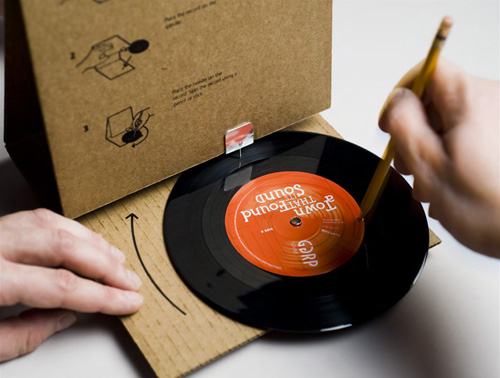
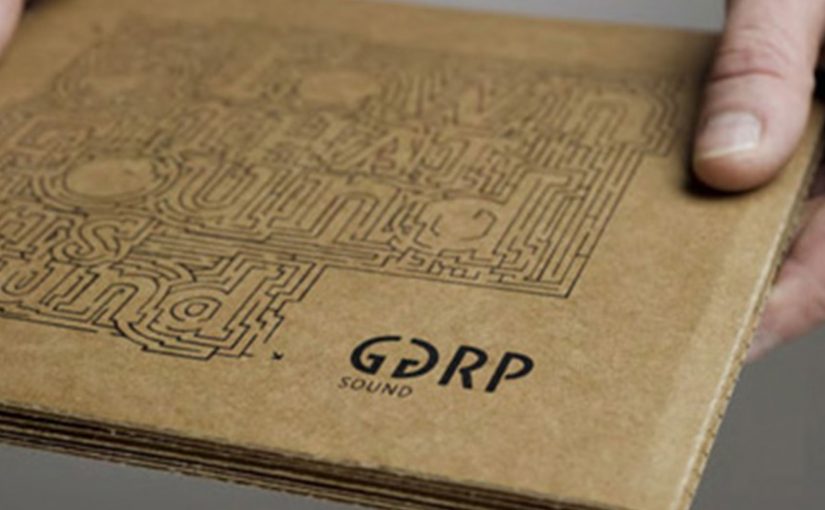
Grey Worldwide in Vancouver created a record player from a piece of corrugated cardboard that folds into an envelope.

GGRP Mailer Open

Once assembled, a record can be spun on the player with a pencil. The vibrations go through the needle and are amplified in the cardboard material.

GGRP Mailer CD

The players were sent out to creative directors across North America as a creative demonstration of GGRP’s sound engineering capabilities.

A demo you can literally feel

This is direct mail that behaves like the product promise. Not a brochure about audio craft, but a physical object that turns vibration into sound in your hands. It creates a moment of discovery before you even think about the brand. Then the brand gets credit for making it work.

How the mechanism does the selling

The sleeve folds into a small phonograph. A pencil becomes the spindle. A simple needle converts the grooves into vibration, and the cardboard body acts as the amplifier. No power, no app, no explanation-heavy setup, just a working proof-of-concept hidden inside a mailer.

Here, proof-of-concept means the mailer itself demonstrates the capability before any sales conversation starts. In B2B creative services, the strongest new-business work is often a tangible demo that turns capability into an experience. Because the recipient has to assemble it and hear it working, the mechanism turns a technical claim into remembered evidence. The real question is whether your outreach proves the craft fast enough to earn a second look.

Why it lands with creative directors

It respects the audience. Creative directors do not need to be told what “sound engineering capabilities” means. They need to feel that the shop thinks differently and executes cleanly. The format also earns time. You do not skim it. You assemble it. That extra time is the real attention premium.

Extractable takeaway: When you sell an invisible craft, build a self-contained artifact that proves it in one minute. The artifact becomes your credibility layer, and your follow-up becomes welcome instead of intrusive.

What this mailer teaches about demo design

  • Make the medium the proof. If it does not demonstrate the promise, it is just packaging.
  • Design for a single “aha”. One clear moment beats multiple clever details.
  • Keep the setup friction low. If it takes instructions to start, the audience drops.
  • Target a specific recipient role. This is built for decision-makers who value craft signals.

A few fast answers before you act

What makes this mailer different from a typical promo piece?

It is not a message about capability. It is a working demonstration that the recipient assembles and experiences immediately.

Why is cardboard the right material choice here?

It is cheap to distribute, easy to fold into a mail format, and it can physically amplify vibration, which makes the “sound craft” claim believable.

What is the main business objective of an object like this?

To create high-quality recall and conversation with a small, high-value target list, rather than broad reach.

What is the biggest execution risk?

If the object does not work reliably, the demo backfires. The entire idea depends on the “it actually plays” moment.

How can other B2B brands apply the same pattern?

Translate your capability into a simple physical demo that proves the benefit without needing explanation, then send it only to the people who can buy.

STIHL: The Self-Tearing Autumn Calendar

STIHL: The Self-Tearing Autumn Calendar

STIHL asked Euro RSCG Germany to develop a business gift promoting its range of leaf blowers. The target audience was international key accounts, and the brief was clear: create something they had never seen before.

Euro RSCG invented an autumn calendar that tears off its “leaves” automatically. The gag is that the calendar behaves like a tree in fall, dropping leaves without you touching it, and making the “clean-up problem” feel immediate and slightly annoying. Exactly the moment where a leaf blower becomes the satisfying solution.

How the product demo is baked into the gift

The mechanism is pure physical storytelling: an object that creates a small mess on schedule. Each day, another leaf falls. Over time, the pile builds. The calendar turns passing time into accumulating clutter, so the product need is not explained, it is experienced.

In B2B product marketing, tactile gifts are most effective when they are not branded trinkets but working demonstrations of the problem the product solves.

The real question is whether your demo makes the problem felt without a salesperson in the room.

Why it lands

It turns a convenience category into felt relief from a recurring irritation, and it does it repeatedly through a daily trigger that keeps resurfacing without loud branding.

Extractable takeaway: B2B gifts perform when they create a recurring micro-problem that mirrors the customer’s real pain, then let the product category be the obvious, satisfying fix.

  • It makes necessity visible. Leaf blowers are often sold as convenience. This calendar reframes them as relief from a recurring irritation.
  • It creates repeated moments, not a one-time impression. A calendar is a month-long touchpoint. The idea keeps resurfacing every day the “leaf” drops.
  • It respects the key-account audience. The gift is novel, engineered, and story-worthy. It earns attention without needing loud branding.

Borrow this mechanic for B2B demos

  • Turn time into a narrative device. Calendars, subscriptions, and scheduled triggers are built for repeat exposure.
  • Create a controlled irritation. A controlled irritation is a small, reversible annoyance that stays playful. The best demos let people feel the problem in a safe, playful way.
  • Make the object retellable. If the recipient can explain it in one sentence, it becomes a story they share inside the company.

A few fast answers before you act

What is the “autumn calendar”?

A calendar designed so its leaf-shaped pages tear off automatically, mimicking falling leaves and creating a small daily mess.

Why does that sell leaf blowers?

Because it dramatizes the nuisance of accumulating leaves and makes the “cleanup solution” feel immediate and obvious.

Who was this made for?

International key accounts, as a business gift intended to be novel and memorable rather than a standard brochure or giveaway.

What makes this a strong example of B2B creativity?

The gift demonstrates the problem through behavior, not messaging. It earns repeated attention through daily interaction.

What is the transferable lesson?

If you can make the pain point show up physically and repeatedly, you reduce the need for persuasion. The demo does it for you.