
Nar Mobile: The Donor Cable

Azerbaijan is often described as having an unusually high incidence of children born with thalassemia, a hereditary blood disorder found across Mediterranean and nearby regions. The illness can require extensive blood transfusions for babies, and hospitals can struggle with shortages of donated blood.

So Y&R Moscow partnered with Azerbaijan cellular network Nar Mobile to re-imagine blood donation for a more digital daily life. Together they created a special wearable bracelet. A donor cable is a wearable charging cable that lets smartphone owners easily donate battery power to another person, and uses that act as a prompt to donate blood.

A wearable that makes donation tangible

The Donor Cable is a charging cable designed as a bracelet. When someone’s phone is dying, you can connect phone to phone and transfer power. The campaign then bridges that familiar “help” moment to a bigger one. Donate blood.

A donor cable is a physical connector that enables one person’s phone battery to recharge another device. The campaign uses that simple transfer as a metaphor for medical donation.

In mobile-first markets, translating “helping” into a familiar phone habit can lower friction for real-world donation behaviour.

Why this lands

This works because it does not start with guilt or abstract altruism. It starts with a small, instantly useful act between two people, then reframes that feeling of helping as the reason to do the harder, higher-impact thing. The bracelet format also keeps the reminder on you without requiring ongoing media.

Extractable takeaway: If you need behaviour change, start with a low-friction action that already feels rewarding, then create a clear bridge and an immediate next step to complete the “real” action while motivation is still warm.

What the numbers are trying to prove

The stronger strategic move here is the bridge from everyday phone help to real blood donation, not the bracelet itself.

The real question is whether the campaign makes the jump from symbolic transfer to actual donation immediate enough to convert intent into action.

Campaign coverage described the donor cables as an instant hit and reported an increase in blood donation of 335%. Treat that percentage as reported performance unless you have a primary measurement source to cite.

What behaviour-change teams should steal

  • Make the metaphor usable. A real action beats a slogan.
  • Put the reminder on the object. Wearable prompts outlast a media flight.
  • Collapse distance to conversion. Pair the story with an easy path to donate.
  • Keep the rule explainable. If it takes a paragraph to understand, it won’t spread.

A few fast answers before you act

What is the Donor Cable?

A wearable charging cable that lets one person transfer battery power to another phone. It is used as a behavioural prompt to encourage blood donation.

Why connect phone charging to blood donation?

The idea uses a clear analogy. A small, immediate “donation” of power makes the bigger act of donating blood feel more approachable, and more top-of-mind.

How does the bracelet change behaviour beyond awareness?

It creates a repeatable micro-action people can perform in public, then links that positive social moment to a concrete next step. Donate blood.

Is the 335% figure a verified metric?

It is presented in campaign coverage as a reported result. If you want it stated as verified, you would need a primary measurement source.

What’s the main risk if you copy this pattern?

If the bridge from the small action to the real action is not immediate, the analogy stays clever but does not convert. The donation step must be easy to find and easy to complete.
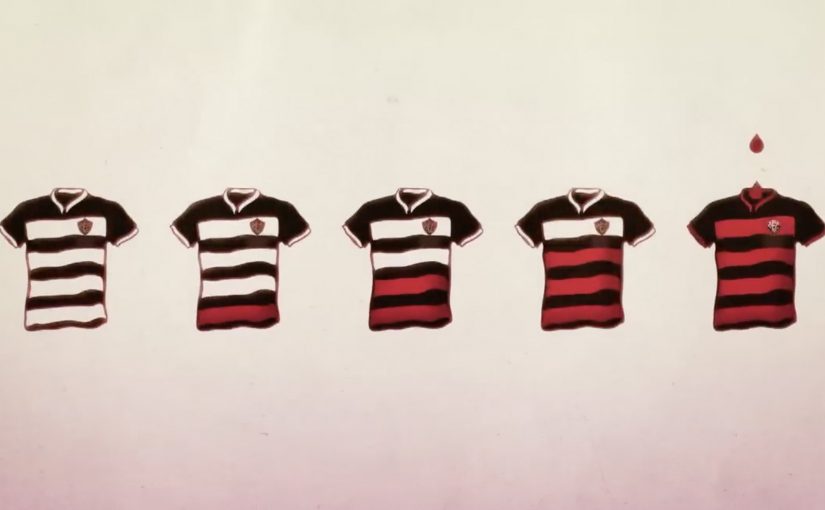
Hemoba and Vitória FC: My Blood Is Red and Black

The state of Bahia was experiencing a shortage of blood. To raise awareness of this problem and increase the blood reserves, Hemoba Foundation (Blood Foundation) in Brazil partnered with Bahia football club Esporte Clube Vitória to run a unique blood donation drive.

For the campaign, the football club changed the stripes of their iconic jersey from red to white. Then over the course of the season as the blood reserves rose, the team slowly changed the white stripes back to the original red.

As a result, the promotion is reported to have helped raise blood donation by 46%.

A club kit that doubles as a public scoreboard

This is a blood drive that refuses to stay in the background. Instead of asking people to donate “because it is important”, it turns the most visible symbol of the club into a live indicator of how the state is doing. This is a stronger behavior-change design than a standard awareness appeal, because the public scoreboard sits inside club identity.

How the stripe mechanic works

The mechanism is one clean promise. Remove the red from Vitória’s shirt, then bring it back only as blood reserves recover. Every step of progress becomes legible in the one place fans naturally look, the team’s colors.

In sports-led community campaigns, changing a core identity asset works because it creates a shared metric that everyone can track without explanation.

Why this lands beyond typical charity messaging

Most donation drives rely on abstract need. This one makes need visible and slightly uncomfortable, because fans are confronted with “missing red” every match week until they act. It also flips motivation from guilt to pride, because the act of donating becomes a way to restore the club’s full identity.

Extractable takeaway: If you need sustained participation, attach the cause to a symbol your audience already protects. Then turn progress into a public, binary signal that updates over time.

What the partnership is really doing

The campaign aligns incentives. The real question is how to turn a one-time act of goodwill into a shared public ritual that people keep joining. Hemoba gets reach and urgency without buying attention in the usual media sense. The club earns meaning and publicity by making its platform materially costly, because it “gives up” part of its kit until the community responds.

What to steal for your next behavior-change campaign

  • Make the metric visible. People act more when they can see progress, not just hear appeals.
  • Use a symbol with real emotional ownership. Identity assets beat posters, because people notice when they change.
  • Turn donation into restoration. “Bring something back” is often more motivating than “add something new”.
  • Design for weeks, not a day. A season-long mechanic sustains attention and creates multiple decision moments.

A few fast answers before you act

What is “My Blood Is Red and Black”?

It is a blood donation campaign in Bahia, Brazil, where Hemoba partnered with Esporte Clube Vitória and used the team jersey’s red stripes as a visible indicator tied to blood reserves.

How did changing the jersey drive donations?

By removing the red stripes and gradually restoring them as reserves improved, the campaign turned blood supply into a public signal that fans could track across the season.

Why does sports identity work for public health?

Because club colors, rituals, and match-week attention are already shared and emotionally charged. The campaign borrows that energy and redirects it into a concrete action.

Why is this stronger than a standard awareness appeal?

Because it does not ask people to care in the abstract. It makes the shortage visible through a symbol fans already watch, defend, and want restored.

What is the transferable principle here?

Make progress tangible. Link participation to restoring a valued symbol, and keep the feedback loop running long enough for people to join when they are ready.