
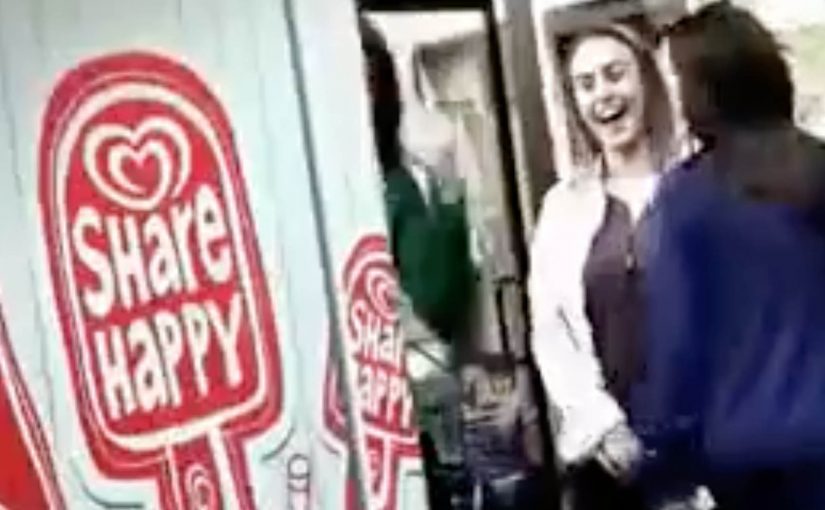
Share Happy Ice Cream Machine

You approach an ice cream machine that asks for a smile. Unilever’s Share Happy installation, developed by SapientNitro, uses facial recognition to reward that expression with free ice cream. The brand’s happiness message becomes something you do before receiving the product.

The idea. Turn a freebie into a moment of happiness

Most giveaways are built for speed. Receive the sample and move on. Share Happy adds a small interaction before the reward. Smile at the machine, let it recognise the expression, and receive an ice cream.

That makes the participant’s expression part of the experience. The product and the action point towards the same brand idea: a small moment of pleasure.

Why this mechanic works

The experience connects a clear action, a visible response and a tangible reward. Facial recognition gives the machine a way to respond to the participant, while the ice cream makes the payoff easy to understand.

The interaction also gives people something to demonstrate and retell. A machine that responds to your smile offers a clearer story than a routine sample handout.

Extractable takeaway: Tie a simple participant action to the brand idea, then make the response immediate and the reward relevant.

Buy interaction, not just sampling

In crowded retail and event environments, a giveaway can attract attention without creating a distinctive brand experience. Share Happy makes the moment of receiving the sample part of the idea.

The commercial question is what that interaction adds. Does it encourage participation, create an enjoyable encounter, or improve recall compared with ordinary sampling? The mechanism gives the brand something to test; those outcomes still need evidence.

A recognised smile is an interaction signal. Participant satisfaction and brand impact need their own measures.

Steal this from the smile trigger

  • Make the action obvious. People should quickly understand what the machine is asking them to do.
  • Connect the action to the brand idea. The smile and the ice cream reinforce the same happiness theme.
  • Keep the payoff immediate. A clear response helps people understand the connection between their action and the reward.
  • Measure the experience as well as the giveaway. Track successful interactions, failed attempts, dwell time and participant feedback alongside dispensing totals.

A few fast answers before you act

What is the Share Happy Ice Cream Machine?

It is Unilever’s smile-activated ice cream installation, developed by SapientNitro. It uses facial recognition to reward a smile with free ice cream.

What triggers the reward?

The machine recognises the participant’s smile and responds with the opportunity to receive an ice cream.

Why is this experiential marketing?

The participant performs the action that brings the brand idea to life. The smile, the machine’s response and the product reward form one encounter.

Where could this format work?

Retail spaces, festivals and events are suitable settings when people have time to participate and the interaction is easy to understand.

What should marketers measure?

Measure successful interactions, dispensing completion, failed recognition attempts, dwell time and participant feedback. Use separate research to assess brand recall or preference.
James Ready: Bar-Ter Campus Tour

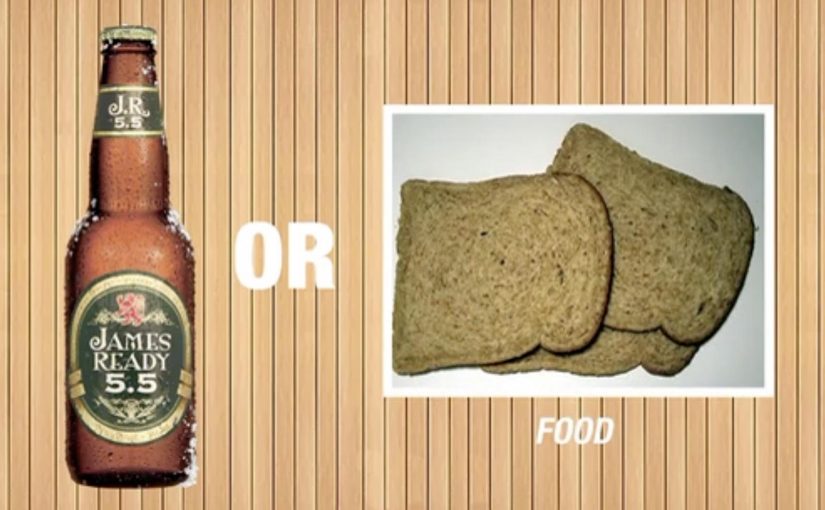
It’s a well-known fact. Students are relatively poor. They have to choose between spending their little money on beer or food, beer or books, and beer or transportation. So Leo Burnett Toronto created The James Ready Bar-Ter Campus Tour. “Bar-Ter” is the campaign’s name for a cap-for-essentials barter mechanic. A way for students to have both. Beer and other necessities.

Students were encouraged to spend their money on James Ready Beer, collect their beer caps, and trade the caps for semi-awesome and useful stuff like detergent, soap, mac n’ cheese, socks and so on.

Beer caps as a campus currency

The idea is disarmingly straightforward. A beer cap becomes a token. Tokens become necessities. Suddenly the brand is not only the thing you buy for a night out, it is also the thing that helps you restock the basics you keep postponing.

Bar-Ter succeeds because it reframes “cheap beer” as “smart trade.” It makes the buyer feel savvy, not broke.

How the Bar-Ter loop works

The loop is simple enough to explain in one breath. Buy beer. Keep caps. Swap caps for stuff you actually need. That simplicity matters because campus promotions only spread when the mechanic is instantly repeatable and easy to tell a friend.

It also builds a visible trail of participation. Caps pile up. People compare counts. The “currency” becomes social proof.

In consumer brands that compete on price and habit, promotions work best when they turn a purchase into a practical ritual people want to repeat.

The real question is whether your promotion creates a repeatable habit or just a one-off spike.

Why it lands with students

Students do not need another discount. They need a way to justify the purchase. Bar-Ter gives them that justification by attaching the brand to everyday utility. The prizes are not aspirational. They are deliberately ordinary, which makes the reward feel honest.

Extractable takeaway: When your audience is cash-tight, utility rewards can justify the purchase better than discounts, because the payoff feels like help, not hype.

There is also a small psychological trick. Collecting caps turns spending into progress. Even if the reward is modest, the accumulation feels like getting somewhere.

What the brand is buying with this promotion

This is not only a giveaway. It is a loyalty habit built on a physical artefact. If you want the cap, you need the brand. If you want enough caps, you need repeat purchase. And because the redemption items are useful, the reward feels earned rather than random.

Industry listings later associated this work with awards recognition, which fits the pattern. A simple mechanic, strong cultural truth, and a clear behaviour change.

Bar-Ter moves worth copying

  • Turn packaging into a token. If the token is already in the product, you lower friction and increase repeat.
  • Reward with utility, not luxury. Useful items make the promo feel like help, not hype.
  • Make progress visible. Collecting is part of the satisfaction. Design the “pile up” effect.
  • Keep the exchange rate legible. If people cannot quickly understand how to win, they will not try.
  • Match the reward to the audience truth. The best prize is the one that feels tailored to their real life.

A few fast answers before you act

What is the James Ready Bar-Ter Campus Tour?

It is a student-focused promotion where people collect James Ready beer caps and trade them for everyday essentials like detergent, soap, mac n’ cheese, and socks.

Why use caps instead of coupons?

Caps are physical proof of purchase that naturally accumulate. They make participation visible and social, and they create a repeat-buy loop without requiring people to track paper discounts.

What makes this kind of promotion feel “smart” rather than cheap?

Utility rewards. When the payoff is something you genuinely need, the purchase feels justified and the brand feels practical rather than desperate.

What’s the biggest risk with token-based promotions?

Redemption friction. If the exchange process is unclear, inconvenient, or understocked, the promotion becomes frustration and the brand takes the blame.

How can a non-beer brand adapt this idea?

Use a built-in product element as the token and exchange it for items that reduce your audience’s everyday pain. The token must be easy to collect and the reward must be meaningfully useful.

Heineken Italy Activation

One of the most sacred moments for a lot of guys is watching football with friends. But as time goes by, that moment is increasingly at risk. So Heineken, with the help of ad agency JWT Italy, decided to remind their audience of what is at stake, right on the evening of a UEFA Champions League match: Real Madrid vs AC Milan.

A prank built around a real tension

The craft here is that Heineken does not try to “own football” with another sponsor message. It stages a situation that dramatizes the threat to the ritual, then resolves it in a way that feels like a reward for fans.

How the activation works

In simple terms, this is an activation. That is an in-person experience designed to trigger conversation, participation, and earned sharing, not just impressions.

The setup plays on a familiar dynamic. Partners and friends pull football fans away from the match with an alternative plan, then the brand flips the evening by revealing the game and turning the “loss” into a surprise watch party moment.

In European football culture, match nights are one of the last reliably shared rituals. Brands that win here do it by protecting the ritual, not interrupting it.

Why it lands

This works because it is built on empathy. It starts with a truth about modern life and competing plans, then turns the brand into the friend who restores the moment. It is entertainment with a clear social payoff, not entertainment for its own sake. The real question is whether your brand can credibly protect the ritual instead of borrowing its attention.

Extractable takeaway: If you can turn a threatened shared moment into a felt relief, the brand earns a role people want to talk about, not just a logo people saw.

A useful way to phrase the mechanism is this. If you can make people feel you defended their time with their friends, they will remember you differently than a logo on a perimeter board.

Business intent: earn affinity, then earn retell

Heineken is not just chasing attention. It is buying a story that people want to retell the next day. That story carries the positioning in a way a standard spot cannot. Heineken. Made to entertain.

Steal this for ritual-protecting activations

  • Start with a threatened ritual. If the audience feels a real loss, the payoff lands harder.
  • Make the brand the rescuer, not the interrupter. The reveal should feel like relief, not a sales pitch.
  • Design for retelling. If a friend cannot explain it in 20 seconds, it will not travel.
  • Let the product stay in the background. The memory is the asset. The label is just the signature.

A few fast answers before you act

What is an “activation” in marketing terms?

An activation is a designed experience, often live or in the real world, that drives participation and sharing. Its output is conversation and earned media, not only paid reach.

Why do ritual-based activations work so well?

Because rituals are emotionally protected. If a brand can credibly defend a ritual, it earns affinity that is hard to replicate with standard advertising.

What is the core mechanism in this Heineken example?

Create a credible threat to a valued moment, then flip it into a surprise payoff where the brand is the enabler of the restored experience.

What needs to be true for a prank activation to feel positive?

The audience must feel safe and rewarded at the end. The reveal has to resolve the tension quickly, and the outcome must be better than what they expected.

How do you measure success for this kind of work?

Look for retell signals and intent signals. Retell signals are evidence people repeat the story to others. Intent signals are evidence people take a next step, like searching, visiting, or asking where to buy.