
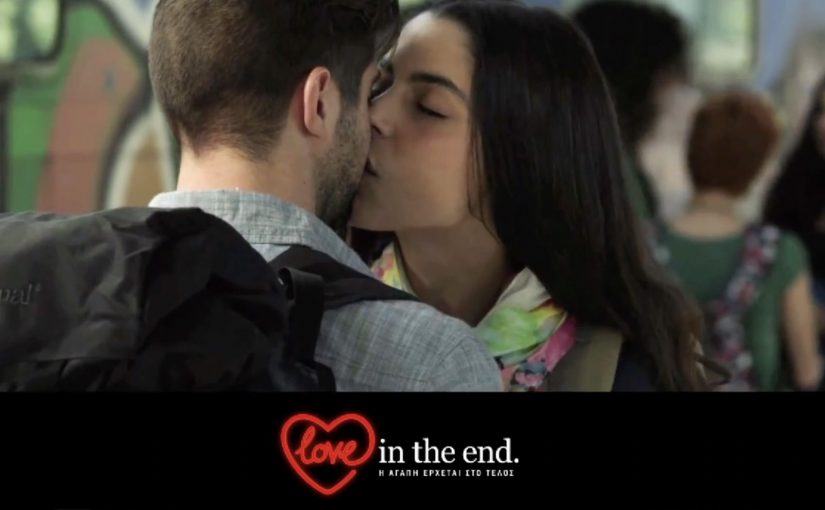
Lacta, a leading chocolate brand in Greece, has been creating innovative film content since 2009 around its strategy of being a symbol for the sweetness of love.
For this installment, Lacta invited fans to submit their stories of unfulfilled love, with the promise to give them the happy end they never had. On the cinema screen.
Finally three stories formed the basis of a film screenplay, entitled “Love in the end”, that was released on Valentine’s Day 2013. A transmedia campaign promoted the film and it became a big hit with audiences in Greece. Here, transmedia means connected teasers and social storytelling across channels that all build anticipation for the same release.
From real stories to a cinema-screen happy end
The mechanism is an audience-to-cinema pipeline. Collect true stories of unfulfilled love, select a small number that can carry a broader narrative, adapt them into a screenplay, then build anticipation through connected channels so the audience feels ownership before opening night. The real question is whether a brand can turn private emotion into a public release without draining it of authenticity. That structure works because early participation creates emotional investment before release, so the opening feels like a shared payoff rather than a pushed campaign.
In European FMCG branded entertainment, this kind of storytelling works best when participation is a source of meaning, not just a source of reach.
Why this lands
This works because it makes the brand the enabler, not the author. The stronger strategic move is to let audience truth carry the emotion and keep the brand in the enabling role. Lacta does not just “tell a love story”. It invites vulnerability, then pays it back with a public resolution in a culturally heavyweight format. The cinema.
Extractable takeaway: If you want a branded film to feel earned, start with real human input, curate hard, and give the audience a clear public moment to rally around, so anticipation becomes part of the product.
The results the campaign reported
Campaign reporting stated that 17% of the Greek internet population saw the online teasers, generating 700,000 views and hundreds of rave comments.
Reported social momentum was also strong. Lacta’s Facebook fans increased by 100,000, making its Facebook page the biggest for any brand in Greece at the time, with 650,000 fans.
On release, the film was described as having the biggest opening night for any Greek movie in the last five years, with more than 75% of all movie tickets being sold for it.
Here are the past film based campaigns
- 2010 – Love in action
- 2009 – Love at first site
What to borrow from Lacta’s film playbook
- Use a human intake. Real stories create emotional permission that scripted copy rarely earns.
- Curate into a single release. Selection and adaptation turn raw submissions into a coherent film people can anticipate.
- Build anticipation with episodic crumbs. Teasers and social updates make a film feel like a season.
- Anchor to a calendar moment. Valentine’s Day creates a natural reason to care now.
A few fast answers before you act
What is “Love in the end”?
It’s a Lacta branded-entertainment film built from fan-submitted stories of unfulfilled love, adapted into a screenplay and released on Valentine’s Day 2013.
What does “transmedia campaign” mean in this case?
It means the film was promoted through multiple connected channels using teasers and social storytelling to build anticipation before the main release.
What results were reported for the online teasers?
Reported results said 17% of the Greek internet population saw the teasers, producing 700,000 views and hundreds of positive comments.
What results were reported for Facebook growth?
Reported results said Lacta gained 100,000 new fans, reaching 650,000 fans and becoming the biggest brand page in Greece at the time.
What was reported about opening night?
The film was described as the biggest opening night for a Greek movie in the last five years, with more than 75% of all movie tickets sold for it.