
KitKat: Human Vending Machine

KitKat: Human Vending Machine

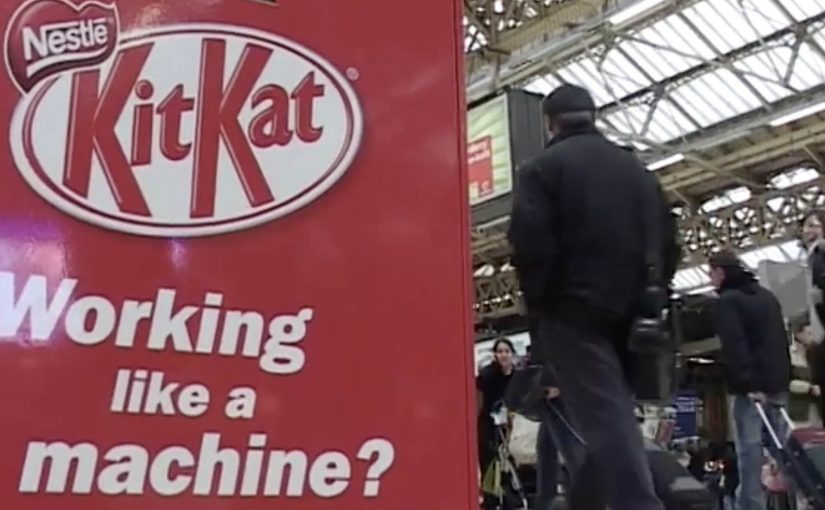
We all know how it feels to need a break from the routine of working like a machine. That is why KitKat brought a quirky trend from Japan over to the UK by installing a human vending machine in London’s busy Victoria Station.

Commuters were given a chance to buy a KitKat for 20p, but from a machine with a real difference. A real person operated it from inside, turning a quick purchase into a small moment of surprise and a quick chat. The money was described as going to charity.

A vending machine that replaces automation with a person

The mechanic is straightforward. It looks like a standard vending machine on the concourse. You put money in. You make a selection. Then a real “vendor” inside the unit hands you the bar, human-to-human, at vending-machine speed.

In high-traffic commuter environments, ambient activations (quick, in-the-flow brand interactions placed in public space) work best when the interaction is instant, the reward is obvious, and bystanders can understand the joke in one glance.

Why it lands

This works because it turns the very thing people are tired of, being treated like a machine, into the punchline. The vending format signals efficiency and routine. The human reveal breaks that expectation and delivers the “Have a break” idea as an experience, not a line of copy.

Extractable takeaway: If your brand promise is about relief, do not only describe relief. Stage a short, public interruption of routine where the consumer feels the promise in real time.

What the activation is really doing for the brand

The real question is whether you can make the “Have a break” promise felt without turning the commute into a bottleneck.

This is a strong format when the idea is obvious from a distance and the handoff stays genuinely fast.

At face value, it is a cheap bar and a good deed. Underneath, it is a behavioural prompt in a place where people are stressed, rushed, and receptive to a small uplift. The “human machine” also creates instant social proof. Every interaction becomes a tiny piece of live theatre that recruits the next person in line.

How to borrow the human-vending-machine pattern

  • Make the concept self-explanatory. The best stunts do not need instructions. The crowd teaches the crowd.
  • Build one clean reveal. A single unexpected moment beats multiple clever steps.
  • Design for the queue. Waiting becomes part of the experience and amplifies visibility.
  • Anchor the stunt to the brand line. The “break” is the product, and the bar is the proof.
  • Give people a reason to feel good. A charity tie-in can reduce cynicism and increase participation.

A few fast answers before you act

What is the “human vending machine” idea in one line?

A vending machine that dispenses KitKat bars, but the dispensing is done by a person inside the unit, turning a routine purchase into a surprise interaction.

Why does this work specifically in a commuter station?

Stations concentrate stress, repetition, and time pressure. A fast, playful interruption is more valuable there than a slow, explanatory brand experience.

What makes it feel like a KitKat idea rather than a random stunt?

The experience embodies the brand’s break positioning. It converts “take a break” from a slogan into a short, tangible moment.

What is the main execution risk?

Throughput. If the interaction slows down and the queue becomes frustrating, the stunt flips from “break” to “delay” and the mood collapses.

What should you measure beyond footfall?

Queue conversion rate (people who stop and join vs those who pass by), average interaction time, sentiment in on-site reactions, and whether the activation shifts purchase behaviour during the commute window.
Volkswagen Polo GTI: Fast Lane

Volkswagen Polo GTI: Fast Lane

Fast Lane: turning routine into a shortcut you choose

Volkswagen is soon going to launch its new Polo GTI. To create awareness and generate buzz, it built a “Fast Lane” in subways, malls and elevators around Germany. In this campaign, “Fast Lane” means a playful, faster-feeling alternative route placed beside the normal one, dedicated to everyone who likes to go beyond the regular, who is curious for new stuff, and who enjoys speeding it all up a little.

How it works: add a faster option that feels like play

The mechanism is simple. Place an obvious “normal” route next to an unexpected alternative that is quicker and more fun. Then let people self-select into it. The viewer controls the switch by choosing the fast lane, and that choice becomes the story.

In German urban commuting environments, small design changes in high-footfall spaces can shift behaviour quickly because routine is strong and the contrast is instantly visible.

The real question is whether you can turn “fast” from a spec into a shortcut people choose in public.

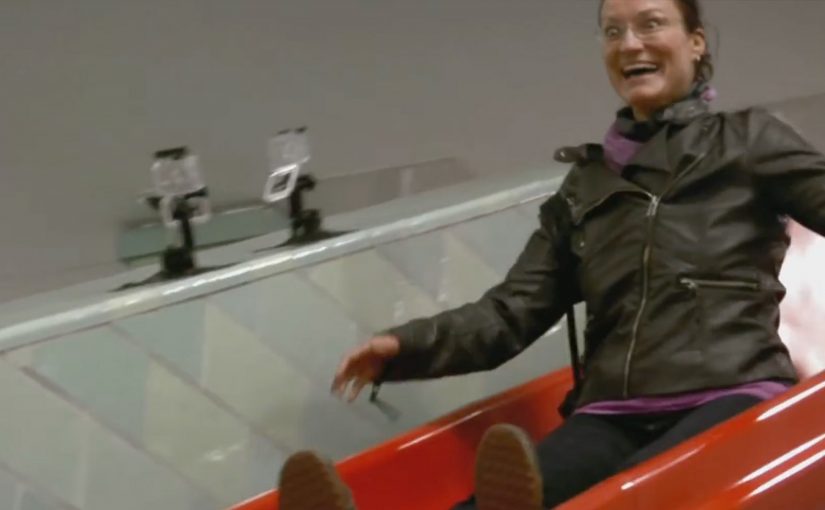
Fast Lane 1: The Slide

Long staircase. Next to it a slide. Which way would you go?

Fast Lane 2: The Shopping Carts

Some carts are pimped with a skateboard. Up for some extra shopping fun?

Fast Lane 3: The Elevator

A sound system turns the ride into a rocket take-off. Welcome on-board.

Why it lands: speed becomes a feeling, not a spec

The campaign does not explain performance. It lets people experience a mindset. Faster. Lighter. A little rebellious. Because the “fast” option is obvious and self-selected, it feels earned, which makes the idea stick without needing specs. Each execution creates a moment where the “fast” choice feels like a reward, not just efficiency.

Extractable takeaway: If you want people to believe a feature, design a situation where they can choose it and feel it, not just read about it.

The business intent: borrow everyday behaviour as proof

For a GTI launch, “fast” can easily become generic language. This is stronger than repeating performance adjectives. Fast Lane makes it concrete. It attaches the idea of speed to real-world micro-decisions, and turns the resulting participation into shareable proof that travels beyond the physical placements.

What to steal if you want to turn a feature into a behaviour

  • Build the contrast into the environment. Normal route next to the fun shortcut.
  • Make the faster choice self-evident. People should understand it in one glance.
  • Let viewer control do the persuasion. Choosing it is more convincing than being told.
  • Create a story per location. Each execution is a complete, watchable moment on its own.

A few fast answers before you act

What is Volkswagen’s “Fast Lane” for the Polo GTI?

A set of playful public-space installations (slide, skate carts, rocket-sound elevator) that let people choose a “faster” option, designed to build buzz for the Polo GTI.

What is the core mechanism?

Put a normal route next to an unexpected shortcut that is quicker and more fun. People self-select, and the choice becomes the story.

Why does this work better than talking about performance specs?

It turns “fast” into a felt experience. Participation makes the feature believable without needing explanation.

What business intent does it serve?

It makes the GTI’s positioning concrete and talkable, then relies on the resulting participation moments to travel beyond the physical placements.

What is the most transferable takeaway?

If you want people to believe a feature, design a situation where they can choose it and feel it, not just read about it.