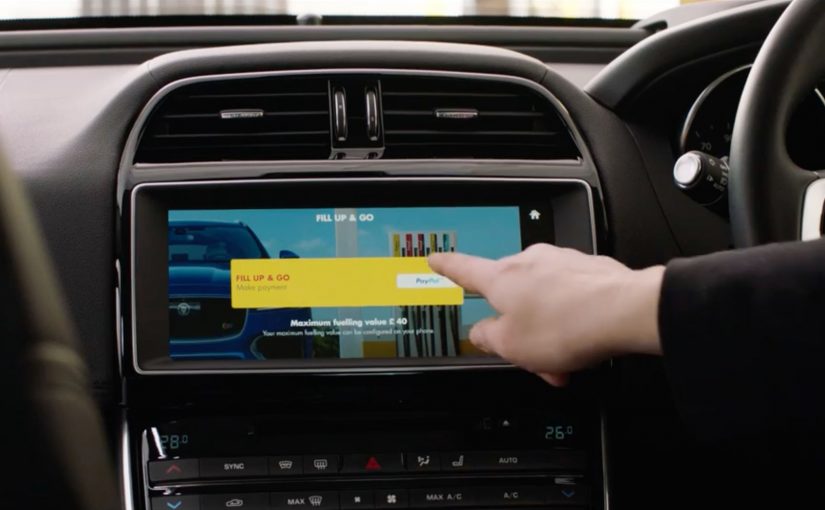
Jaguar launches in-car cashless fuel payment

Drive up to a Shell pump. Choose your fuel amount on the car’s touchscreen. Pay without leaving the seat. In a world-first, Jaguar and Land Rover owners can pay for fuel via the touchscreen of their car at Shell service stations. Rather than paying at the pump or queuing to pay in the shop, installing the Shell app via InControl means drivers can drive up to a pump at participating Shell service stations, select how much fuel they require, and pay with PayPal or Apple Pay on the vehicle’s touchscreen.

For more details click here.

Why this matters beyond fuel

This is not really a “payments innovation” story. It is a friction story. The value comes from removing context switching. No wallet. No phone. No queue. The car becomes the interface where the need happens.

It moves checkout into the moment of intent

The moment you decide to refuel is the moment you can complete the transaction. That reduces drop-off, reduces effort, and makes the experience feel modern without changing the core product.

It turns the car into a commerce surface

Once the dashboard becomes a trusted place to authenticate and pay, the opportunity expands to other “on-the-go” services where drivers normally step out, wait, or juggle devices.

It is a clean example of partner-led experience design

Jaguar provides the in-car platform. Shell provides the forecourt context and operational integration. The user experiences it as one flow, not two brands handing off a task.

The reusable pattern

  1. Embed the action where the context already is. Put the transaction inside the primary interface, not a separate detour.
  2. Keep the flow short and explicit. Select, confirm, pay, receipt. Anything more breaks the promise.
  3. Design for trust signals. Clear station identification, clear confirmation, and a clear receipt reduce “did it work” anxiety.
  4. Make the benefit obvious in one sentence. “Pay from your car” is enough. The value is immediate.

What to measure beyond views

  • Adoption. Percentage of eligible drivers who activate the in-car payment feature.
  • Repeat usage. Whether people use it again after the first try.
  • Time saved. Reduction in “fuel stop duration” compared with paying in-store.
  • Experience confidence. Drop-off rates between selecting the pump and confirming payment.

Risks and guardrails that matter

  • False positives. The system must reliably know which station and which pump the driver is using.
  • Failure recovery. If payment fails, the user needs a clear next step that does not create embarrassment at the pump.
  • Trust. Drivers need clear confirmation, receipts, and predictable behavior every time.

A few fast answers before you act

What is Jaguar’s in-car cashless fuel payment?

A Shell fuel payment flow that lets Jaguar and Land Rover drivers select an amount and pay from the vehicle touchscreen via the Shell app in InControl.

What problem does it solve?

It removes the need to pay at the pump or queue inside the shop. The entire task completes from the car.

What is the core mechanism?

A contextual in-car experience that links the driver, the station, and the payment method into one short flow.

What is the most reusable lesson?

Move checkout into the moment of intent inside the primary interface. Then keep the steps minimal and confidence high.

What is the biggest failure mode?

Any ambiguity about station or pump, or any unclear “did I pay” outcome. Trust collapses fast in payments.
Volvo Concierge Services

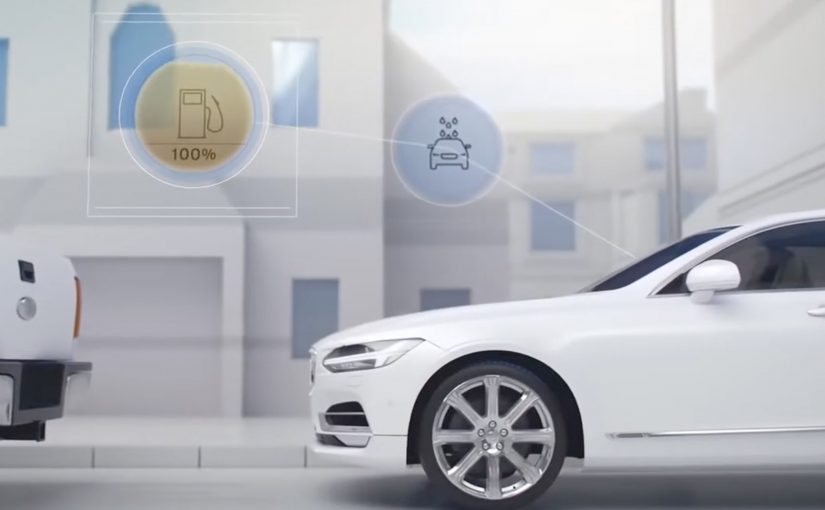
Volvo is actively experimenting with moving beyond simply building and selling cars. With Volvo Keyless Cars and Volvo In-Car Delivery, the direction is clear. Build a service layer around the vehicle. In its latest effort, Volvo creates a concierge-style service ecosystem that gives customers access to third-party service providers who can remotely refuel the car, run a car wash, handle servicing, and more.

The heart of Volvo Concierge Services is the digital key. A one-time-use, location- and time-specific key that gives an approved service provider access to the vehicle. That matters because it keeps the car secure and removes the need for the owner to meet someone and physically hand over keys. Whether the supplier is a refuelling company, a valet parking attendant, or Volvo itself for maintenance, the provider uses an app to remotely unlock the car and allow the engine to turn on.

The Volvo Concierge Services are currently being tested in the San Francisco Bay Area with owners of the new Volvo XC90 SUVs and S90 sedans.

The digital key is the unlock. The services are the business model

This is not just about convenience. It is a structural shift. Once access becomes software, it can be controlled precisely. Who gets access. For how long. Where. For what purpose. That is the foundation you need to turn a connected car into a platform for partners and post-sale services.

Why “remote access without handover” changes behaviour

Traditional servicing and add-on services create friction. Scheduling. Meeting. Waiting. Key logistics. Concierge Services reduces that friction by making the car addressable when it is parked, and by making access safe enough to involve third parties.

What to pressure-test before you scale a service ecosystem

  • Trust and governance. Who qualifies as an approved provider. What is logged. What can be revoked instantly.
  • Edge cases. What happens if something goes wrong mid-service. What support paths exist for customer and provider.
  • Consistency of experience. If third-party services vary in quality, the brand still owns the perception.
  • Security by design. One-time, time-bound, location-bound access is powerful. It has to be implemented rigorously.

A few fast answers before you act

What is Volvo Concierge Services?

A service ecosystem around Volvo cars that enables approved third-party providers to refuel, wash, service, and handle other tasks with controlled remote access to the vehicle.

What enables the service providers to access the car?

A one-time-use, location- and time-specific digital key that unlocks the vehicle through an app without physical key handover.

Where is it being tested?

In the San Francisco Bay Area, with owners of Volvo XC90 SUVs and S90 sedans.

What is the core strategic takeaway?

When access becomes software, the car can support a partner service layer that keeps creating value after purchase.

IAA Walk of Innovations – 2013

The 65th Internationale Automobil Ausstellung (IAA) has been running in Frankfurt am Main for the past two weeks. So on Saturday I decided to go for the motor show to catch up on the latest cars and also see first hand the much anticipated Nissan Nismo Watch.

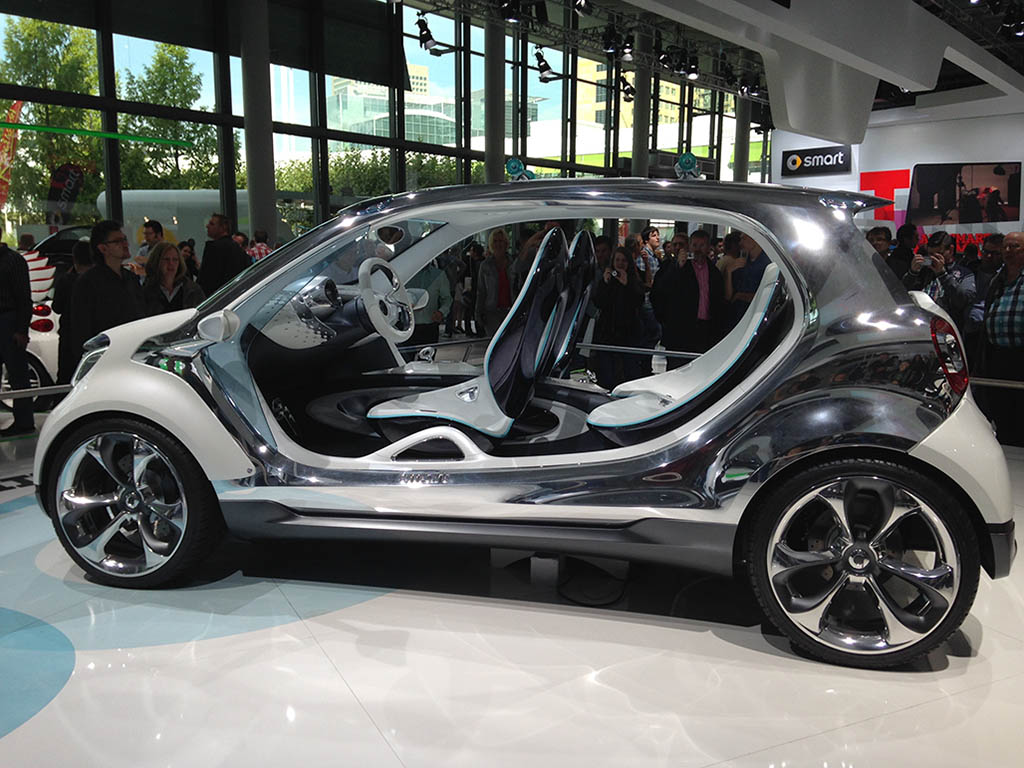
Most of the car makers in this year’s show were also present in IAA 2011. In fact they were even located in the same stands as 2011, with the same high tech touch displays to promote their cars. The only difference was that their 2013 car models were now more hybrid and or electric only e.g. this new four seater Smart…

But while I walked around and looked for changes vis-à-vis what was shown in IAA 2011, I noticed that apart from the now expected large screens and touch displays, car makers were using all kinds of social media to engage with their visitors.

Here is a quick photo report of my engagement experiences with the various car makers…

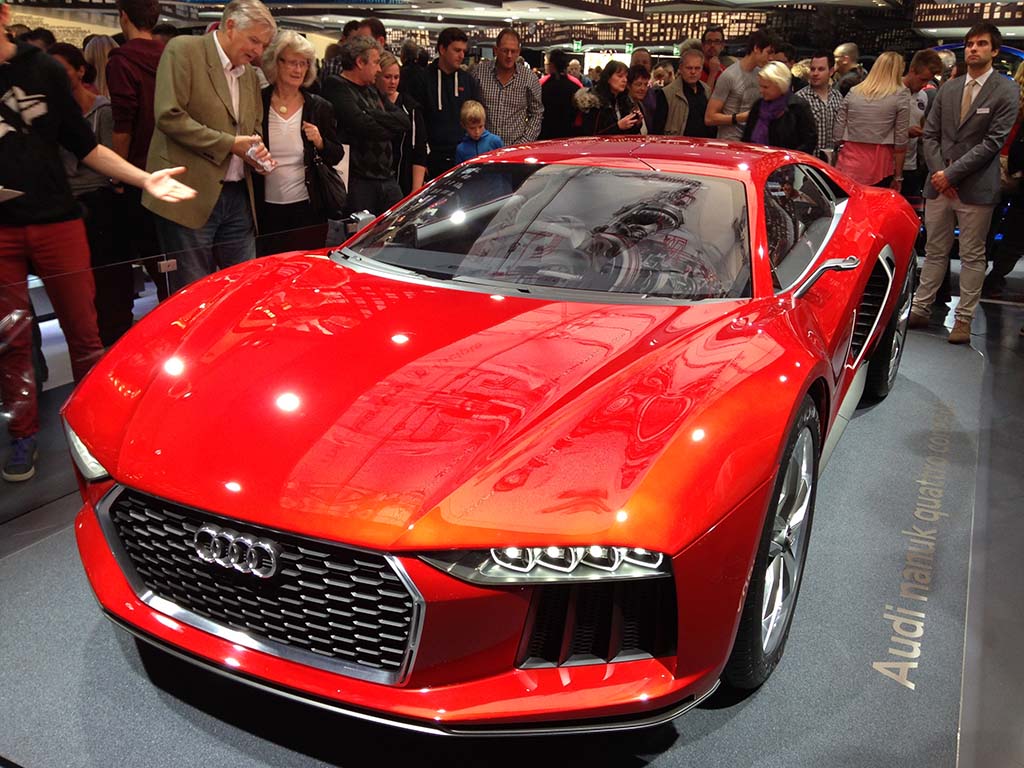
Audi

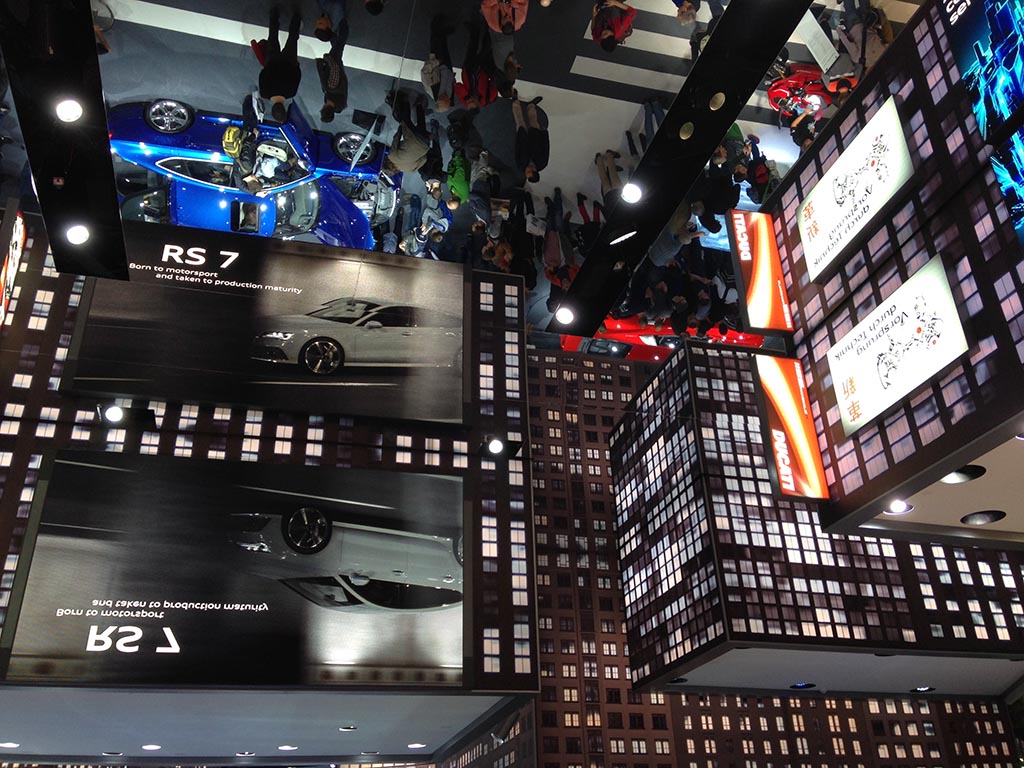
To make sure I did not miss Audi this year due to 200+ people standing in line to get into the Audi Stand, I decided to visit the stand very early in morning. The line to get into the stand was short, but there were already hundreds of people inside. On walking in, I noticed that the concept for the stand was taken straight out of the Hollywood movie “Upside Down“…

Visitor engagement at the stand was done through a special photo booth. While people waited in the line they got an iPad to play a game and answer three questions about Audi. Winners got special custom giveaways like keychains, gummy bears etc. After which visitors were assured into the photo booth which superimposed the photos onto custom Audi backgrounds. Visitors could take home a printed copy of the photos and later also download soft copies from www.audiphotoautomat.com.

Mercedes

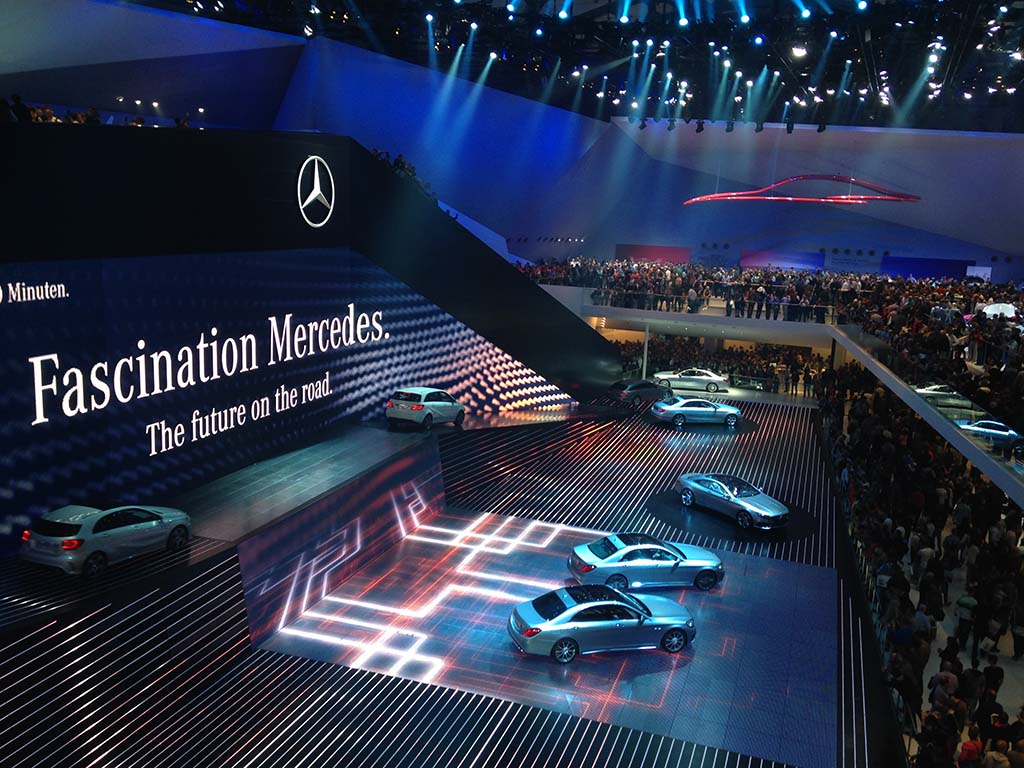
Next stop was the Mercedes stand which was also impossible to get into in 2011. From the below picture you can see why…

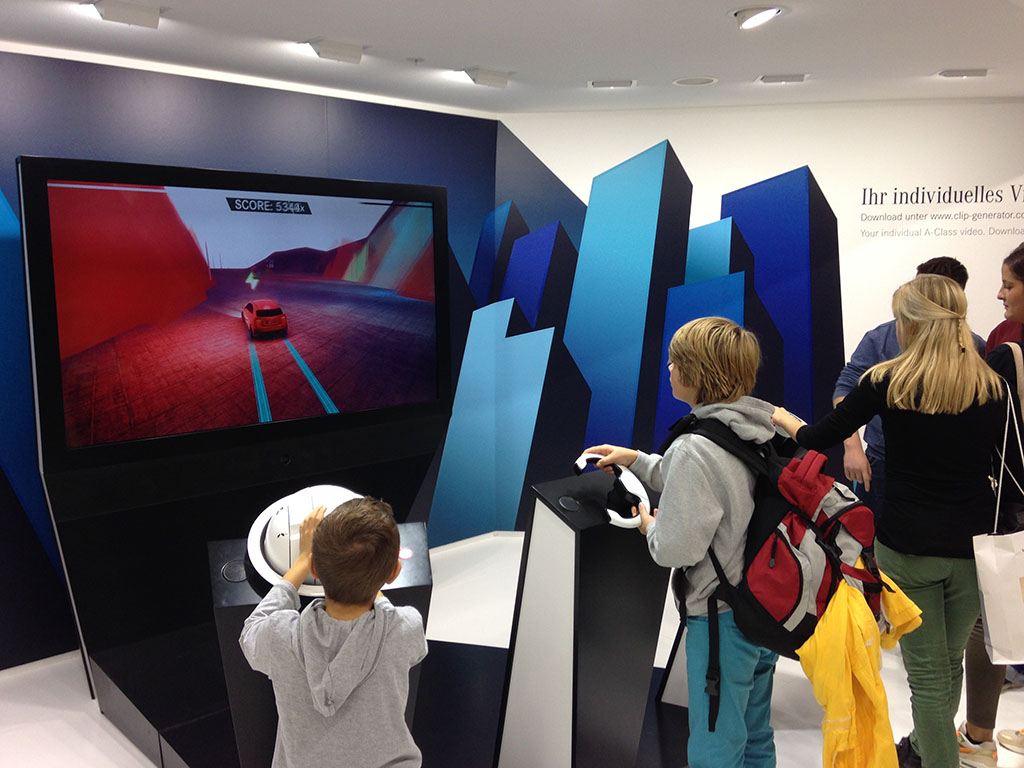
Mercedes put up a huge multi-sensory show that went on for over 20 minute, while thousands of people just stopped and watched. Children visiting the stand were kept busy with car simulators…

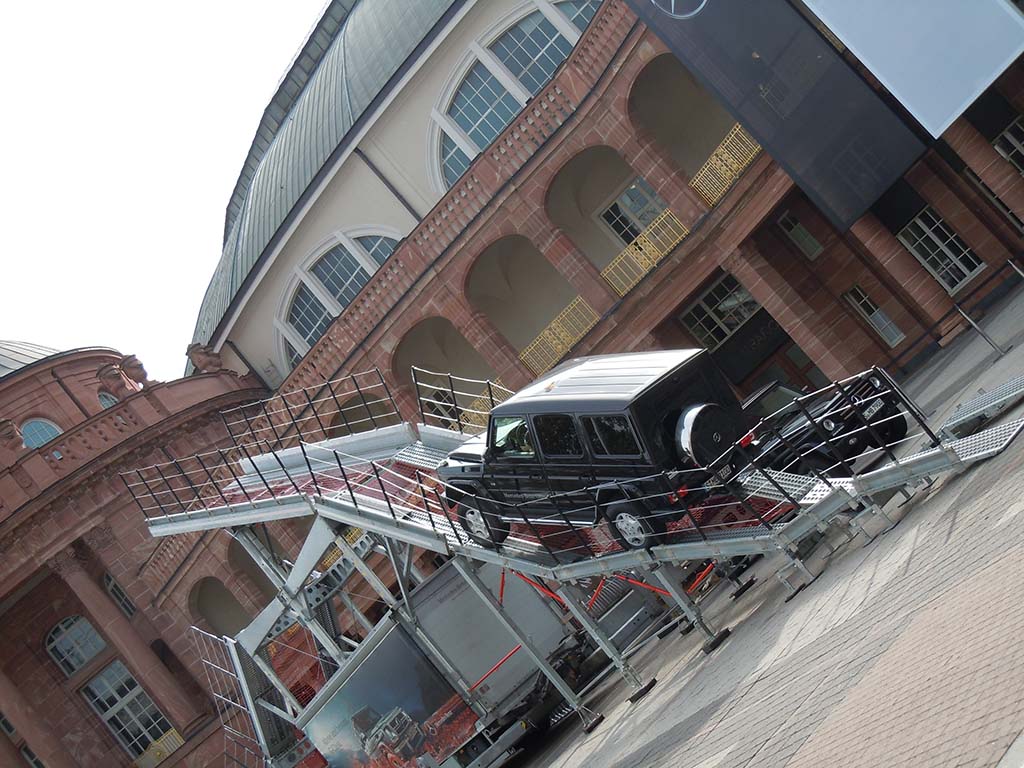
Outside the stand one could test drive the Mercedes off road jeeps with the help of trained drivers…

Hyundai

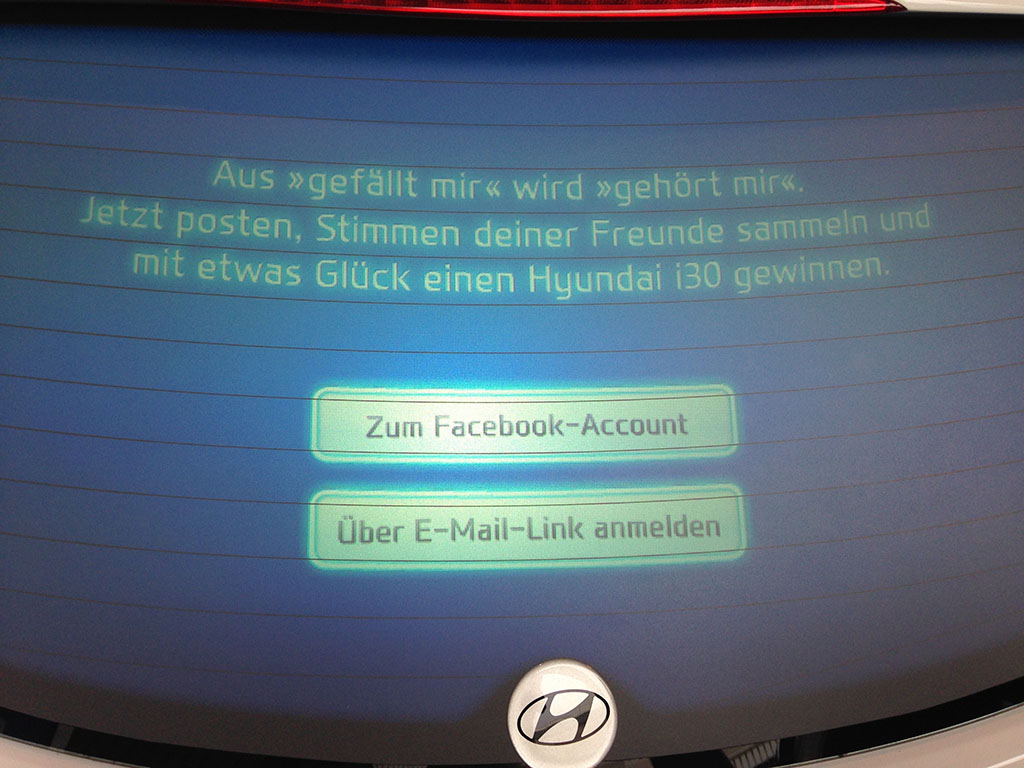
Hyundai was the first car brand I came across that was using the event to generate Facebook fans. For liking the Hyundai Facebook page, fans at IAA could win a Hyundai i30…

The rear windscreen of the i30 was converted into a touchscreen which people could use to instantly “Like” the brand’s Facebook page or choose to receive the Fan Page link via email…

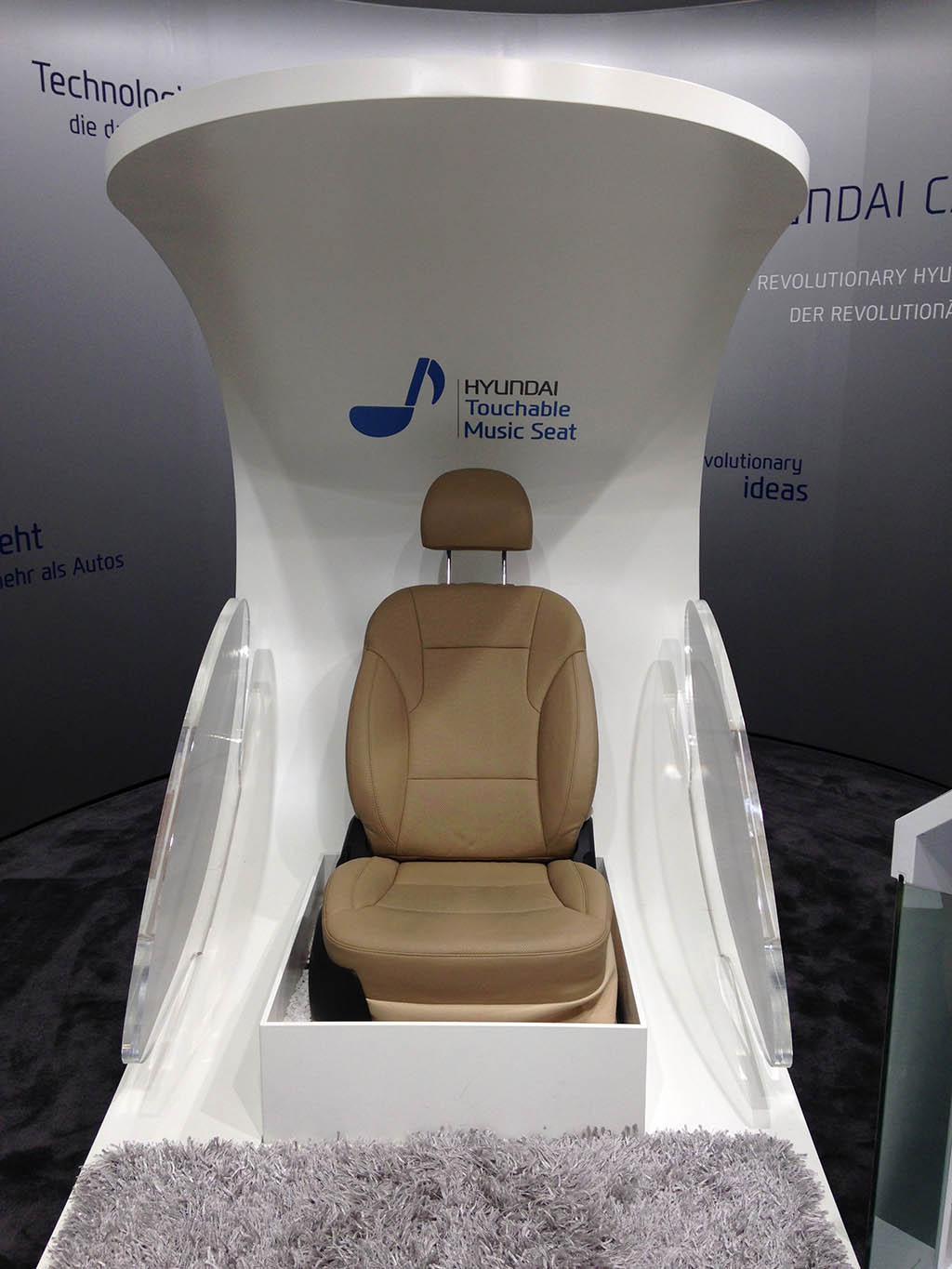
At the stand Hyundai also displayed a unique touchable music seat for hearing impaired drivers which vibrated as per the music being played. This is still in concept phase and the test seats are currently being developed out of Korea…

Volkswagen

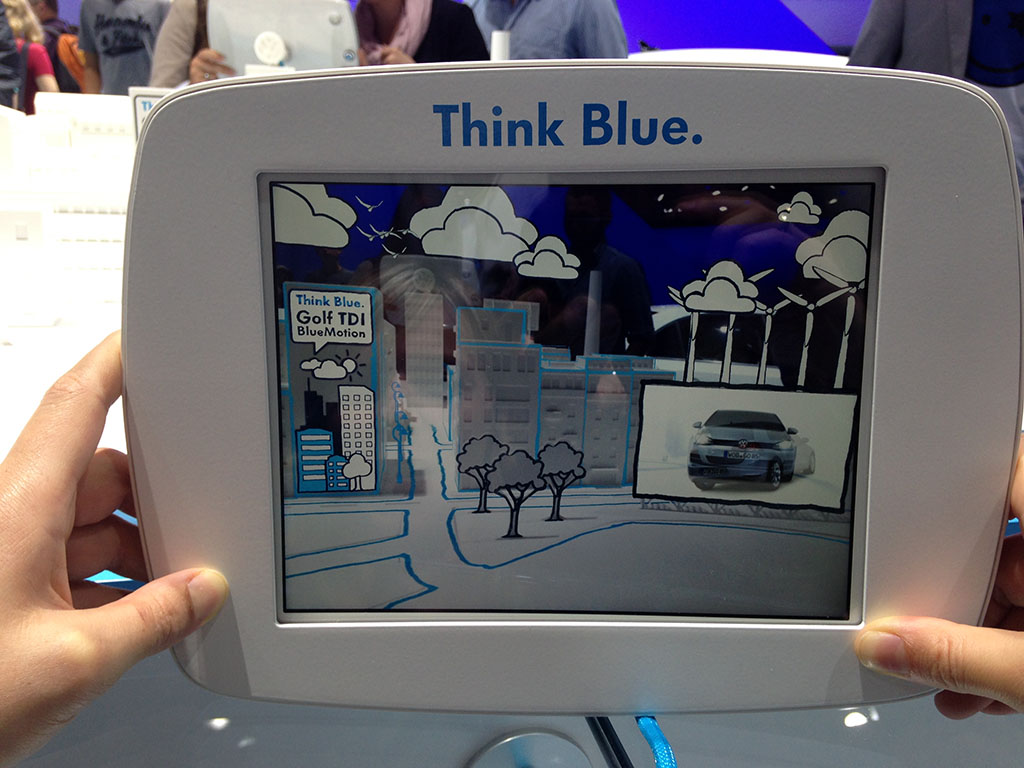
The Volkswagen “Think Blue” initiative was presented via an interactive augmented reality layer that was activated through the provided iPads…

Skoda

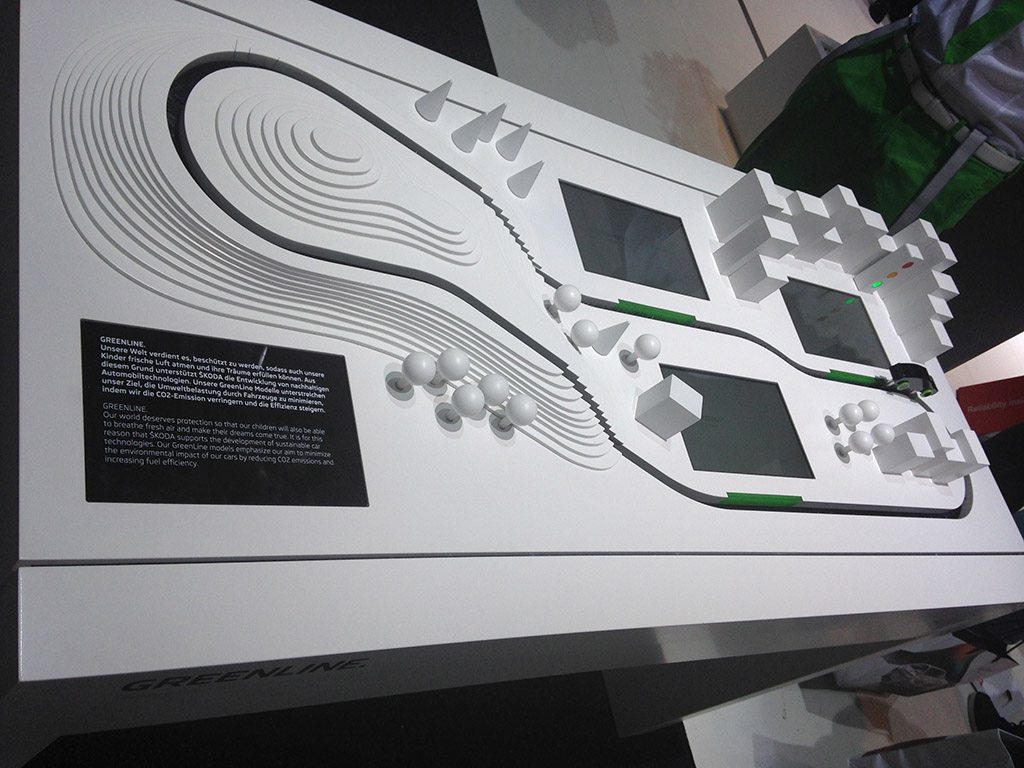
Skoda explained their Green Line initiative via a wooden toy car that was supported by the animations in the embedded touch screens…

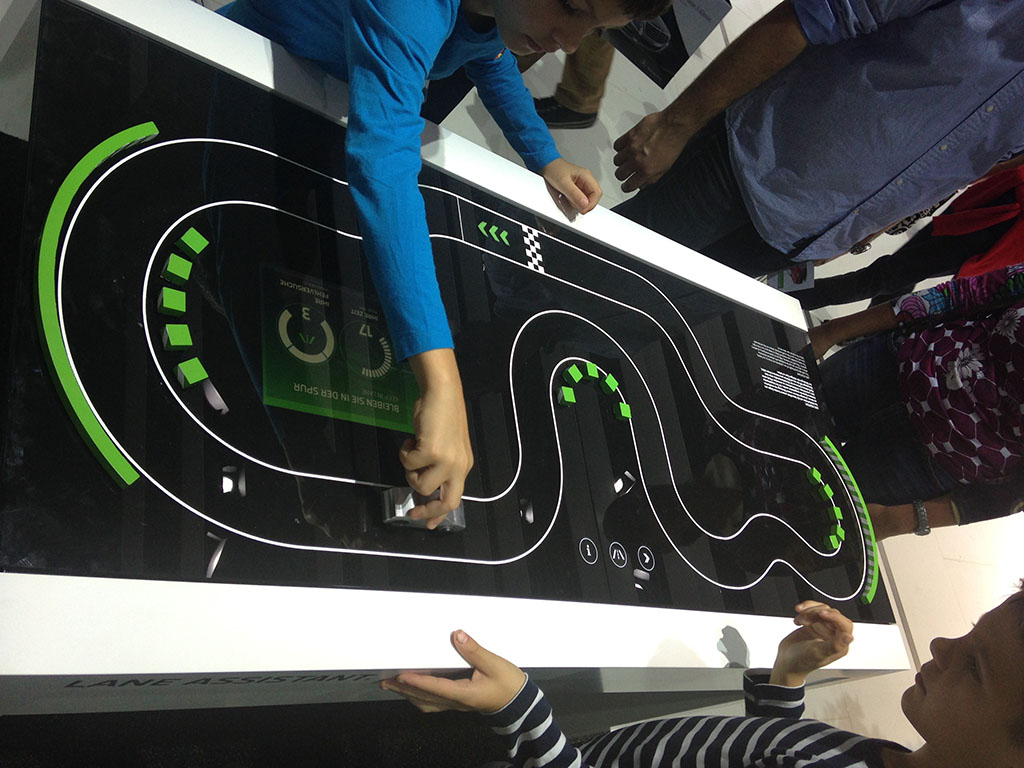
At the neighbouring table kids were engaged with games around the Green Line initiative…

Michelin

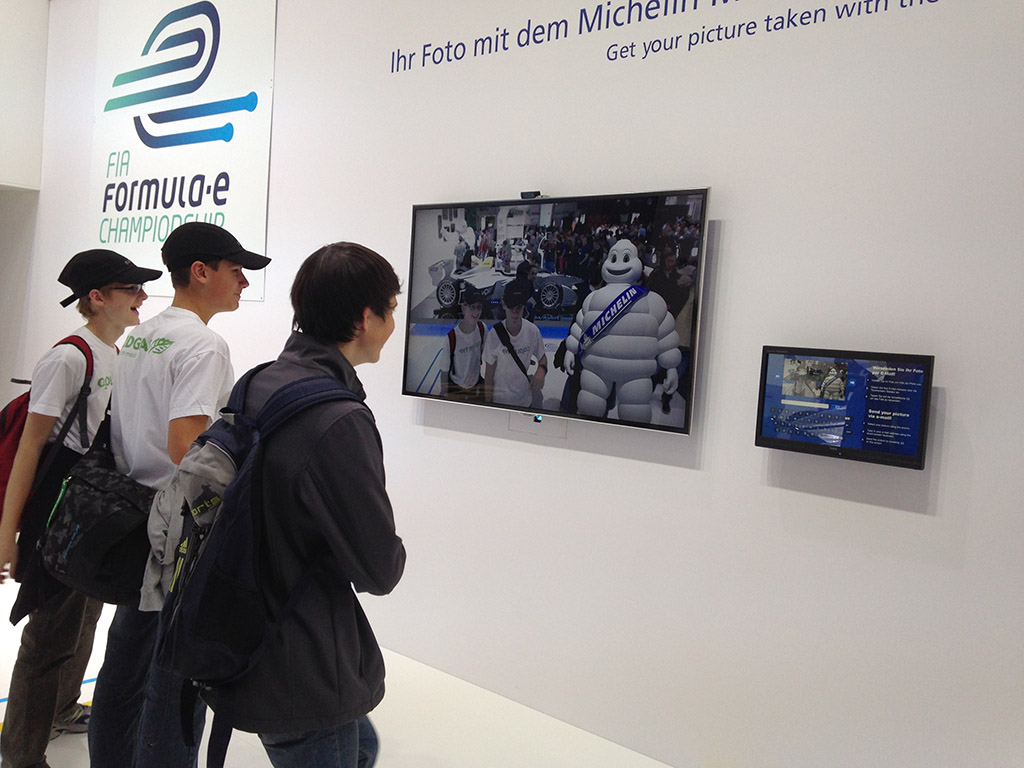
At the Michelin stand, visitor could take pictures with a virtual Michelin mascot and have the pictures emailed to themselves instantly…

Nissan

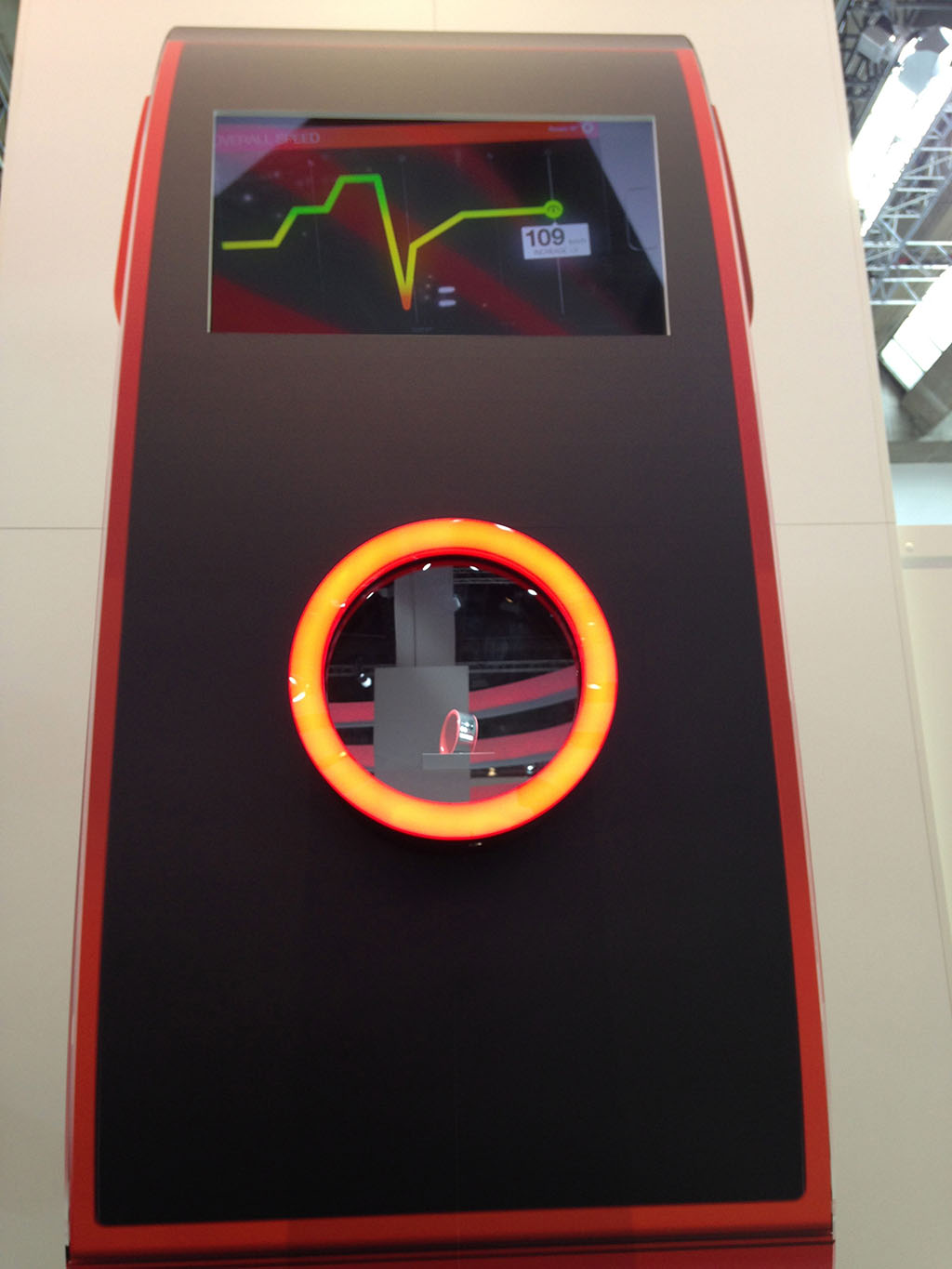
After having written about the Nissan Nismo Watch last week, I could not wait to see the real watch in action. But to my disappointment the watch was not there as announced. There was only a boring plastic dummy on display…

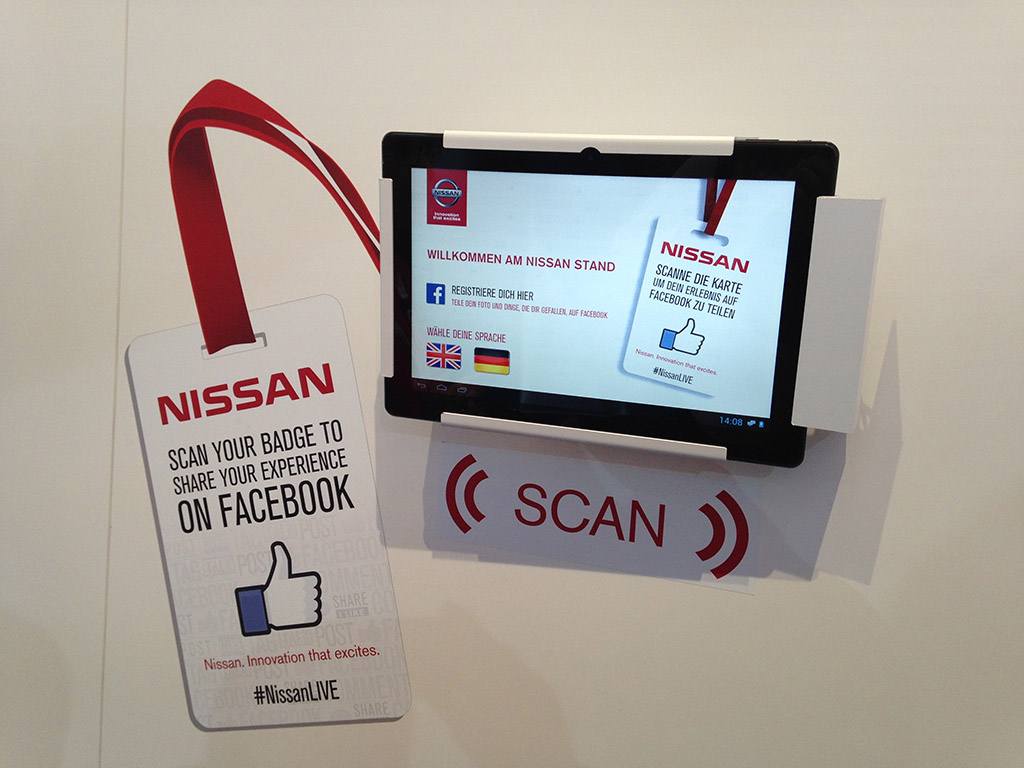
But I did take Nissans version of real life “Likes” for a spin (first spotted at the Renault stand in the 2011 Amsterdam Motor Show)…

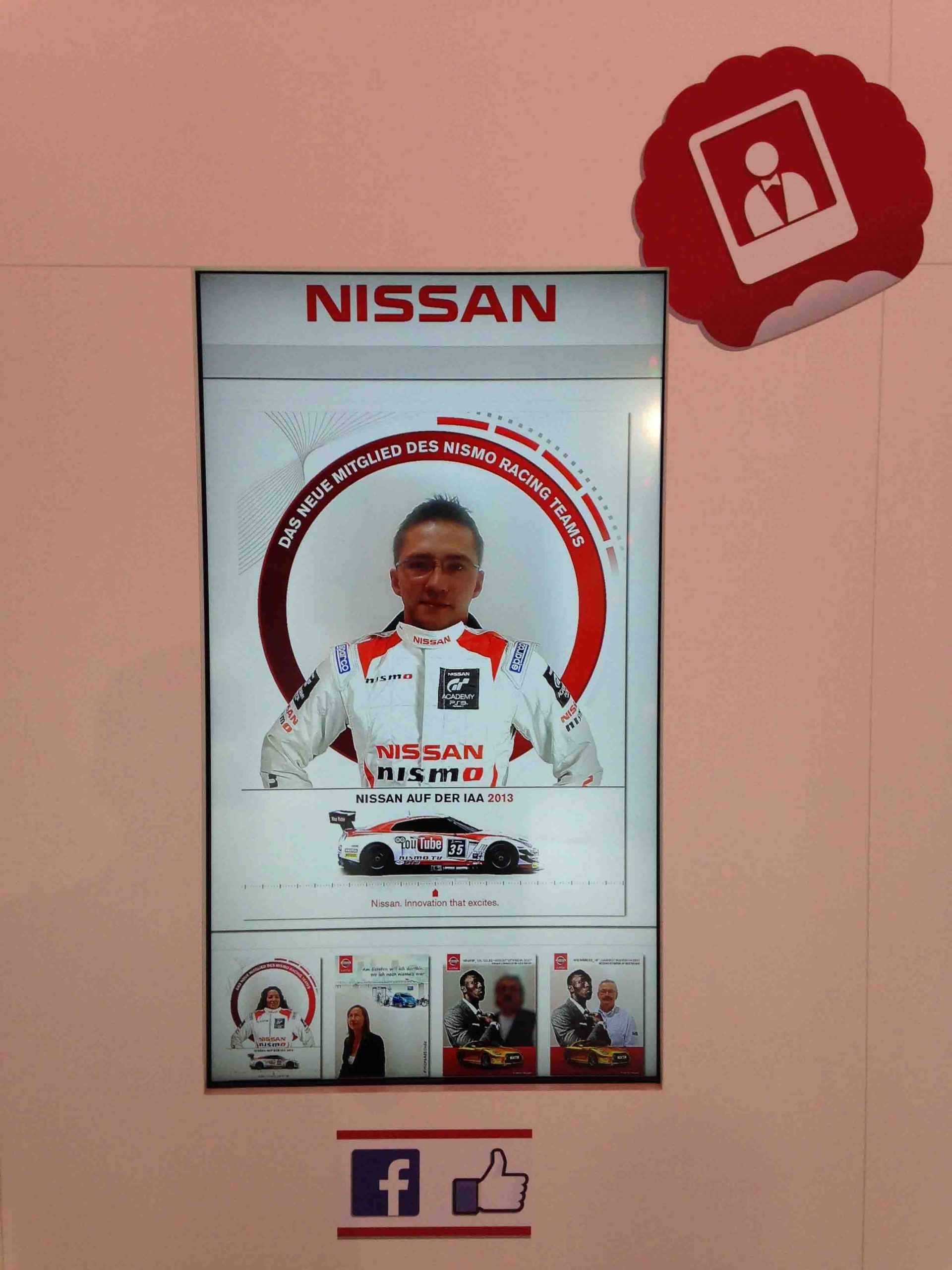
The RFID badges allowed visitors to post custom Nissan branded pictures of themselves onto Facebook…

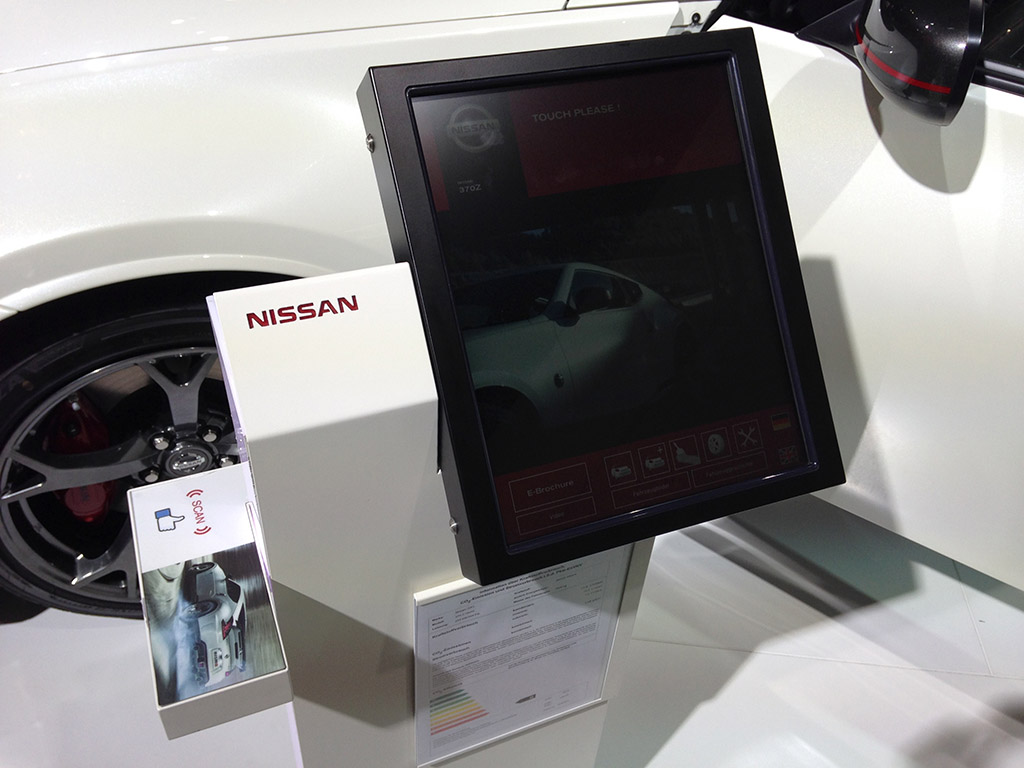
Visitors were also given the option to share the cars they like on Facebook via special Like buttons built into the car info pillars…

Ford

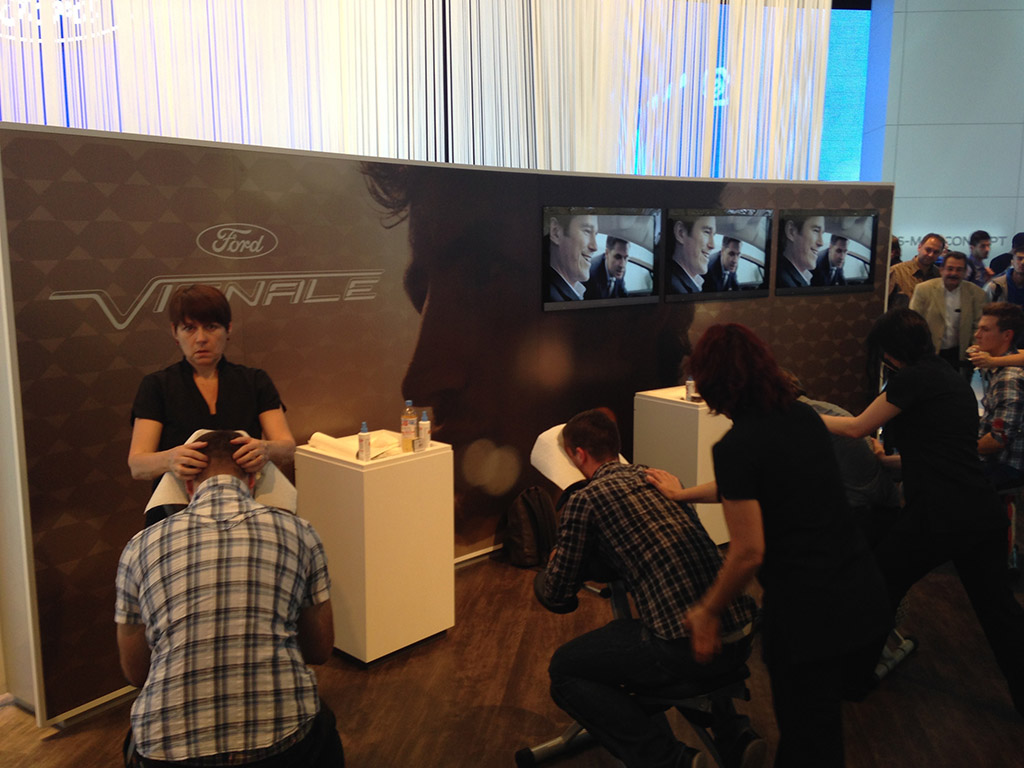
At the Ford stand this year visitors were given head and shoulder massages…

Then to experience the Ford EcoBoost, visitors were put in front of a leaf blower and there reactions caputred and uploaded on the Ford Flickr Channel.

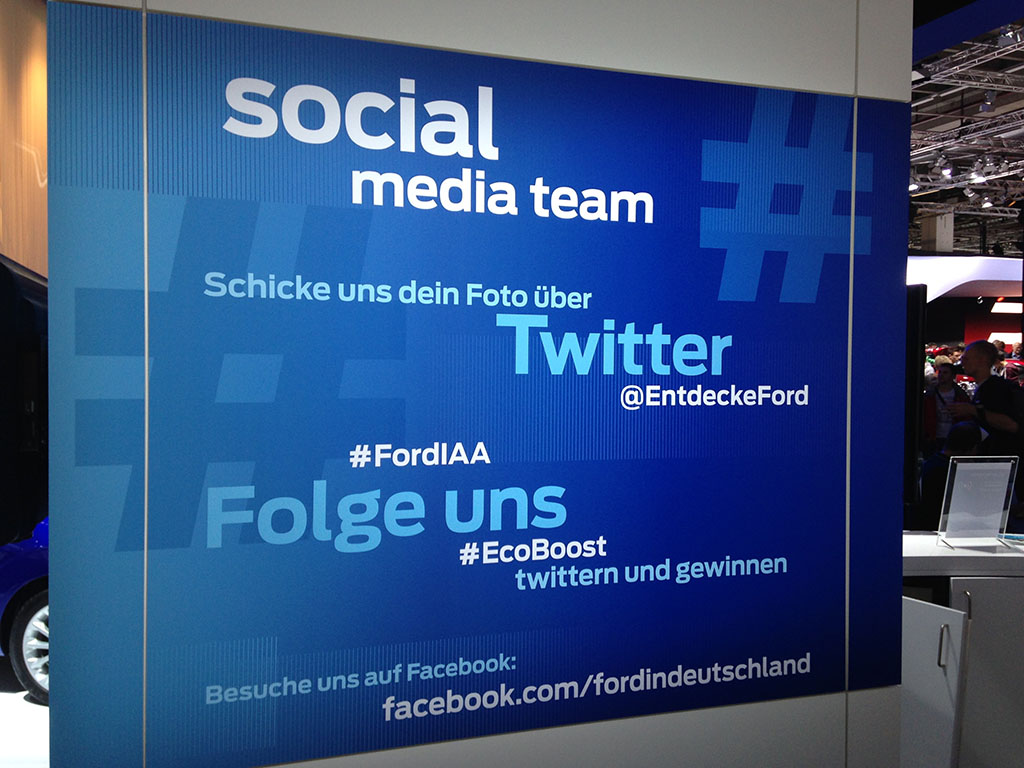
And for the more social visitors, Ford had a nice twitter based contest running…

Kia

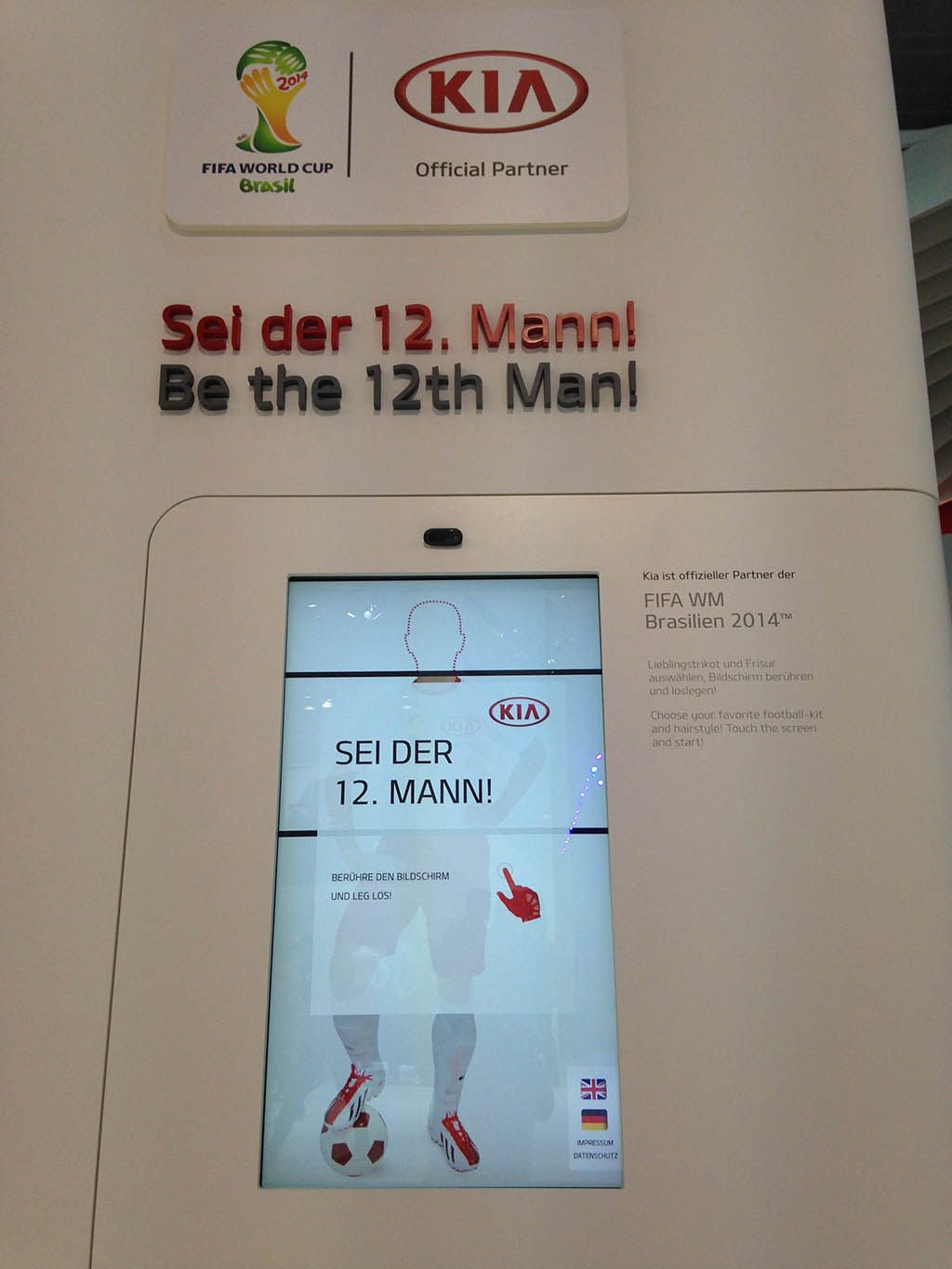
At Kia, visitors could superimpose their heads onto a football player and then have the custom postercard sent to their email id’s…

Chevrolet

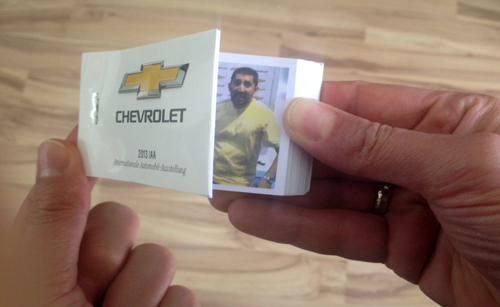
Visitors at the stand could make small flipbooks of themselves doing funny dances in front of the main charachter of the Hollywood film “Turbo“…

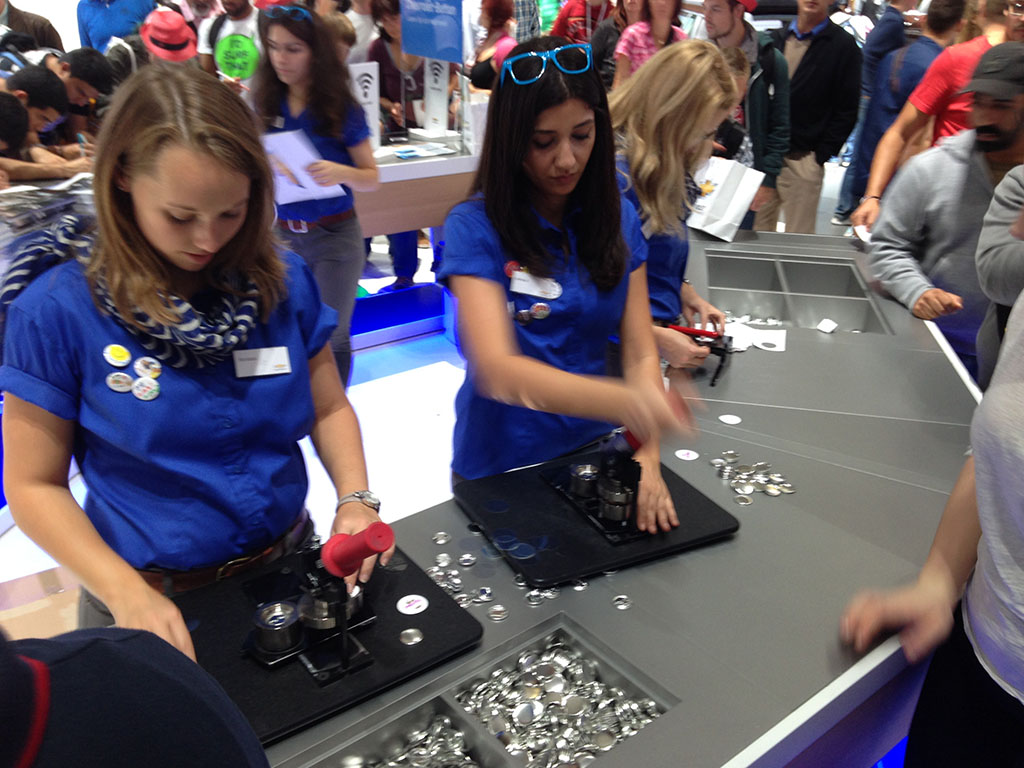
Or they could write special messages to their loved ones on a piece of paper and the team at Chevrolet would instantly convert them into wearable badges…

Chevrolet was also the only car maker at the IAA who was using Foursquare to offer discounts on their show merchandise…

Mini

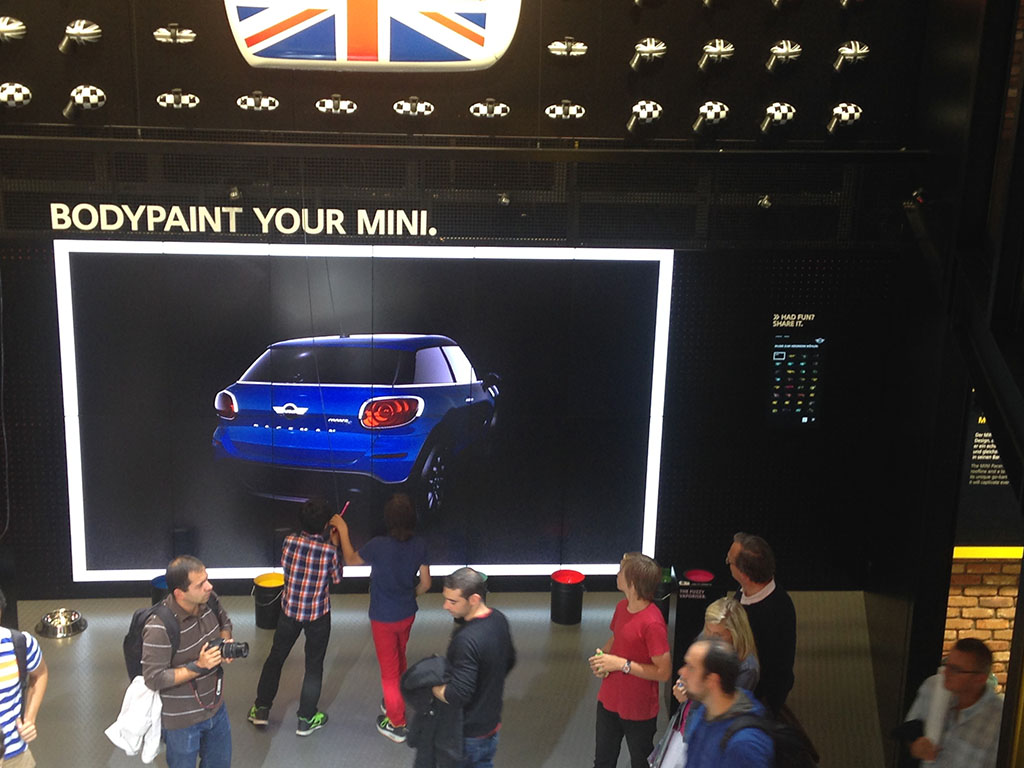
Mini this year gave visitors the option to body paint their cars and email the photos to themselves…

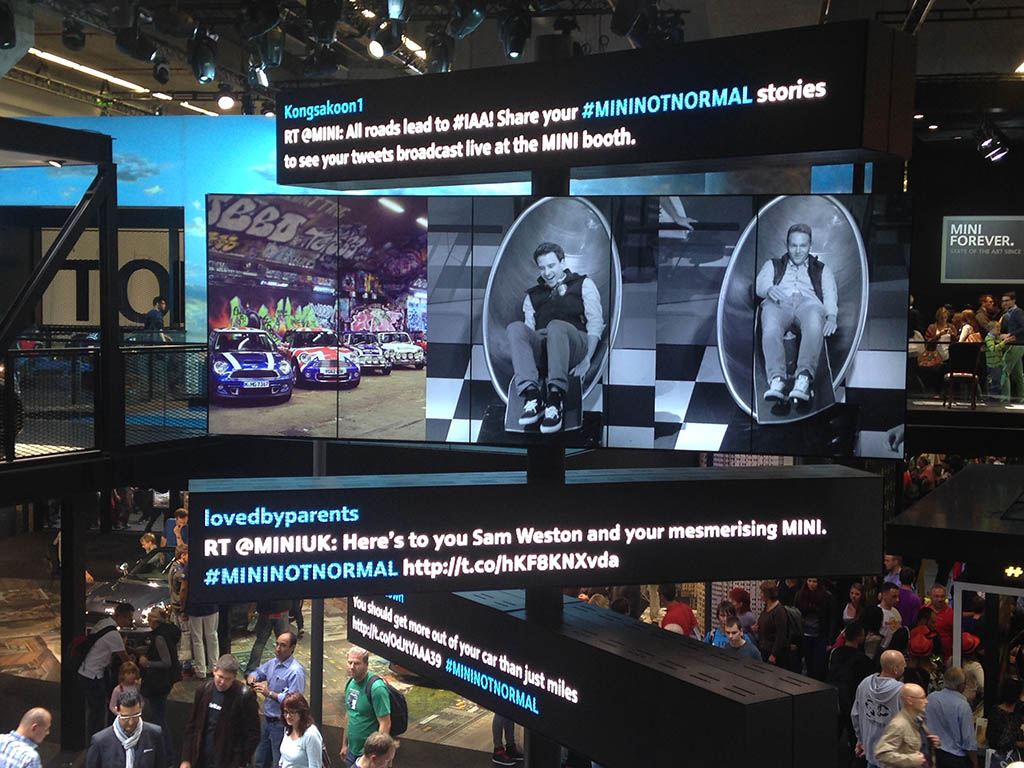
Visitors could also slide down a specially created tunnel at record speeds that were also photographed and displayed on a large overhead digital screen…

BMW

BMW like Mercedes also put up on a multi-sensory show at their stand. But compared to Mercedes it was short and not as extravagant. But it was still pretty impressive…

Kumho Tyres

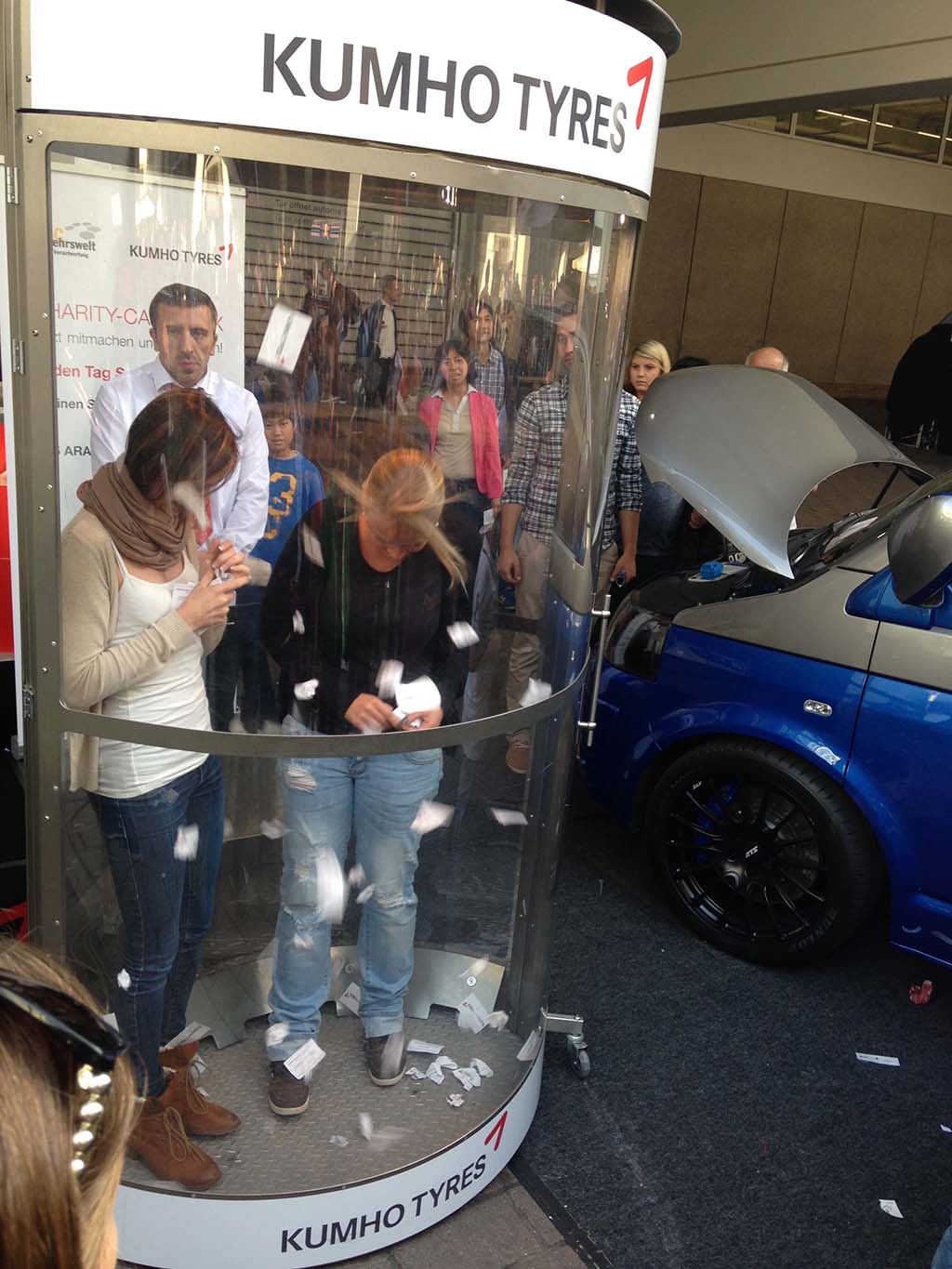
Then on the way out I spotted Kumho Tyres giving away various petrol and tyre related coupons. To win the coupons visitors had to catch them while being closed inside a wind cabin…

And that was a quick overview on what I experienced at the 65th Internationale Automobil Ausstellung. (To read about my experience at the 2011 show, click here.)

Until the next show in 2 years. This is Sunil Bahl signing off from IAA 2013. 😎