Who says plain fridge magnets cannot be reinvented? Here are two brands who do exactly that, and in the process also enhance the brand experience with their consumers.
VIP Fridge Magnet
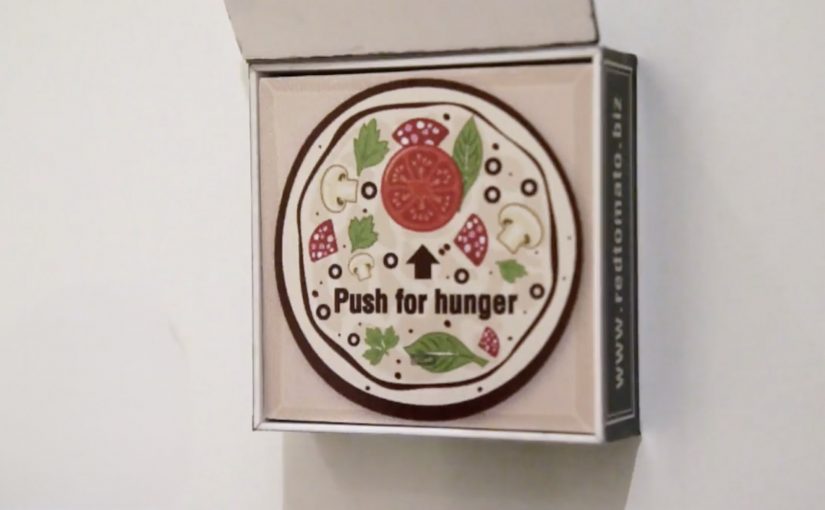
Red Tomato Pizza in Dubai take their loyal pizza patrons very seriously. So they created the “Pizza Emergency Button”, a fridge magnet with a difference. Each button has a loyal pizza patron’s favorite pizza programmed into its memory. When hungry, all the loyal patron needs to do is flip the pizza box lid on the magnet and press the pizza button inside.
Wifi Water Magnet
Evian in Paris created a simple fridge magnet that allows owners to order water and request a particular delivery time directly from their fridge.
The “Smart Drop” magnet is made up of a microcontroller, LED screen, a wireless chip, battery and an inbuilt HTML5 app that does all the work.
The mechanic: turn the fridge door into a service interface
Both executions take a boring surface and give it a single, high-frequency job. One turns repeat ordering into a one-press ritual. The other turns replenishment into a quick scheduling choice, without opening a laptop or digging for an app.
In connected-home style experiences, the winning pattern is not “more features”. It is fewer steps placed exactly where the habit already happens.
Here, “connected-home” means a branded shortcut embedded in an existing household habit, not a full smart-home platform.
Why this lands
These magnets win because they reduce effort at the moment of desire. Hunger and “we’re out of water” are not times when people want menus, logins, or long flows. A physical button and a tiny display on the fridge convert a decision into a reflex.
Extractable takeaway: If the customer action repeats weekly, design the interface around speed and placement first, and only then worry about adding options.
What the brands are really buying
Red Tomato turns loyalty into a tangible perk that feels exclusive and personal. Evian turns replenishment into an owned service moment, and makes delivery feel like part of the product, not a separate chore.
The real question is whether the brand can earn a permanent shortcut into a repeat household behavior.
What to steal for repeat-order design
- Anchor the interaction to the habit location. Put the “button” where the decision already happens.
- Make the primary action one-step. If it needs instructions, it is not a fridge magnet anymore.
- Personalize the default. Pre-selecting “my usual” removes choice friction and makes the experience feel made for me.
- Show just enough state. A tiny display that confirms quantity and timing often beats a full app for repeat tasks.
A few fast answers before you act
What makes these magnets more than gimmicks?
They replace a recurring micro-task with a faster interface placed at the point of need. The form factor is the strategy, not decoration.
When does a physical button beat an app?
When the action is frequent, low-consideration, and time-sensitive. In those cases, speed and placement outperform feature depth.
Why does placement matter so much here?
Because the fridge is where need becomes action. Putting the interface there removes recall and navigation steps that usually interrupt repeat behavior.
What is the transferable principle for digital teams?
Design around the moment of intent. If you can remove steps at that moment, you usually get higher repeat usage than by adding more functionality.
What is the biggest risk with this pattern?
Over-engineering. If the device needs setup, troubleshooting, or too many choices, the friction cancels out the convenience.