At CES 2026, I am seeing a familiar pattern. Earlier AI bot ideas are returning with a new coat of paint, powered by stronger models, better microphones, better cameras, and much tighter product positioning.
Razer’s Project AVA is one example. It reads like a modern update of the “companion in a box” category, echoing Japan’s Gatebox virtual home robot from 2016. Think less novelty bot, more designed product, with better sensing, better personalization, and clearer use cases.
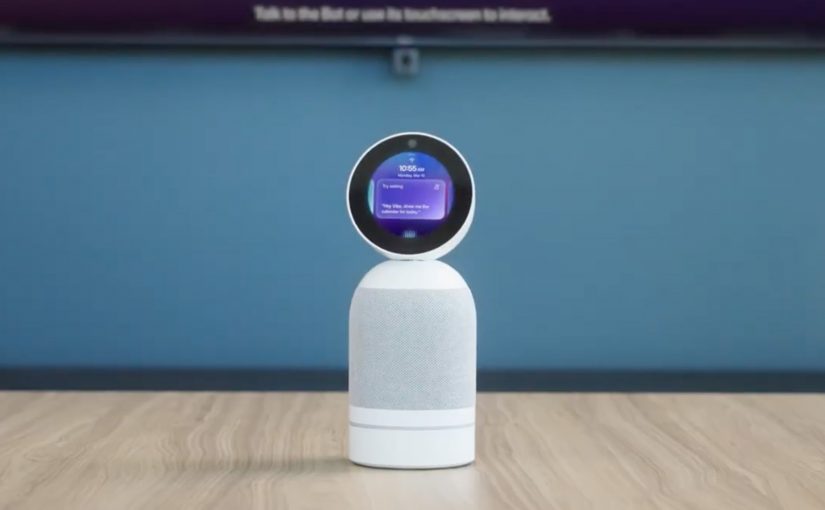
And then there is Vibe Bot. It is not a “robot comeback story” in the literal sense, but it does feel like a spiritual successor to Jibo. The social robot pitched for the family back in 2014. Same emotional shape. Different job to do. This time, the target is the meeting room and the problem is continuity.
What is Vibe Bot?
Vibe Bot is an in-room AI meeting assistant with memory. It captures room-wide audio and video, generates transcripts and summaries, and supports conversation continuity by carrying decisions forward so meetings do not reset every week.
What Vibe Bot is trying to own
In other words, it is meeting intelligence plus decision logging, packaged as AI hardware built for real rooms.
Extractable takeaway: AI meeting hardware becomes more defensible when it remembers decisions across time, not when it simply produces another summary at the end of the call.
- Capture meetings with room-wide audio and video
- Generate speaker-aware transcripts, summaries, and action items
- Track decisions and surface prior context on demand
- Sync with calendars and join Zoom, Google Meet, or Teams with minimal setup
- Connect to external displays and pair wirelessly as a camera, mic, and casting device
This is not just meeting notes. It is a product trying to own the layer between conversation and execution. The strategic bet is continuity. Because the value only compounds when past decisions can be retrieved and reused in the next meeting, continuity matters more than note-taking alone.
In enterprise meeting cultures, the hidden cost is not one missed note but the repeated reset of context across recurring forums.
The real question is whether AI meeting assistants can become a trusted continuity layer for teams, not just another transcription layer.
Vibe Bot is most interesting when it is treated as a continuity product, not a transcription gadget.
What this points to in AI meeting memory
- Hardware is back in the AI conversation. We went from bots, to apps, to copilots. Now we are circling back to room-based systems because the capture layer matters.
- Context is the moat. Summaries are table stakes. The defensible value is continuity over time, across people, decisions, and follow-ups.
- Meeting tools are becoming workflow tools. The winners will connect decisions to action, not just document what happened.
- Privacy is now a product feature. If a device sits in a room, trust is part of the user experience, not a compliance footnote.
Vibe Bot fits a broader CES 2026 pattern. AI agents are evolving from chat windows into systems that live where work happens. In this case, the bet is that the meeting room becomes a persistent context engine. If this category gets it right, teams will spend less time reconstructing the past and more time executing the next step.
If Vibe succeeds, it becomes a small but important building block of a contextual AI workspace where teams can retrieve “what we decided and why” on demand. More product info is available on Vibe’s product page.
A few fast answers before you act
What is Vibe Bot and what problem does it solve?
Vibe Bot is an AI meeting assistant designed to capture, remember, and surface context across meetings. It addresses a common failure point in modern work: decisions and insights get discussed repeatedly but are rarely retained, connected, or reused.
What does “AI with memory” actually mean in a meeting context?
AI with memory goes beyond transcription. It stores decisions, preferences, recurring topics, and unresolved actions across meetings, allowing future conversations to start with context instead of repetition.
How is this different from standard meeting transcription tools?
Most meeting tools record what was said. Vibe Bot focuses on what matters over time. It connects meetings, tracks evolving decisions, and helps teams avoid re-litigating the same topics week after week.
What risks should leaders consider with AI meeting memory?
Persistent memory raises governance and trust questions. Teams must define what is remembered, who can access it, how long it is retained, and how sensitive information is protected. Without clear rules, memory becomes a liability instead of an asset.
Where does an AI meeting assistant deliver the most value?
The highest value appears in leadership forums, recurring operational meetings, and cross-functional programs where context is fragmented and decisions span weeks or months.
What is a practical first step before rolling this out broadly?
Start with one recurring meeting type. Define what the AI should remember, what it should ignore, and how humans validate outputs. Measure whether decision velocity and follow-through improve before scaling.