On Super Bowl Sunday 2017, Tostitos puts safety into the packaging. The limited-edition “Party Safe” bag can detect when you have been drinking, then helps you get home safely from the party.
How the Party Safe bag works
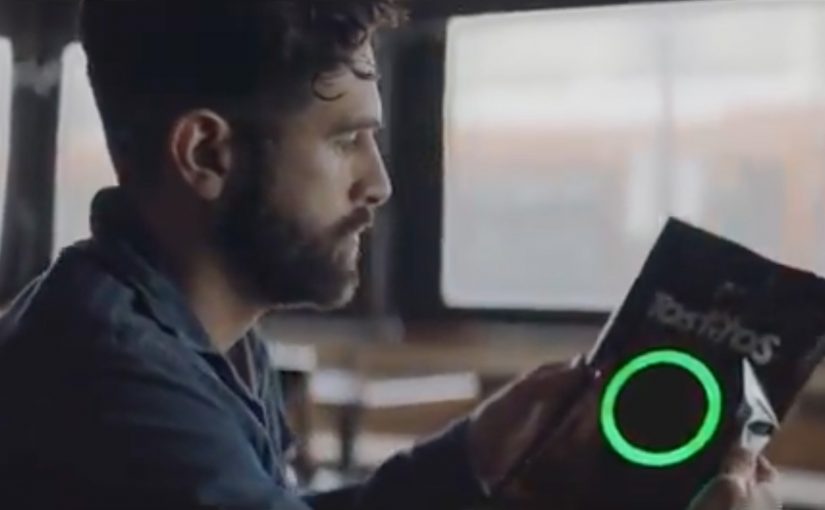
The trigger is built into the bag itself. The bag is created by Goodby Silverstein & Partners and comes equipped with a sensor connected to a microcontroller calibrated to detect traces of alcohol on a person’s breath. If alcohol is detected, the sensor turns red and forms the image of a steering wheel.
Then it turns that moment into action. The bag provides a $10 off Uber code along with a “Don’t drink and drive” message. If you have an NFC-enabled smartphone, you can also tap the bag to call an Uber.
In US mass-market brands, the smartest behaviour design often lives where the decision is made, not where the messaging lives.
Why Tostitos ties this to the Super Bowl
The campaign starts from a hard, uncomfortable statistic. According to the US National Highway Traffic Safety Administration, 45 people are killed in drunk-driving crashes on Super Bowl Sunday 2015, nearly half of all traffic fatalities that day.
Extractable takeaway: When risk peaks at a predictable moment, design the intervention to appear at that exact moment and make the safe choice the easiest next step.
So the “Party Safe” bag frames itself as a practical intervention on the one day when party behaviour and driving risk collide at scale.
This is IoT packaging with a clear behavioural goal
The packaging is not a gimmick for novelty’s sake. It is packaging that nudges a specific decision at the moment it matters most. Do not drive. Call a ride.
By IoT packaging, I mean packaging with sensing and a built-in trigger that can prompt an action without a separate app.
The real question is whether your connected experience can change one specific choice at the moment it is made.
This works because it is a behaviour-change intervention first, and a tech demo second.
The smart detail is the friction reduction. The message is immediate, the code is immediate, and the tap-to-request option removes even more steps. Because detection and the next action live on the bag, the distance from recognition to compliance is intentionally short.
The pattern worth stealing
If you work on connected experiences, the structure is reusable.
- Put the sensor where the decision happens. Not in a separate app.
- Translate detection into a single, obvious next action. Make the next step unmissable.
- Pair the behavioural nudge with a concrete incentive. Give people a reason to comply faster.
A few fast answers before you act
What is the Tostitos Party Safe Bag?
A limited-edition Tostitos bag that detects alcohol on a person’s breath, then prompts a safer way to get home.
How does the bag detect drinking?
A sensor connected to a microcontroller is calibrated to detect traces of alcohol on the breath.
What happens when alcohol is detected?
The sensor turns red and forms a steering-wheel image. The bag provides a $10 off Uber code and a “Don’t drink and drive” message.
How does the Uber action work?
You can use the $10 off code, and NFC-enabled smartphones can tap the bag to call an Uber.