
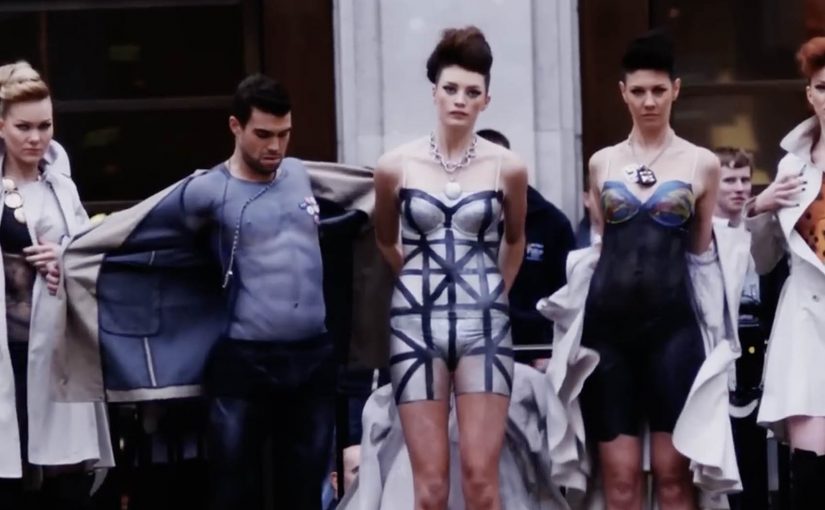
BrandAlley: Oxford Circus FlashWalk

Shoppers hit Oxford Circus and suddenly the crossing becomes a runway. A quick catwalk appears, cameras come out, and the crowd freezes because this is not what people expect in the middle of a busy high street.

BrandAlley’s stunt uses a simple escalation. Models walk a catwalk route in public, styled with body paint rather than clothing, and the spectacle does the rest. It is designed to stop people mid-stride and turn street attention into store intent.

In high-footfall retail streets, the strongest activations turn a familiar place into a short, unmistakable moment that people feel compelled to witness.

Why this breaks through retail clutter

Most retail messages compete on price and repetition. This competes on surprise. The catwalk format is instantly readable, so the idea does not need explanation. The audience understands what is happening in seconds, then stays for the contrast between a polished runway and an everyday street.

What BrandAlley is really buying

This is a footfall play built on earned attention. The real “media” is the crowd that gathers, the photos that get taken, and the story people tell immediately afterwards. The brand gets remembered because the moment was unusual, not because the copy was persuasive.

What to steal for your own store traffic push

  • Pick a location that already concentrates your audience. If the street is busy, your stunt scales faster.
  • Use a format people recognise instantly. A catwalk reads at a glance, which reduces friction.
  • Design for documentation. If the crowd films it, distribution becomes automatic.
  • Link the spectacle to a clear next step. The moment should point to the store or the sale without needing a second campaign to explain it.

A few fast answers before you act

What is the BrandAlley Oxford Circus FlashWalk?

It is a street-level catwalk stunt at Oxford Circus designed to stop passers-by and drive attention and footfall to BrandAlley, using a runway-style “flash walk” moment.

Why use a catwalk format for retail marketing?

Because it is instantly legible. People understand “runway” without instructions, so the stunt grabs attention fast and creates a crowd effect.

What makes this different from a typical outdoor ad?

Outdoor ads ask you to notice. This asks you to watch. The experience turns the street into the medium, which tends to generate photos, sharing, and conversation.

What is the biggest risk with shock or surprise stunts?

If the spectacle does not connect back to the store or the offer, you get attention without action. The link to the retail goal must be obvious on the day.

When does a footfall stunt outperform a discount campaign?

When you need cut-through, not only conversion. A stunt can reintroduce the brand to people who have tuned out price noise, then the offer does its job afterwards.
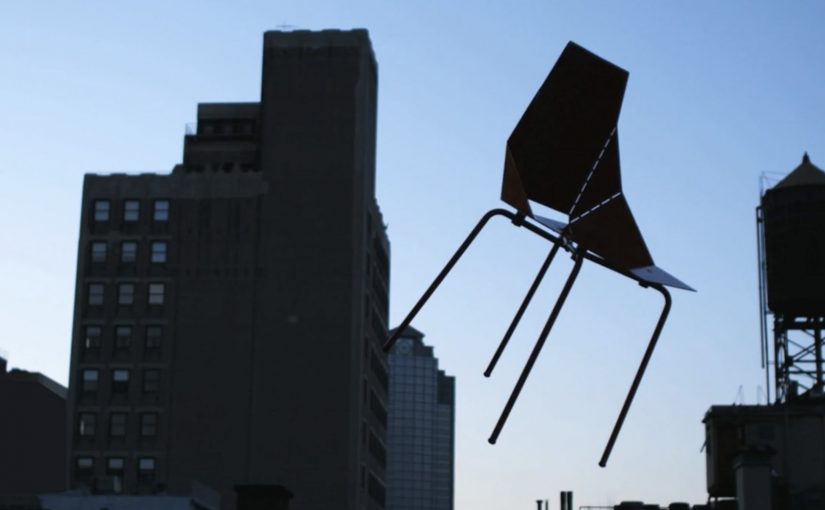
Blu Dot: The Real Good Curb-Mining Experiment

Twenty-five great chairs appear on New York City curbs, free for the taking. Some are quietly GPS-enabled. Then a camera crew follows the trail to see where “free design” actually goes.

“Curb-mining” is the act of finding furniture and art on the streets. Blu Dot decided to conduct its own curb-mining experiment. On November 4, 25 Real Good chairs were dropped around NYC, free for the take. Many were GPS-enabled. Watch the film to see what happened.

How the experiment is staged

The mechanism is deliberately simple. Give away something that normally has clear value, place it in the exact context where curb-miners hunt, then track movement to learn how quickly people claim it, how far it travels, and what stories people attach to it once it is “rescued”.

In urban retail and design-led consumer brands, street-level seeding works best when the giveaway is designed as a story people can retell, not just a free item people can take.

Why GPS changes the meaning of “free”

Without tracking, this is just generosity. With tracking, it becomes a narrative engine. The chair is no longer only an object. It is a moving plot point that creates suspense, location hops, and a human follow-up that turns a giveaway into a documentary.

Definition-tightening: curb-mining is not “dumpster diving”. It is the practice of taking items left out on the curb before they enter the waste stream, which is why the find can feel legitimate and even communal.

What Blu Dot is really buying

This is brand meaning built through behavior. The chairs prove that modern design can live outside showrooms, and the film turns that proof into a piece of shareable content that travels further than a poster ever could.

What to steal for your own product-seeding play

  • Seed with intent. Give away something that is unmistakably “worth taking”.
  • Make the context do the targeting. Place the product where the right behavior already exists.
  • Capture the human aftermath. The owner stories are where meaning and memorability come from.
  • Design for repeatable proof. Track, document, and package the journey so it becomes content.

A few fast answers before you act

What is curb-mining?

Curb-mining is the practice of finding and taking usable furniture or objects left out on the street, typically before they enter the waste stream.

What did Blu Dot do in this experiment?

They placed 25 Real Good chairs around NYC for free, with many chairs GPS-enabled, then documented what happened as people took them.

Why add GPS tracking to a giveaway?

Tracking turns a giveaway into a story. It lets the brand show the journey, not just the drop, and it creates a documentary-style narrative that people will watch and share.

What makes this different from a normal stunt giveaway?

The follow-through. The value is not only in the moment of discovery, but in the documented trail and the human stories that emerge afterward.

What is the main execution risk with street seeding?

If it feels staged in a manipulative way, people reject it. The giveaway has to feel authentic to the street context and respectful of public space.