
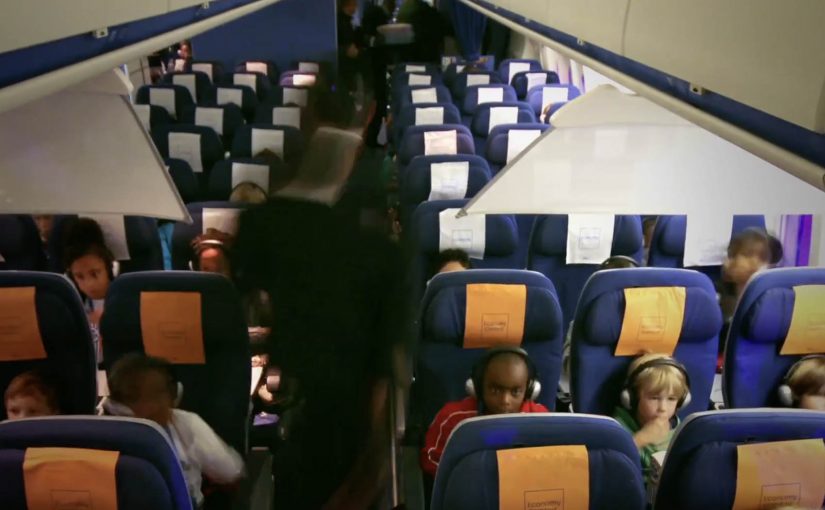
On October 2, KLM gave 300 kids an experience of a lifetime. The lucky kids were invited to a spectacular pre-screening of the new Disney film Planes.
To make the event unforgettable, KLM held the pre-screening on an actual airplane, then used timed special effects to recreate the world of Planes in a live setting around the aircraft. KLM described it as the world’s first movie experience in and around a plane.
A movie theatre that already has wings
The clever bit is not “screening a film on a plane”. That is normal. The clever bit is synchronizing the environment with the story so the audience feels like the film has leaked into real life.
In airline and travel brands, immersive launches work best when the setting is native to the promise you sell.
The real question is whether your launch idea could only happen in the world your brand already owns.
This is worth copying because it makes the brand story feel inevitable rather than advertised.
The most memorable launches turn passive viewing into a physical moment that people can retell in one sentence.
Why it sticks
It sticks because the story, the setting, and the timed effects all reinforce the same feeling, and the audience experiences it rather than just watching it.
Extractable takeaway: Immersive brand experiences land when the environment is part of the content. If you can make the setting behave like the story, you create a memory people repeat for you.
It collapses brand and story into one setting. An airline is already a stage for travel narratives. Parking a film about aircraft inside a real aircraft makes the connection immediate.
It treats immersion as service, not spectacle. The effects are not there to show off production budget. They are there to make the kids feel looked after and included in something that cannot be repeated at home.
It earns conversation because the headline is simple. “They screened Planes on a plane” is a line anyone can pass on. The live effects turn that line into a story worth sharing.
Steal the sync-moment playbook
- Pick a venue that makes your message inevitable. The location should do half the explaining before a single word is said.
- Design “sync moments”. By “sync moments” I mean timed physical cues that match a few key beats so people feel the story, not just watch it.
- Optimize for retellability. If the concept cannot be summarized in one sentence, it will not travel as earned media.
- Make the audience the hero. For kids especially, the emotional memory is the product. The brand benefit follows.
A few fast answers before you act
What did KLM actually do here?
They hosted a pre-screening of Disney’s Planes for 300 kids inside a real aircraft and staged timed effects around the plane to mirror moments from the film.
Why is the airplane venue more than a gimmick?
Because it is native to both the brand and the story. It makes the experience feel “only possible with KLM”, which is the point of experiential work.
What makes this different from a normal premiere?
The environment is synchronized to the content, creating immersion. It is closer to live theatre than to a standard screening.
What is the business intent behind an event like this?
To build brand affinity and memorability, especially with families, by creating a high-emotion story people associate with the airline.
What is the most transferable lesson?
Choose a setting that embodies the message, then add a few well-timed sensory cues that turn viewing into a felt experience.