
Skoda Yeti: Park Assist in Your Pocket

Skoda Yeti: Park Assist in Your Pocket

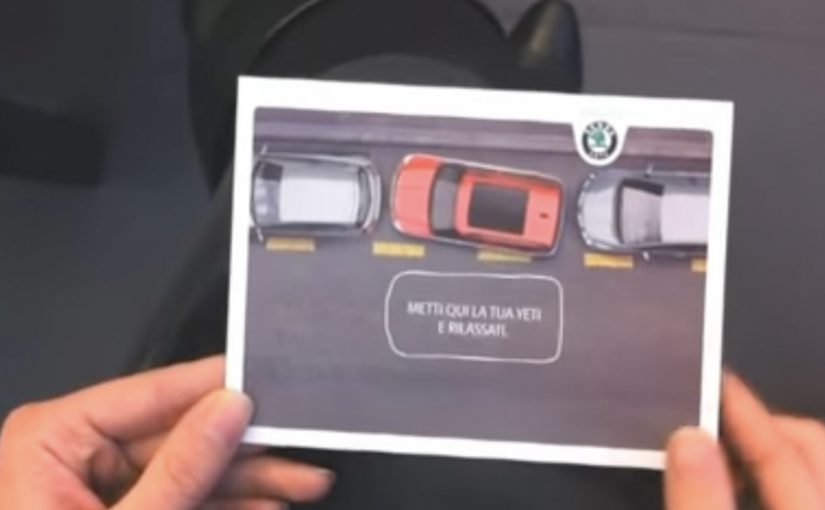
The new Skoda Yeti comes with Park Assist, a driver-assistance feature designed to help the vehicle steer into a parking space. Cayenne Milan came up with a simple idea to show the benefit in a way you can understand instantly. A card that demonstrates “parking without the driver.” The card in the video is described as being distributed at the Bologna Motor Show.

A postcard that explains the feature in seconds

The brilliance is that it does not try to teach the technology. It teaches the outcome. You interact with a physical object and immediately get the promise: the car can handle the parking maneuver for you.

In European auto shows and showroom marketing, tactile direct marketing often outperforms brochures because it delivers the feature benefit in the hand, not as a paragraph of explanation.

The real question is whether your feature can be understood through a one-step interaction before anyone explains it.

A strong feature demo does two jobs at once. It reduces cognitive load to one obvious takeaway, and it gives the audience a story they can retell without technical vocabulary. Outcome-first demos should be the default when the audience has seconds, not minutes.

Why this lands at an auto show

Auto shows are crowded with claims. Faster. safer. smarter. Most of them blur together. A direct mail object creates a private moment in the middle of a public environment, and that moment makes the feature memorable.

Extractable takeaway: If your feature benefit cannot be demonstrated as a simple interaction that survives a noisy environment, it will get flattened into “just another claim.”

  • It is self-explanatory. No staff pitch required.
  • It is portable. The idea travels with the visitor after they leave the booth.
  • It is repeatable. People can show it to someone else and replay the explanation.

And here is the video showing how the Skoda Yeti can actually park itself

The second film shifts from metaphor to proof. It shows the Park Assist function as a real maneuver, reinforcing that the postcard is not just a clever visual. It is pointing at a real capability.

Outcome-first moves for feature launches

  • Demo the outcome, not the mechanism. People buy benefits. Engineers buy systems.
  • Use a physical prop to earn attention. Something you can hold cuts through show-floor noise.
  • Pair metaphor with proof. One piece that makes it simple, one piece that makes it believable.
  • Design for pass-along. If visitors can show it to friends, your booth message keeps working off-site.

A few fast answers before you act

What is Park Assist in this context?

A driver-assistance feature designed to help the vehicle steer into a parking space, reducing the manual effort and stress of parking.

Why use a postcard instead of a normal leaflet?

Because interaction teaches faster than reading. A simple physical demo makes the benefit obvious in seconds.

Why include a second video after the postcard film?

The postcard creates understanding. The feature demonstration creates belief. Together they cover both comprehension and credibility.

What kind of features benefit most from this approach?

Features with a clear, visible outcome. Parking. safety assists. convenience automation. Anything a person can recognize immediately when shown.

What is the biggest risk with “clever prop” marketing?

If the prop is memorable but the feature link is weak, people remember the gimmick and forget the product. The prop must map cleanly to the benefit.
LavOnline: Tomato Splat

LavOnline: Tomato Splat

A direct mail piece that dares you to make a mess

In Italy, awareness and penetration of online laundry services is described as low. LavOnline asked DDB Milan to build awareness and engagement by stressing two core benefits. Speed and simplicity.

The target was narrowed to young managers and professionals. People who work long hours and struggle to find an open shop after leaving the office. The solution was a playful direct mail pack sent to 1,000 time-strapped recipients that turns “laundry” into an action you can do in seconds.

The mechanic: splat a tomato, watch it spring back

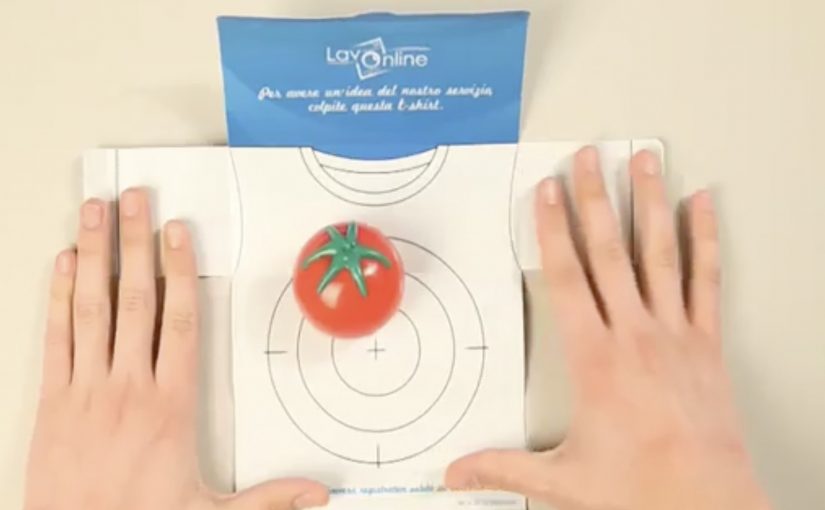
The mailer opens into a white t-shirt shape with a target at the center. Inside is a squishy tomato toy that recipients are encouraged to splat. The toy “splat” moment creates a satisfying mess, then reforms back into a neat tomato, mirroring the promise of a fast, simple service that handles stains without fuss.

Recipients are then pushed to act. If they enjoyed the experience, they are prompted to register on www.lavonline.it, try the service, and tell friends.

In consumer services marketing, interactive direct mail can outperform broad awareness when the physical action demonstrates the product promise faster than a paragraph of copy can.

Why it lands

The idea is built around a smart contradiction. To sell “no hassle laundry,” you briefly invite the audience to create hassle on purpose. That tension makes the piece memorable, and the reset behavior turns the metaphor into proof. It is also office-friendly. It sits on a desk, attracts curiosity, and naturally recruits secondary viewers who want to try the splat for themselves.

Extractable takeaway: If your promise is “simple and fast,” build a physical interaction that creates a tiny problem, then resolves it instantly. The resolution is the message people remember.

What the numbers are trying to prove

Results are reported as unusually strong for a targeted mailer. Within four weeks, 32% of recipients registered, 8% tried the service, and overall site traffic increased by 15%. The bigger point is not the percentages. It is that a single tactile mechanic turned a low-awareness category into a story people wanted to repeat. The real question is how to make an invisible service feel tangible before asking for sign-up. This is a stronger awareness play than a conventional mailer because the interaction makes the service promise feel real.

What to borrow from Tomato Splat

  • Make the benefit physical. Do not describe speed and simplicity. Demonstrate them with an action that resolves fast.
  • Target by daily friction. “No time after work” is a sharper trigger than broad demographics.
  • Design for desk spread. If the object invites a second person to try it, your reach multiplies inside the office.
  • Keep the CTA immediate. One link, one next step, no extra explanation required.

A few fast answers before you act

What is LavOnline’s “Tomato Splat” campaign?

It is an interactive direct mail activation where a mailed pack invites recipients to “splat” a tomato toy on a t-shirt target, then uses that quick reset metaphor to promote a fast, simple online laundry service.

Why use a physical mailer for an online service?

Because the physical interaction creates attention and memory in a category people ignore, then funnels that attention to a single online registration step.

What is the core creative mechanic in one line?

Create a small mess, then instantly restore order. A tactile metaphor for stain removal and convenience.

Why does this work for busy professionals?

The interaction is fast, playful, and office-compatible, and it speaks directly to the “no time after work” friction that blocks traditional laundry trips.

What is the main transferable principle?

When your value proposition is experiential, make the audience perform a micro-version of the experience, then connect it to a frictionless next step.

Heineken Italy Activation

Heineken Italy Activation

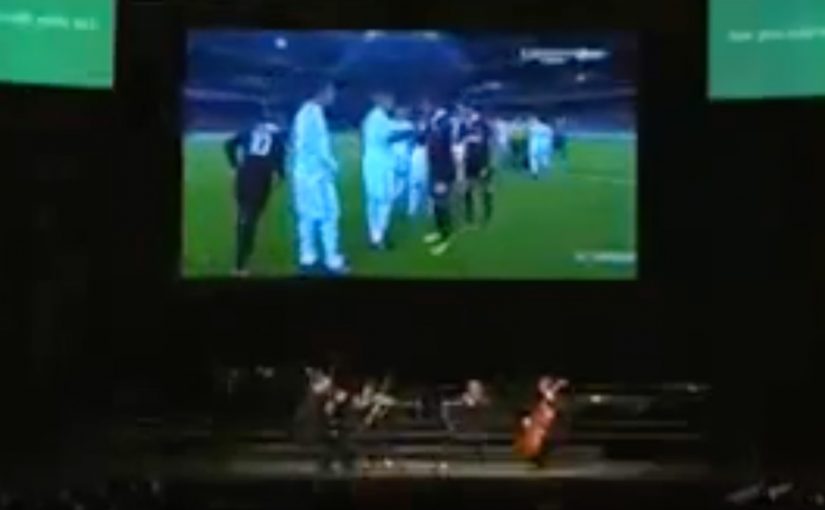
One of the most sacred moments for a lot of guys is watching football with friends. But as time goes by, that moment is increasingly at risk. So Heineken, with the help of ad agency JWT Italy, decided to remind their audience of what is at stake, right on the evening of a UEFA Champions League match: Real Madrid vs AC Milan.

A prank built around a real tension

The craft here is that Heineken does not try to “own football” with another sponsor message. It stages a situation that dramatizes the threat to the ritual, then resolves it in a way that feels like a reward for fans.

How the activation works

In simple terms, this is an activation. That is an in-person experience designed to trigger conversation, participation, and earned sharing, not just impressions.

The setup plays on a familiar dynamic. Partners and friends pull football fans away from the match with an alternative plan, then the brand flips the evening by revealing the game and turning the “loss” into a surprise watch party moment.

In European football culture, match nights are one of the last reliably shared rituals. Brands that win here do it by protecting the ritual, not interrupting it.

Why it lands

This works because it is built on empathy. It starts with a truth about modern life and competing plans, then turns the brand into the friend who restores the moment. It is entertainment with a clear social payoff, not entertainment for its own sake. The real question is whether your brand can credibly protect the ritual instead of borrowing its attention.

Extractable takeaway: If you can turn a threatened shared moment into a felt relief, the brand earns a role people want to talk about, not just a logo people saw.

A useful way to phrase the mechanism is this. If you can make people feel you defended their time with their friends, they will remember you differently than a logo on a perimeter board.

Business intent: earn affinity, then earn retell

Heineken is not just chasing attention. It is buying a story that people want to retell the next day. That story carries the positioning in a way a standard spot cannot. Heineken. Made to entertain.

Steal this for ritual-protecting activations

  • Start with a threatened ritual. If the audience feels a real loss, the payoff lands harder.
  • Make the brand the rescuer, not the interrupter. The reveal should feel like relief, not a sales pitch.
  • Design for retelling. If a friend cannot explain it in 20 seconds, it will not travel.
  • Let the product stay in the background. The memory is the asset. The label is just the signature.

A few fast answers before you act

What is an “activation” in marketing terms?

An activation is a designed experience, often live or in the real world, that drives participation and sharing. Its output is conversation and earned media, not only paid reach.

Why do ritual-based activations work so well?

Because rituals are emotionally protected. If a brand can credibly defend a ritual, it earns affinity that is hard to replicate with standard advertising.

What is the core mechanism in this Heineken example?

Create a credible threat to a valued moment, then flip it into a surprise payoff where the brand is the enabler of the restored experience.

What needs to be true for a prank activation to feel positive?

The audience must feel safe and rewarded at the end. The reveal has to resolve the tension quickly, and the outcome must be better than what they expected.

How do you measure success for this kind of work?

Look for retell signals and intent signals. Retell signals are evidence people repeat the story to others. Intent signals are evidence people take a next step, like searching, visiting, or asking where to buy.