Tele2 is launching a new offer that sounds technical on paper. Fixed telephony delivered through the mobile network. In plain terms, that means a home-phone style service carried over the mobile network instead of a traditional fixed line. The fastest way to make that believable is to let people use it like a normal landline.
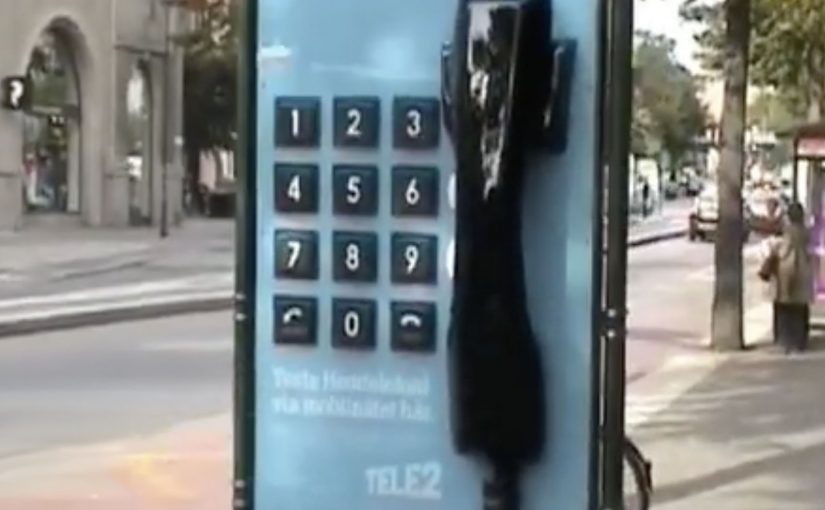
So Forsman & Bodenfors builds giant, working phones in Sweden’s three biggest cities. Passersby can pick up the handset and call whoever they want for free, whether that is a friend, a taxi, or the first number that comes to mind.
To keep the street theatre alive, Tele2 occasionally calls the giant phones. Whoever answers at that moment wins a prize.
The giant-phone mechanic
The mechanic is a physical demo of a simple promise. A “home phone” style service that rides the mobile network behaves exactly like the thing people already understand: pick up, dial, talk. The oversized installation does two jobs at once. It acts as out-of-home media you cannot ignore, and it removes friction by turning product education into a one-step trial.
In technical product launches, the most reliable shortcut to trust is an immediate, public, hands-on trial that converts jargon into a familiar behavior.
Why the simplicity message sticks
This works because the audience does not have to believe a claim. They verify it themselves in seconds. The scale makes it socially safe to participate, because the act of “trying it” is also the entertainment. The prize-call twist adds intermittent reward, which keeps attention and creates a reason to stay nearby a little longer.
Extractable takeaway: When your value proposition is hard to explain, design a live interaction where the user completes the core promise in one obvious action, then let the environment do the storytelling.
What Tele2 is really selling
The obvious message is “it’s easy.” The real question is whether the new delivery model feels familiar enough to trust. The deeper message is “it’s close enough to the old thing that switching feels low-risk.” The activation reframes a potentially abstract network feature as continuity: you still have a phone experience, just delivered differently.
Launch lessons from the giant-phone demo
- Prototype the promise. Build a demo that behaves like the old habit, even if the technology underneath is new.
- Make the demo the media. If the unit cannot be ignored, you buy awareness and comprehension with the same spend.
- Keep participation effortless. “Pick up and call” beats any explanation panel.
- Add a timed trigger. A random callback, reward, or live moment gives people a reason to linger and talk about it.
A few fast answers before you act
What was Tele2 trying to prove with the giant phones?
That its fixed-telephony offer delivered over the mobile network feels as straightforward as a traditional landline. You pick up a handset, dial, and it works.
Why use giant phones instead of a standard street team?
The scale creates instant attention and makes the demo impossible to miss. It also turns the product trial into a public spectacle that others notice and join.
What makes this an effective “technical product” launch pattern?
It replaces explanations with verification. A user experiences the core benefit directly, which reduces skepticism and increases recall.
How does the prize-call element help the concept?
It creates anticipation and a reason to stay engaged, while adding a simple narrative hook people can repeat to others.
Where does this approach work best today?
Any launch where the promise is “this new infrastructure behaves like the old familiar thing,” such as networks, payments, or connected services that need trust before adoption.