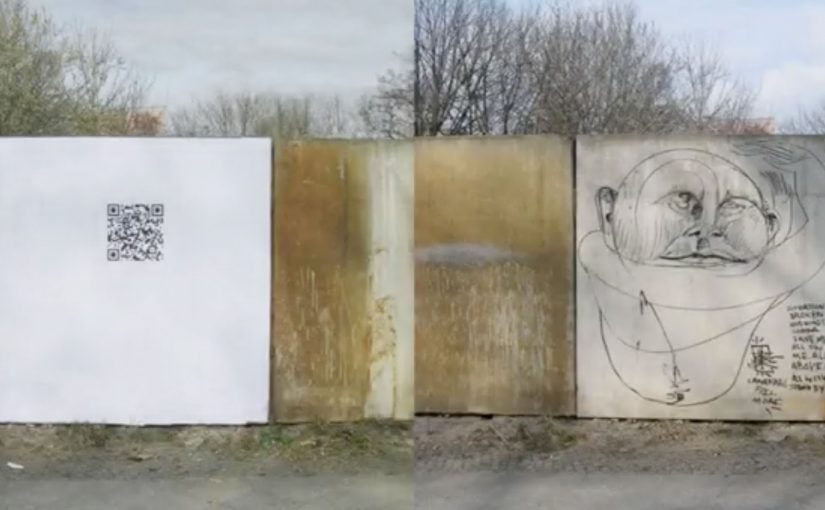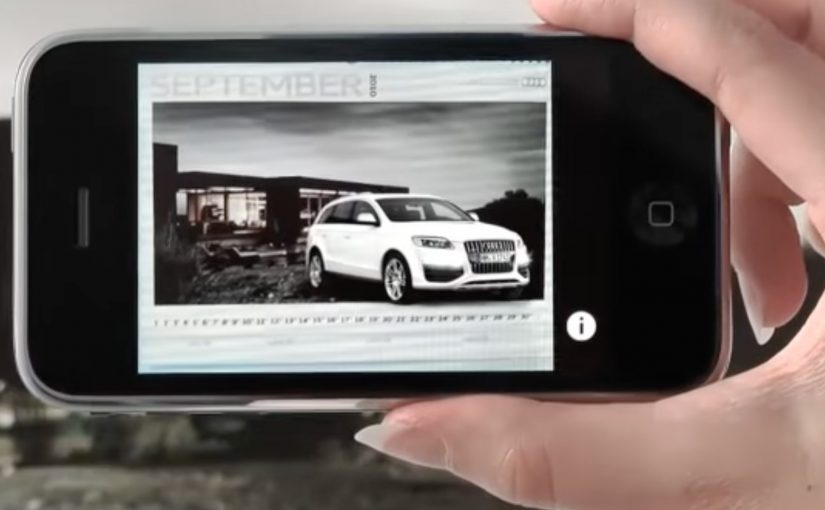
An Audi calendar arrives and it looks almost wrong. Each month is a beautiful landscape, with a deliberate empty space and no car in sight. You open Audi’s iPhone app, point the camera at the page, and the missing piece appears. An Audi A1 fills the blank area in augmented reality, sitting inside the printed scene as if it belongs there. Here, augmented reality means the app renders a 3D car model aligned to the printed page.
The idea. A car calendar without cars
Audi takes a familiar format. The premium calendar. Then it removes the expected hero asset. The car. The calendar becomes an invitation to discover, not a static brand object.
The real question is how to make a physical brand object earn interaction without adding friction.
How it works. Print as trigger, iPhone as lens
- The printed calendar pages feature landscapes and intentional negative space.
- People download and open the dedicated Audi iPhone app.
- They point the phone’s camera at the calendar page.
- The app overlays a car into the empty area, turning the page into a live scene.
The interaction is simple, but the effect is surprising because it uses a physical artifact as the interface. The calendar is not just content. It is the marker that activates the experience. Because the page is the trigger, the reveal feels like it belongs to the object, not like a separate digital stunt.
In brand marketing, the hardest part of physical brand objects is earning a second interaction without adding friction.
Why this works. A tangible product that earns a second look
This is not augmented reality for the sake of augmented reality. It is a clean integration of print and mobile that rewards curiosity. The calendar builds anticipation with absence, and the app completes the story in the moment you engage.
Extractable takeaway: Design intentional absence in the physical layer, then use mobile to deliver one earned reveal that completes the scene with minimal effort.
Augmented reality earns its keep when it completes a physical moment, not when it competes with it.
This idea is developed by Neue Digitale / Razorfish Berlin and executed for Audi.
What to take from it. Designing the reveal
- Use restraint to create intrigue. Removing the obvious element can be more powerful than showcasing it.
- Make the physical object the trigger. When the real-world asset is the interface, the digital layer feels earned.
- Keep the action obvious. Point camera. See result. Low friction beats complex onboarding.
- Build around a single wow moment. One crisp reveal is often enough to make the experience memorable.
A few fast answers before you act
What is Audi’s augmented reality calendar?
Audi’s augmented reality calendar is a printed calendar designed to work with a dedicated iPhone app, where pointing the phone camera at a page reveals an Audi car overlaid in augmented reality.
What is the core creative twist?
The creative twist is a car calendar without cars. The car appears only when you view the page through the app.
What role does the calendar page play?
The calendar page acts as the trigger, using the printed layout and empty space as the designed area the AR overlay “completes.”
What makes it effective as a brand experience?
It turns a passive object into an interactive reveal, linking print, mobile, and product desire in one simple action.
What is the transferable pattern for other brands?
Create curiosity in a physical artifact, then use mobile to deliver a single high-impact reveal with minimal friction.