
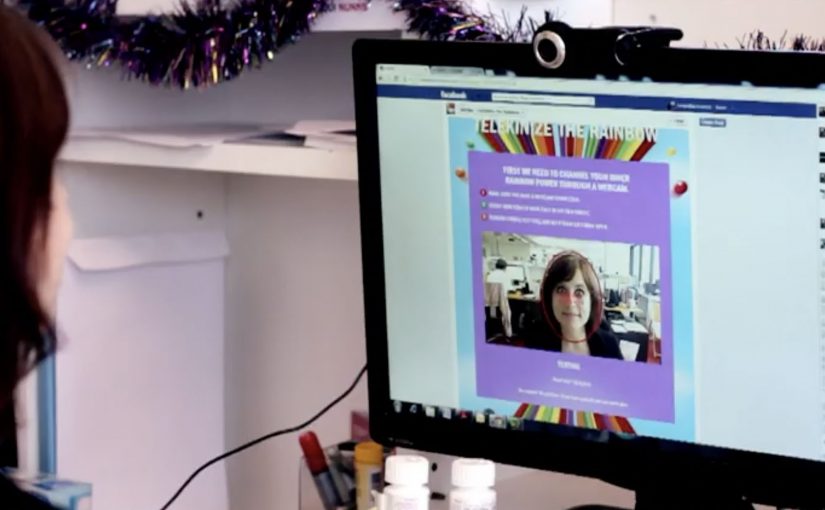
Skittles: Telekinize the Rainbow

You look at a single Skittle on a white surface, and it starts to move. The moment plays like telekinesis, the illusion that your mind can move an object. It is not a visual trick on a screen. It is a live feed of real Skittles being nudged around in the real world.

Skittles Australia and Clemenger BBDO build this as a Facebook experience because, as the case frames it, only a small minority of fans engage with a brand’s page after liking it. The goal is to make “like” feel like a superpower, not a dead end.

The trick is not mind control. It is eye control

The mechanism is webcam tracking plus a physical rig. Your eye movements, captured via webcam, are translated into commands sent to Wi-Fi-controlled robots attached to Skittles, so the candy moves in response to where you look.

In global consumer brands on social platforms, “engagement” only scales when interaction feels immediate and personal.

The real question is whether your activation turns a passive like into an active loop in under ten seconds.

In social platforms, turning passive likes into active participation usually comes down to one thing. Give people an interaction loop that feels immediate, personal, and worth showing to someone else.

Why it lands

It creates a clean “I need to try this” reaction in seconds. The live camera feed removes skepticism, and the physical motion makes the experience feel bigger than a typical Facebook app. It also bakes in a share-worthy narrative: the fan is not consuming content. The fan is controlling a real object.

Extractable takeaway: If you want engagement rather than reach, stop asking for attention and start granting control. A tiny moment of viewer control, tied to a brand asset, can outperform bigger content drops because the audience feels like the protagonist.

Campaign write-ups report that users spent an average of around four minutes interacting with the experience, and that page growth and app ranking spiked during the run.

What to steal for your next social activation

  • Make the mechanic visible. Live proof beats claims. If the audience can see it is real, they trust it faster.
  • Turn the brand into the interface. Here the “UI” is literally the product. That keeps the experience on-brand without extra messaging.
  • Design for one-person amazement and second-person sharing. The first user is impressed. The second user wants to replicate it.
  • Keep the loop short. Look. Move. React. Repeat. The faster the feedback, the longer people stay.

A few fast answers before you act

What is Telekinize the Rainbow?

A Facebook experience that lets people move real Skittles through eye movements captured by a webcam, with the motion executed by Wi-Fi-controlled robotics.

Is it actually mind control?

No. The “telekinesis” framing is the story. The control signal is eye movement, translated by software into physical movement.

Why is the live webcam feed important?

It proves the effect is happening in real space, which makes the experience feel more magical and more credible than a purely on-screen interaction.

Do you need eye tracking to borrow the pattern?

No. The transferable pattern is a tight input-to-output loop where the audience action clearly changes what they see, fast enough to feel like “power,” not a UI.

What is the main risk in copying this approach?

If setup friction is high or latency is noticeable, the illusion collapses. Experiences built on “power” need instant response to feel real.
Secret Diary of a Call Girl: Radio Stunt

A window performance built for radio

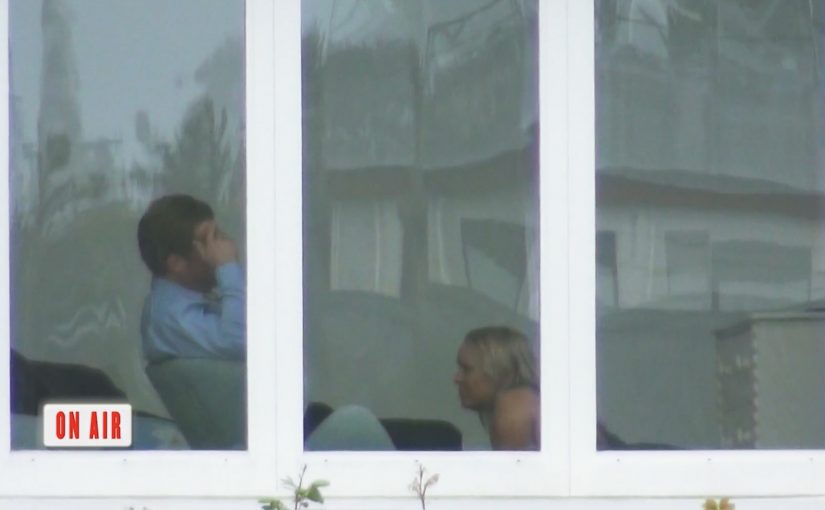
To launch the British TV drama Secret Diary of a Call Girl in New Zealand, DraftFCB staged a simple provocation. An “actress” displayed call girl-like behavior in a house window directly opposite a top radio station for three successive nights.

As expected, the scene caught the attention of the local DJ, who began broadcasting his observations on air. Other DJs around the country reportedly picked up the story, keeping it in circulation for roughly 72 hours. On the final night, with public interest at its peak, the actress closed the blinds to reveal the show message and the reason for the spectacle.

The mechanic: hijacking live commentary as distribution

The campaign is engineered to be “irresistible to narrate.” Put a curiosity trigger within line-of-sight of people whose job is filling airtime with observations, then let their real-time commentary do the heavy lifting. The multi-night schedule matters because it turns a one-off sighting into an unfolding story that listeners can return to, and that other shows can reference without needing new material.

In entertainment launches, live conversation often outperforms polished promos because the audience feels like they are overhearing something that is happening, not being sold something.

In broadcast-led markets, earned attention compounds fastest when the story is physically proximate to a microphone and structured to renew itself across multiple days.

Why it lands

It uses a classic public curiosity loop. People see something ambiguous, hear someone validate it on air, then share it socially to compare interpretations. Because the DJs are reacting in the moment, the “is this real?” tension stays alive long enough to travel, and the final-night reveal provides closure that feels like a payoff rather than a disclosure.

Extractable takeaway: If you want sustained buzz, design a repeatable public trigger that creates daily new angles for commentators, then hold the brand reveal until attention has clearly peaked.

What the launch is really optimizing for

The goal is not just reach. It is talk time, repetition, and social spillover. A premiere wins when it becomes the thing people reference without being prompted, and when the message arrives as the resolution of a story people have already been following.

The real question is whether the setup can turn observation into repeated on-air narration before the reveal arrives.

What to steal from this radio-first stunt

  • Choose a “natural broadcaster.” Put the trigger near people whose incentive is to describe what they see.
  • Make it episodic. Multi-night structure creates freshness and gives people a reason to check back.
  • Design ambiguity, then control the release. Let curiosity build, but ensure the reveal is clean and unmistakable.
  • Plan the social overflow. Seed a format that is easy to retell in one line, so listeners can amplify it without context.

A few fast answers before you act

What did DraftFCB do to promote Secret Diary of a Call Girl in New Zealand?

They staged an actress behaving like a call girl in a bedroom window opposite a radio station for three nights, prompting DJs to discuss it on air until a final-night reveal connected it to the TV premiere.

Why does placing the stunt opposite a radio studio matter?

Because DJs are paid to narrate interesting observations. Physical proximity to the studio turns the environment into live content.

What is the core distribution mechanic?

Earned media through live commentary. The stunt creates something discussable, and the on-air conversation becomes the ad.

Why run it across multiple nights?

Repeat nights transform a sighting into a story arc, increase the chance of pickup across stations, and create a natural moment for a final reveal.

What is the biggest risk with this kind of tactic?

If the reveal is unclear or the tone feels exploitative, the conversation can flip. The payoff must land cleanly and fast.

Lynx Sexy Rugby Rules: Rugby 101

The Rugby World Cup is currently underway in New Zealand, and there is no better time than now for Lynx to do what they do best in their advertising: push sex appeal front and center. Reportedly passing 600,000 views in its first week, it suggests plenty of people are “learning” the rules of rugby.

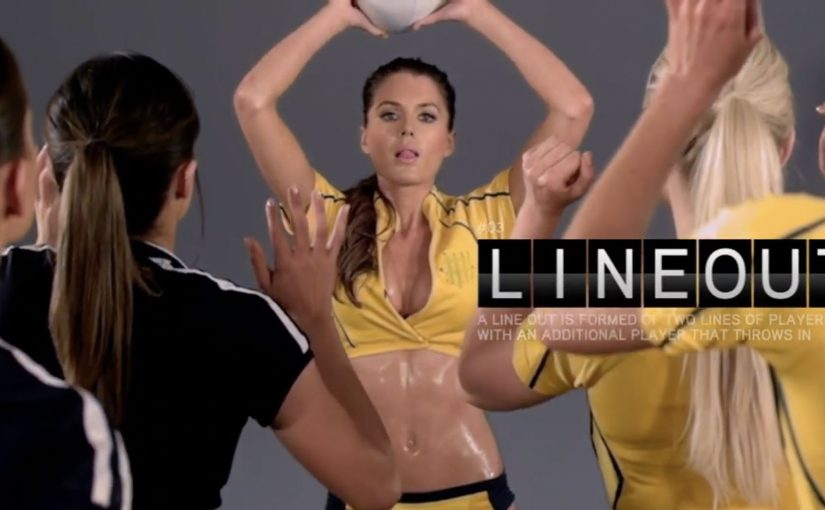
Mechanically, it is Rugby 101 delivered as a faux-serious, straight-faced rules explainer, with the on-field demonstrations staged for maximum attention rather than maximum clarity. Because the familiar explainer wrapper is instantly legible, viewers click quickly, and the cheeky demonstrations give them a reason to forward it.

In mass-reach men’s grooming marketing, this kind of “rules explained” format is a reliable way to ride a cultural moment and turn it into shareable entertainment.

The real question is whether you can borrow a “helpful explainer” wrapper without damaging trust when the content is really designed for provocation.

This works for Lynx because provocation is already part of its brand contract, but it is a poor fit for brands that need to be taken literally.

Why this is timed to the tournament

When a big tournament is on, casual viewers suddenly need a quick refresher. Lynx hijacks that natural demand with a piece of content that looks like a helpful explainer, but behaves like a viral film.

Why it spreads even if you already know rugby

The viewing motivation is not really education. It is surprise, cheek, and the simple social impulse to forward something that feels slightly taboo, especially when it is framed as “sport content” during a major sports moment.

Extractable takeaway: If you can wrap a bold brand move inside a familiar utility format, you lower the friction to watch, and you increase the odds that people share it as “useful” instead of “an ad.”

What Lynx is actually reinforcing

This is classic Lynx branding: confidence, flirtation, and provocation, packaged into a format that is easy to justify watching because it is “about rugby rules.” The product is not the story. The personality is the product.

What to borrow from the “rules refresher” wrapper

  • Attach to a live moment. The closer you are to the cultural peak, the less explanation you need.
  • Use a familiar wrapper. A “rules refresher” is instantly understood, so the audience knows what they are getting.
  • Design for forwarding. If the content is made to be shown to a friend, distribution becomes part of the creative.
  • Keep the premise simple. One joke, one format, one payoff. No extra plot required.

A few fast answers before you act

What is Lynx “Sexy Rugby Rules”?

It is a Rugby 101 style explainer video released during the Rugby World Cup that uses provocative on-field demonstrations to turn a rules refresher into viral entertainment.

Why launch something like this during the Rugby World Cup?

Because more people are searching for quick rules explanations during a tournament, so the format earns attention without needing heavy media spend to explain itself.

Is this meant to genuinely teach rugby?

Not primarily. The “rules” wrapper gives it a reason to exist, but the real goal is shareable entertainment that fits the Lynx brand tone.

What makes this kind of content travel?

Simple premise, instantly recognizable format, and a payoff that people feel compelled to forward as a joke or talking point.

What is the key lesson for campaign timing?

If you can piggyback on a live cultural event, you can spend less time building context and more time maximizing the share moment.