The Swedish Post has a collection of pre-stamped parcels that makes it easy to send things. The task for ad agency Åkestam Holst was to tell people that it was possible to send almost anything overnight with these pre-stamped parcels.
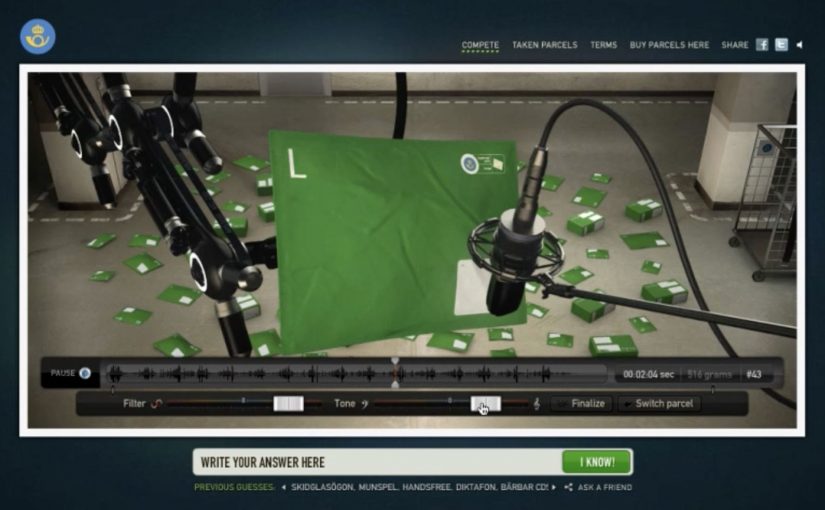
So they packed 80 parcels with all sorts of stuff and recorded 80 specific sounds. Those sounds powered “The Sound of Green” competition. Users picked a parcel, listened closely, and guessed what was inside. If they got it right, the Swedish Post sent the same parcel to the winner the very same day.
After a reported 140,240 guesses, the competition finally came to an end.
When proof beats promise
The mechanism is a neat translation of capability into play. Instead of listing what you can ship, you create 80 mystery parcels, record what they sound like, and let the public test their attention. The prize is not a voucher or a discount. The prize is the actual thing, delivered fast, which quietly demonstrates the core promise.
In consumer postal markets where “overnight delivery” sounds like a commodity claim, capability stories land better when they are demonstrated through a simple, repeatable experience.
The real question is whether the brand can make overnight delivery felt before someone ever ships a parcel.
Why it lands
This works because it turns logistics into curiosity. Sound is intimate and surprisingly hard to fake, so the listener leans in. The guessing format also creates a low-friction reason to spend time with the brand, and the same-day fulfilment makes the payoff feel real, not promotional.
Extractable takeaway: If you are selling an invisible service, build a public game that forces the benefit to show up as evidence, not copy.
What service brands can borrow
- Demonstrate the promise. Replace “we can do anything” with proof people can experience.
- Use a constraint to create focus. 80 sounds is large enough to feel rich, small enough to feel curated.
- Make the prize the product. Shipping the parcel is the cleanest way to validate shipping.
- Design for repeat attempts. A guessing mechanic naturally invites “one more try”.
A few fast answers before you act
What is “The Sound of Green”?
An online competition by the Swedish Post and Åkestam Holst where people listen to recorded parcel sounds, guess the contents, and winners receive the same parcel delivered the same day.
What is the core mechanism?
Pack real parcels, record the sounds they make, then let users choose a parcel sound and submit a guess. Correct guesses trigger real fulfilment.
Why use sound instead of photos?
Sound forces attention. It is less immediately obvious than visuals, and it creates a stronger sense of discovery when you finally figure it out.
What does this teach about marketing service businesses?
Claims are easy to ignore. Demonstrations are harder to dismiss, especially when the demonstration is interactive and ends in real delivery.
How do you keep a contest like this from feeling gimmicky?
Make the payoff identical to the promise. In this case, the reward is the service itself, delivered fast.