
NIVEA Creme: Second Skin Project

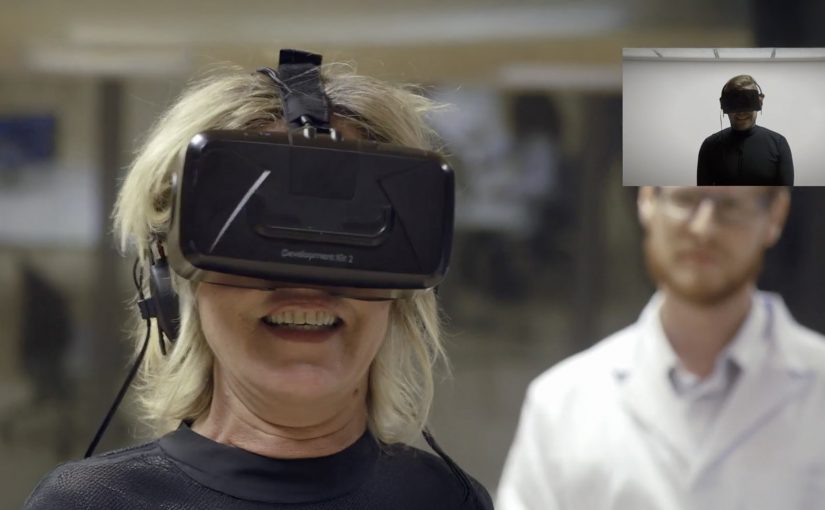
A mother puts on a headset and a skin-like suit. Her son does the same, thousands of kilometres away. The promise is simple. If they cannot be together for Christmas, technology will let them feel a hug anyway.

That is the set-up in NIVEA Creme’s “Second Skin Project” with Leo Burnett Madrid. The film introduces Laura in Madrid and her son Pablo, who is away volunteering in Paraguay. They are invited to test a “Second Skin” garment that is presented as a high-tech fabric designed to simulate human skin and transmit the sensation of touch at distance, paired with virtual reality headsets.

The story then pivots. What looks like a tech demo is used to make a point about touch, not technology. The most persuasive moment is not the suit. It is the human reunion that follows, designed to underline NIVEA Creme’s belief that nothing beats skin-to-skin contact.

The “Second Skin” mechanism that pulls you in

The film borrows credibility from advanced-sounding materials and VR. That framing creates anticipation, because the viewer wants to know whether the experiment can actually work. The suit and headset are the narrative engine that earns attention for long enough to land the real message.

In global consumer brands where heritage products compete with endless alternatives, emotional proof often carries more weight than functional claims.

The real question is whether the tech is the story, or whether it is just a credible pretext for the brand to own the value of touch.

The twist that protects the brand meaning

There is a risk with tech-led emotion. The technology can become the hero and the brand becomes a sponsor. This script avoids that by using the tech as a decoy. The reveal shifts the spotlight back to the product truth. A hug is still the best “gift” and NIVEA Creme wants to be associated with that intimacy.

Extractable takeaway: When you borrow a shiny mechanism to earn attention, make the emotional payoff explicitly restate what the brand believes, or the gadget takes the credit.

How to use “purpose + tech” without losing the human truth

  • Use technology as the hook, not the conclusion. Let it earn attention, then pay it off with a human truth.
  • Make the brand stance explicit. Here the stance is clear. Technology can be amazing, but touch matters more.
  • Cast real stakes. Distance, holidays, and family history make the outcome feel earned.
  • Keep the product role emotional, not technical. NIVEA Creme is not “the innovation”. It is the comfort cue that frames the story.

A few fast answers before you act

What is the NIVEA Creme Second Skin Project?

It is a Christmas-season film and experiment setup where a mother and son test a VR-led “Second Skin” suit that is presented as transmitting the feeling of touch at distance, then the story reveals the value of real human contact.

Why does the campaign use VR and a “second skin” suit?

Because it creates a believable question the audience wants answered. Can technology replicate a hug? That curiosity holds attention long enough for the campaign’s real point to land.

What is the core message NIVEA Creme is trying to own?

That skin-to-skin contact matters. The work uses technology to highlight that, even in a world of advanced tools, nothing replaces human touch.

What makes this more than a generic emotional video?

The narrative structure. It starts as a tech experiment, then pivots into a human reunion. That contrast makes the conclusion feel stronger than a straight sentimental story.

What is the biggest risk with “tech-as-story” campaigns?

Audience misattribution. People remember the gadget and forget the brand meaning. The fix is to ensure the emotional payoff clearly belongs to the brand stance, not the device.
Jeep Wrangler: Drive Your Track

A road trip, chosen by your favorite song

Tell Jeep your favorite song and their app will tell you where to drive. Jeep Spain and Leo Burnett Iberia come up with an online campaign called “Drive Your Track”.

At www.driveyourtrack.com users are asked to upload their favorite song to discover where their music could take them.

How Drive Your Track works

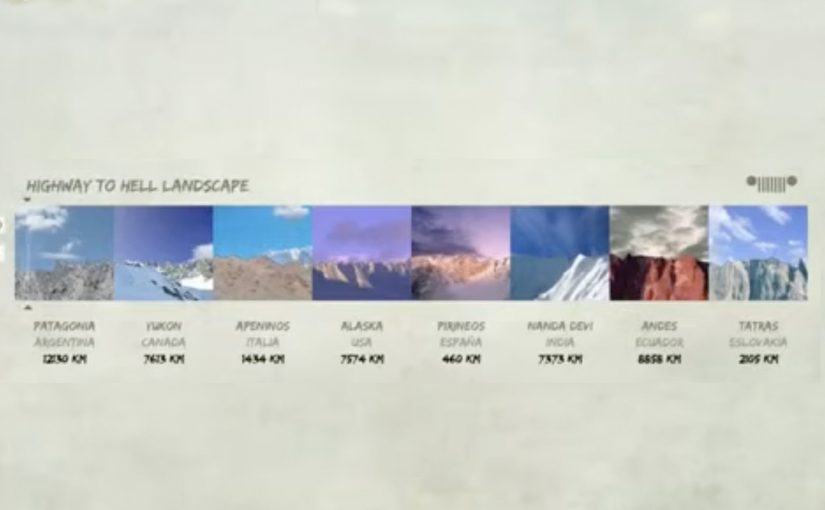
The mechanic is simple and slightly magical. The site reads the shapes of the uploaded track’s sound waves, then matches those shapes to landscape imagery that “looks like” the waveform. With an extra click, users can also discover the route to reach the destination.

In automotive brand building, turning an abstract promise like “freedom” into a playful self-portrait tool helps make exploration feel personally earned. Here, that means the user’s own taste shapes the result, so the experience feels like a reflection rather than a recommendation.

Why it lands

It replaces the usual car-site decision tree with a personal input that people already care about. Their music taste. That shifts the interaction from “find a feature” to “discover a place”, and it gives people a reason to share because the output feels like a quirky reflection of them, not an ad.

Extractable takeaway: If you want people to explore a brand experience, start from an input they feel ownership over, then return an output that looks unique enough to share without needing an incentive.

What Jeep is really buying

This is a soft test-drive nudge disguised as entertainment. The real question is how to make a brand promise about freedom feel personal before anyone even thinks about a vehicle spec sheet. The campaign gets people to imagine themselves on a specific drive with a specific soundtrack, then offers a route so the fantasy can become a plan. Even if the destination is symbolic, the journey cue is real, and that is the brand territory Jeep wants to occupy.

What to steal from Drive Your Track

  • Make the first step emotional, not technical. “Upload a song” beats “choose terrain type”.
  • Turn data into a story artifact. Waveforms become landscapes, so the output is visual and memorable.
  • Give a clear next action. A route option converts discovery into intent.
  • Design for identity sharing. If the result feels personal, distribution comes naturally.

A few fast answers before you act

What is Jeep’s “Drive Your Track”?

It is an interactive campaign where users upload a favorite song and the experience matches the track’s waveform shapes to landscapes, then offers a route to reach the suggested destination.

What is the core mechanic?

Waveform visualization and pattern matching. Your song’s sound-wave shapes are used to generate a landscape-style destination suggestion.

Why does music work as the input?

Music is identity. When the input feels personal, people stay longer, care more about the output, and are more likely to share it.

What makes this more than a novelty?

The route step. It turns a playful recommendation into a concrete next action that can lead toward an actual drive.

What is the transferable lesson for other brands?

Start with a user-owned input, return a shareable artifact, then offer one clear step that turns curiosity into intent.

Fiat Street Evo

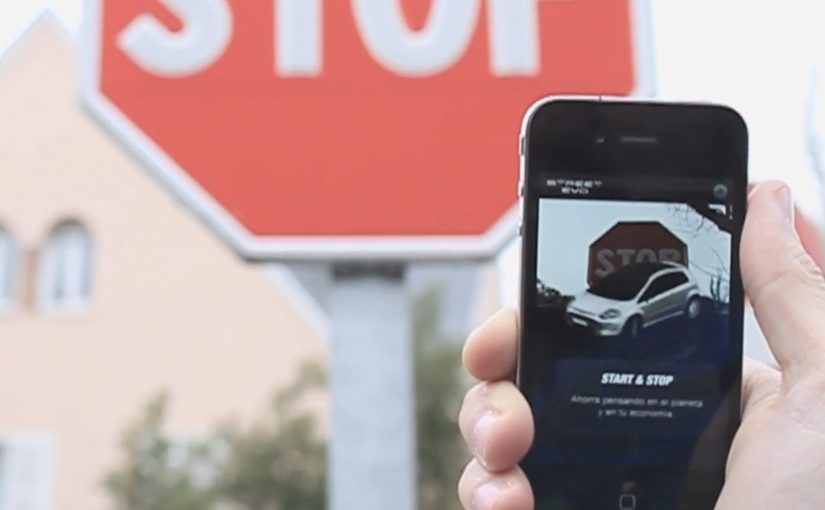
Leo Burnett Iberia has launched a new app called Fiat Street Evo, described as a “not-printed” car catalogue. A catalogue that is virtually on every street in your city.

Fiat Street Evo recognises traffic signs as if they were QR codes and associates each sign with a feature of the new Fiat Punto Evo. For example, a STOP sign points you to braking. A curve-ahead sign points you to intelligent lighting that guides you through bends. The list continues across the everyday signage you pass without noticing.

When street furniture becomes a product demo

The mechanism is a neat inversion of the usual brochure logic. Instead of printing a catalogue and hoping people keep it, the city becomes the index. Your camera becomes the browser, and the sign becomes the trigger. Here, “street furniture” means the signs and fixtures already in public space.

In automotive launch marketing, the strongest mobile ideas turn the real world into media without asking people to change their routine.

Why it lands

It reframes “specs and features” as discovery. You do not read a list. You unlock a feature in context, tied to a symbol you already understand. That makes the catalogue feel lighter, and it makes exploration feel like play rather than research. This pattern is stronger than a brochure-style feature list because it earns attention through context, not interruption.

Extractable takeaway: Product education travels further when it is organised around familiar cues in the environment, not around the brand’s feature taxonomy.

What Fiat is really trying to achieve

The real question is whether you can make the phone the first place curiosity goes by attaching product education to cues people already recognise. This kind of execution is doing two jobs at once. It builds attention for a new model, and it makes the phone the first place curiosity goes. That matters because the intent moment is not always at a dealership. It is often on the street, in motion, and in between other tasks.

Patterns to borrow for mobile launch marketing

  • Borrow existing symbols. Traffic signs already carry meaning. Use that meaning as your information architecture.
  • Keep the mapping intuitive. The sign-to-feature link should feel obvious, or people will drop the experience.
  • Design for quick sessions. One sign. One feature. One payoff. Repeat when you feel like it.
  • Make “catalogue” feel like exploration. A sense of discovery beats a long scroll of specifications.
  • Use the city as distribution. When the triggers are everywhere, frequency becomes effortless.

A few fast answers before you act

What is Fiat Street Evo in one sentence?

It is a mobile catalogue concept that recognises traffic signs and uses each sign to reveal a related Fiat Punto Evo feature.

Why call it a “not-printed car catalogue”?

Because the “pages” are distributed across the city as street signs. The phone becomes the reader, and the street becomes the catalogue.

What makes the sign-to-feature mapping important?

The mapping is the comprehension layer. If the association feels natural, users keep going. If it feels random, the idea collapses into novelty.

What is the biggest execution risk?

Recognition reliability. If the app struggles to identify signs in real conditions, people will not persist beyond the first attempt.

What should you measure in a pilot?

Successful recognitions per session, repeat usage, time-to-first-payoff, and whether the experience increases search, dealership visits, or brochure requests.