
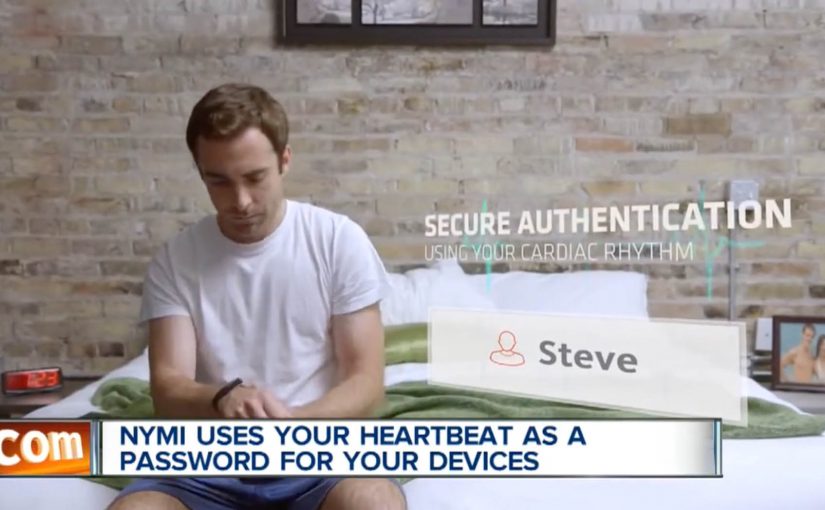
Imagine never having to type a password, and never needing to pull out your credit card to make a payment ever again. A biometrics startup called Bionym is positioning exactly that future with Nymi, a sleek wristband that uses your heartbeat to authenticate your identity.
The promise is simple. If your identity can be verified passively, you can unlock everyday things without friction. Bionym presents Nymi as a way to unlock your favourite devices such as your computer, smartphone, and even your car. If this kind of wearable is adopted at scale, it becomes a first step toward replacing keys and passwords with something you already carry on you.
What is actually being launched
Nymi is positioned as a consumer-ready wristband with a clear job. Authenticate you, then unlock the devices and services you use most. The interesting part is not the form factor. It is the shift from remembering secrets to proving identity continuously.
In this context, “authenticate” means proving your identity without typing a secret. That shift matters because it removes repeated login interruptions from the moments you are trying to get something done.
In global consumer and enterprise environments where people move between devices, services, and locations all day, authentication friction becomes a quiet tax on usage.
Why passive identity is so tempting
Passwords and keys interrupt you at exactly the point you want momentum. A wearable that verifies you in the background reframes identity from an event (login) to a state (you are present), which makes everyday unlocks feel like flow instead of checkpoints.
Extractable takeaway: When identity proof becomes a background signal, you remove “stop and sign in” moments that quietly kill adoption.
The ecosystem requirement that decides whether it matters
A wearable authentication layer only becomes valuable when it works across many endpoints. That means third-party developers and partners need to build a thriving ecosystem of apps and devices that can use Nymi for access and verification.
The real question is whether “heartbeat as login” can become a shared standard across devices and services, because without broad integrations it stays a niche accessory.
Pre-order details
You can pre-order the Nymi for $79, but it is not going into production until later this year. Between now and launch, the real work is adoption. Getting integrations, partners, and use cases that make “heartbeat as login” feel normal.
Moves worth copying for frictionless login
- Make the promise tangible. Give the product one clear job (unlock) instead of selling biometrics as a vague “future”.
- Design for passive confirmation. Reduce prompts, but make the authenticated state obvious enough that people trust it.
- Win integrations before awareness. Treat partners and endpoints as the product, because a single-device unlock story does not change behaviour.
A few fast answers before you act
What is Nymi?
A wristband from biometrics startup Bionym that uses your heartbeat to authenticate your identity and unlock devices.
What kinds of things can it unlock?
Bionym positions it as a way to unlock devices such as computers, smartphones, and cars, reducing the need for passwords and keys.
What has to happen for this to scale?
A strong third-party ecosystem of apps and device integrations, so the wristband works across many real-world use cases.
Is heartbeat authentication inherently safer than passwords?
It can reduce risks tied to memorized secrets, like reuse across services. Security still depends on how the wristband, the endpoints, and the fallback flows are implemented.
What should you look for before betting on a wearable login?
Look for real integrations with the devices and services you actually use, because the ecosystem decides whether this becomes a habit or a gimmick.
