
Honda CR-V: An Impossible Made Possible

When “no CGI” becomes the flex

Optical illusions and jaw-clenching stunts (Volvo Trucks) instead of computer animation are becoming the norm.

Honda’s latest European commercial for the CR-V 1.6 i-DTEC Diesel keeps that trend going. It uses well-placed props and carefully drawn imagery to trick you into seeing the impossible. Describing it in detail gives too much away, so it is better to watch the optical illusions directly.

The mechanic: perspective tricks that stay readable on camera

The spot plays with perspective, scale, and line-of-sight to make everyday spaces behave in ways they should not. The car seems to float, shrink, or move through geometry that your brain struggles to reconcile, precisely because the scene is constructed to be “correct” from the camera’s viewpoint. That matters because a camera-perfect illusion feels physically plausible, so viewers give the stunt more credit than they would give obvious digital trickery.

In European automotive marketing, practical illusion work is a fast way to signal engineering credibility while still delivering spectacle. By practical illusion work here, I mean physical sets, props, and camera-controlled perspective rather than digital effects.

Why it lands

It rewards attention. You cannot half-watch it, because your brain keeps trying to solve the image. That creates replay value, and replay value is a quiet superpower for car advertising, where most spots blur into the same driving shots and the same claims.

Extractable takeaway: If your message is “this performs beyond what you expect,” use a visual system that makes viewers test their own assumptions, then let the craft do the convincing.

The real question is whether the illusion makes the car feel more impressive, not just the ad more clever.

Honda gets that balance right here because the illusion sharpens the product story instead of distracting from it.

What to borrow from illusion-led car storytelling

  • Make one camera angle the truth. Illusions work when the viewing position is controlled and the payoff is immediate.
  • Use mystery as a feature. A little confusion buys you replays, and replays buy you recall.
  • Keep the brand role simple. The product should move through the illusion, not compete with it.
  • Protect the reveal. If explanation kills the effect, build your copy to point, not to decode.

A few fast answers before you act

What is “An Impossible Made Possible” for Honda CR-V?

It is a European TV spot for the CR-V 1.6 i-DTEC Diesel that uses practical optical illusions, props, and perspective tricks to make the car appear to do impossible things.

What is the core creative mechanic?

Forced perspective and camera-aligned set construction. The scene is built so the illusion reads as “real” from the viewer’s point of view.

Why avoid heavy CGI in this kind of execution?

Practical illusions feel earned. Viewers sense there is a real setup behind the shot, which increases credibility and replay value.

What makes illusion-led ads more memorable?

They trigger a “solve it” response. People replay to understand what they saw, and that repetition drives recall.

What is the most transferable lesson for brands?

Use craft to create viewer doubt, then resolve it with a clean product moment. Confusion first. Clarity second.
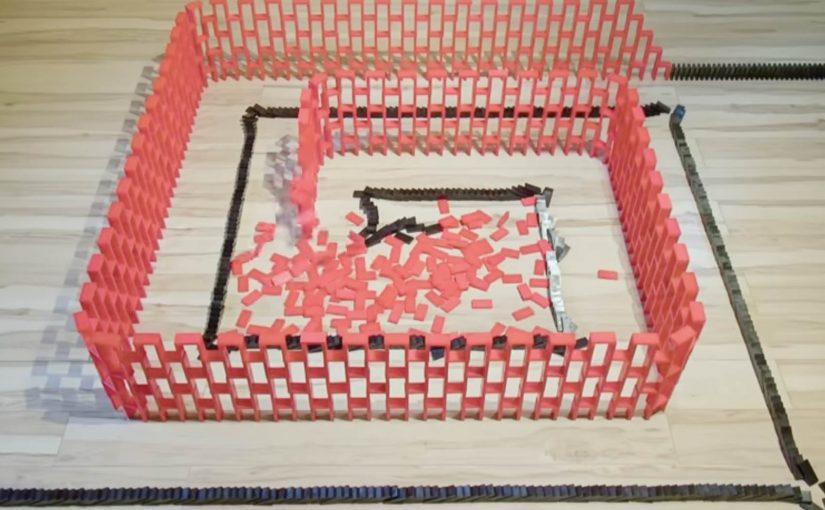
Hevesh5: Domino Tricks Screenlink

Hevesh5 and MillionDollarBoy spent three months organizing more than 20,000 dominoes into a tight masterpiece of clicks and clatters.

The video uses a technique known as “screenlink”. Each section is constructed separately, then edited together to look like one continuous setup.

What “screenlink” enables

Screenlink is a production workaround that unlocks variety without requiring one gigantic, fragile, single-take build. You can design multiple high-risk moments, film them when they work, and then stitch them so the viewer experiences an uninterrupted flow.

In creator-led visual content, this is a scalable way to deliver “impossible” continuity while keeping build time, failure risk, and resets manageable.

The real question is how you preserve the thrill of continuous payoff without turning practical craft into a production liability. The strongest choice here is to protect momentum for the viewer, even when the build itself has to stay modular.

Why this lands

This works because it preserves the dopamine loop of a perfect domino run. No downtime, no rebuild fatigue, just consecutive payoffs. The editing is invisible enough that the craft still feels physical and earned, which keeps the satisfaction of practical effects intact.

Extractable takeaway: If your content depends on fragile real-world execution, design it as modular sections, capture each section at its best, and stitch the sequence so the audience gets continuous momentum instead of production reality.

What to steal from screenlink production

  • Modularize the build. Treat each “wow” moment as its own unit you can perfect.
  • Edit for perceived continuity. The viewer cares about flow, not your reset count.
  • Make the craft legible. Even with editing, keep the physical logic visible so it feels real.
  • Use collaboration to expand the idea space. Two builders can generate more distinct tricks faster than one.

A few fast answers before you act

What is a “screenlink” domino video?

It’s a domino compilation where separate sections are built and filmed individually, then edited together to appear like one continuous run.

Why not build it as one continuous setup?

A single setup is more fragile and time-consuming to reset. Screenlink reduces risk while enabling more variety.

Does screenlink mean it is fake?

No. The domino physics are real per section. The continuity is created in editing so the overall sequence feels seamless.

What makes a good screenlink edit?

Consistent pacing, clean transition points, and visual continuity cues so cuts are not distracting.

When should brands use this kind of technique?

When you need repeated “wow” moments with practical credibility, but the real-world build is too fragile or costly to execute as one uninterrupted take.

Hey, Pass Me a Beer: Creative Handoff

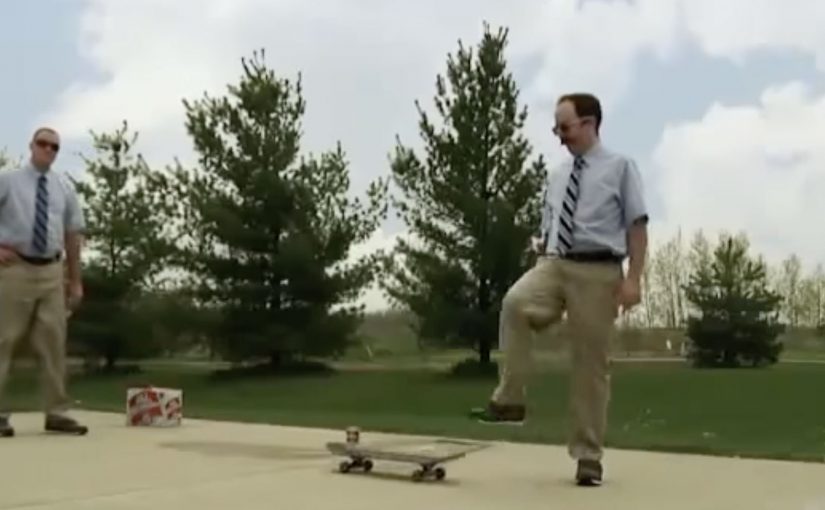
“Hey, pass me a beer” is a throwaway line until you treat it like a creative brief. This short film, described as shot in Milwaukee by Almost Twins, turns a simple request into a chain of increasingly elaborate handoffs.

The charm is in the escalation. Each new pass answers the same problem with a more over-engineered solution, and that relentless commitment is what keeps you watching.

The handoff trick that makes it work

The mechanism is a repeating loop. Set up the same micro-goal, move the beer from A to B, then raise the complexity without changing the premise. Here, the micro-goal is simply getting one beer from one person to another. Because the rules stay constant, the viewer can focus on anticipating the next method, not on understanding the story.

In internet video culture, repeatable mechanics like this spread because they are instantly understandable, and they reward attention with continual novelty.

Why it lands

It treats craft as the punchline. The joke is not a line of dialogue. The joke is the effort. That effort reads as playful competence, and it invites the viewer to watch for “how did they do that” as much as “what happens next”.

Extractable takeaway: If you want a simple gag to carry a whole film, lock one clear rule, then escalate execution rather than premise. The audience stays oriented while still being surprised.

What “trending” really means here

The real question is whether the viewer understands the rule fast enough to enjoy the escalation rather than spend energy decoding the format.

When a video like this climbs, it is usually because it is easy to share with one sentence, and because it plays well without sound or context. You do not need to explain it. You can just send it and let the mechanic do the work.

What to steal for your own short-form content

  • One rule beats ten ideas. A single repeating mechanic can outperform a complicated concept.
  • Escalate visually. Make each beat clearly “more” than the last, even in a thumbnail-sized view.
  • Keep runtime tight. End while the pattern is still satisfying, not after it becomes predictable.
  • Design for retellability. If a viewer can pitch it in one line, they will.

A few fast answers before you act

What is the core idea of Hey, Pass Me a Beer?

A single premise, passing a beer, repeated with escalating handoff methods so the execution becomes the entertainment.

Why does this format keep attention?

The rules stay fixed, but the solution changes each time. That combination makes it easy to follow and hard to predict.

What makes it shareable?

It is understandable instantly and does not need setup. People can share it with one sentence and the recipient gets it immediately.

How do you apply this to a brand or product?

Pick one tiny behavior you want to dramatize, then show many inventive ways to achieve it. Keep the product cue present, but let the mechanic carry the viewing pleasure.

What is the reusable lesson for short-form creators?

Build around one rule the audience can grasp immediately, then make each beat visibly more inventive without changing the premise.