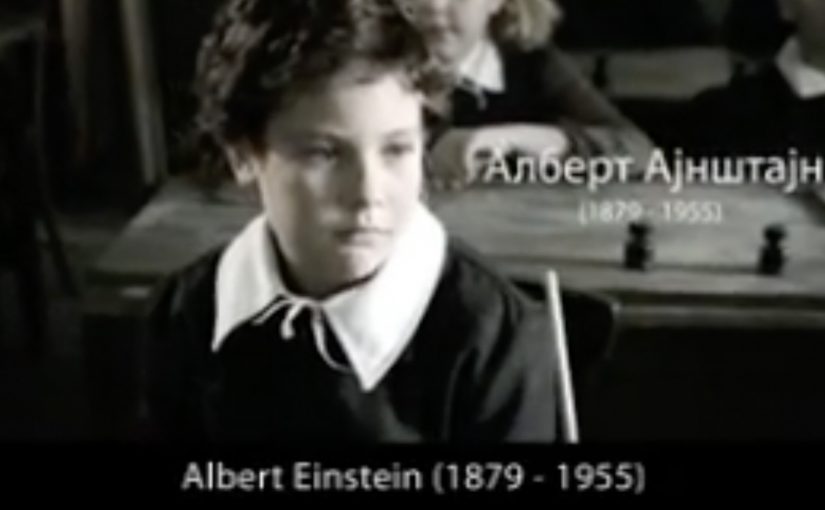
Here is a social campaign aimed at promoting education, created by New Moment New Ideas Company as a TV commercial for the Government of the Republic of Macedonia, Ministry of Education and Science.
The mechanism behind the message
The execution leans on a deliberately provocative framing. It takes a policy-adjacent topic, religion in school, and places it inside a broader “education equals empowerment” argument, using a short, declarative headline structure that is designed to be debated as much as it is watched.
In public-sector education communication, provocation is often used to force attention onto curriculum choices that would otherwise be discussed only in administrative language.
The real question is whether a campaign can use provocation to drive education attention without turning the message into a referendum on belief.
Why it lands
It turns a policy topic into a binary statement. You may agree or disagree, but you are unlikely to ignore it, which is typically the point of a social campaign trying to break through apathy.
Extractable takeaway: Public-interest campaigns win attention by making a curriculum or behavior choice feel like a values choice, but credibility depends on details like accurate attribution, because authority shortcuts can backfire when audiences fact-check.
It borrows authority cues. The line “Knowledge is power” is familiar and often associated with big-name attribution. If the spot leans on an Einstein association, note that this attribution is widely disputed, and misattributed quotes can weaken credibility even when the intent is strong.
It collapses values and education into one frame. By calling religion “knowledge”, it reframes the topic away from belief and toward curriculum, which is a strategic shift even if it remains contentious. Because the framing is blunt and declarative, it triggers instant agreement-or-rebuttal, which expands discussion beyond passive viewing. Provocation can be a valid attention tactic, but only when every credibility cue is defensible.
Borrowable moves for education PSAs
- Use short headline architecture. A campaign line plus a spot line gives people two levels of meaning to repeat and argue about.
- Engineer “talk value” intentionally. By “talk value,” mean a message that people can repeat, argue about, and share in one breath.
- Stress-test credibility signals. Quotes, attributions, and “famous authority” cues should be defensible, or they become the story instead of the issue.
A few fast answers before you act
Who is this commercial for?
It is framed as a public campaign tied to the Government of the Republic of Macedonia, Ministry of Education and Science.
What is the central claim of the spot?
That religion should be treated as a form of knowledge and positioned as part of schooling, under a broader “knowledge equals empowerment” campaign idea.
Why does the campaign use such blunt language?
Because blunt claims create attention and debate quickly, which is often the goal in social messaging where indifference is the main competitor.
What is the main risk with this style of PSA?
Polarization and credibility challenges. If the audience argues about the quote, the messenger, or the framing, the educational intent can get diluted.
What is the transferable lesson for communication leaders?
If you choose provocation as the hook, protect the trust layer. Every supporting detail has to be clean enough to survive scrutiny.