
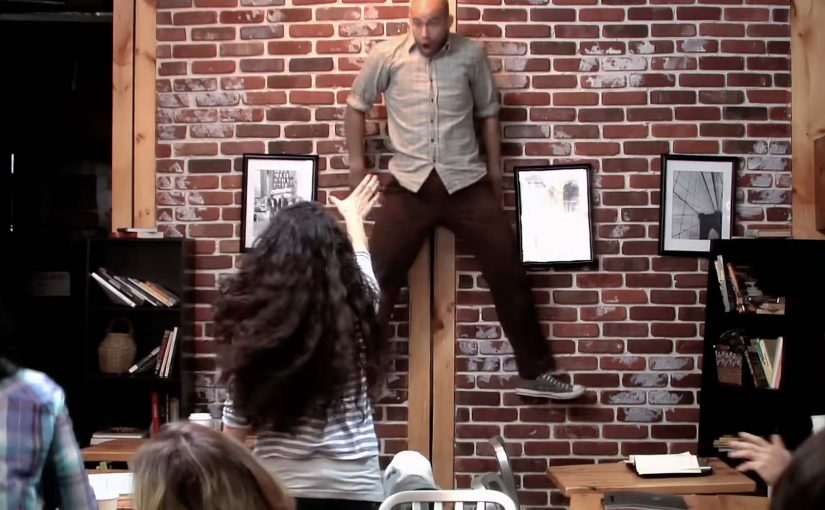
A coffee shop that turns into a horror scene
Carrie is an upcoming 2013 American supernatural horror film. It is the third film adaptation of Stephen King’s 1974 novel of the same name.
To promote the remake, Sony (with help from Thinkmodo) outfits a small coffee shop in New York with remote-controlled tables and chairs, a fake wall used to “levitate” a guy, and books that fly off the shelves by themselves. An actor takes on the role of Carrie and sets up innocent customers for a prankvertising experience they do not see coming. Here, prankvertising means a brand-built public stunt designed to capture genuine reactions on camera.
The mechanic: practical effects plus hidden cameras
The execution works because the effects are physical, not “post.” Furniture moves with real force. Books drop in real time. A wall gag sells the impossible moment. Hidden cameras then capture reactions that read as instinctive rather than performed, which is exactly what makes the video rewatchable and shareable.
In entertainment launches, engineered “you had to be there” moments are a reliable way to turn a theme into conversation without relying on a trailer.
Why it lands
The spot uses a tight emotional sequence. Normal. Confusion. Escalation. Relief. Then laughter. That arc matches how people actually experience a scare, and it gives viewers permission to share it because the payoff is reactions, not cruelty. It also maps cleanly onto the film’s core promise. Something supernatural breaks into an everyday setting, and nobody is ready for it. The real question is whether the stunt makes people feel Carrie before they watch Carrie.
Extractable takeaway: If you are selling a feeling (fear, awe, suspense), stage a believable real-world trigger that creates the feeling first, then let the audience’s reaction become your proof and your distribution.
What to steal from this horror launch
- Make the premise legible in five seconds. Coffee shop. Spilled drink. Sudden shift. No explanation needed.
- Use practical cues that cameras can’t fake. Real movement and real sound sell “impossible” faster than clever editing.
- Keep the reveal product-aligned. The stunt matches the movie’s supernatural premise, so it feels like an extension of the story world.
- Design for safe escalation. Intensity rises, but the scene resolves quickly enough that sharing feels fun, not disturbing.
A few fast answers before you act
What is the “Telekinetic Coffee Shop Surprise” for Carrie?
It is a staged hidden-camera stunt where a “Carrie” character appears to use telekinesis in a New York coffee shop, creating a real-world scare moment to promote the 2013 remake.
What is the core mechanic that makes it believable?
Practical effects in a real environment. Remote-controlled furniture, triggered props, and a wall gag create physical proof, and hidden cameras capture genuine reactions.
Why is this format effective for film marketing?
It demonstrates the film’s emotional promise in the real world, then turns audience reactions into shareable content that travels farther than a standard promo clip.
What makes prankvertising work without backlash?
When escalation is controlled, participants are not humiliated, and the payoff is relief and laughter. The moment should feel surprising, not harmful.
What’s the main transferable lesson?
Stage the feeling first. If you can reliably create the intended emotion in a real setting, the audience will do the storytelling for you.