

Tic Tac: Likes Matt

Tic Tac France recently reached one million fans on Facebook. To say thank you, they published a video where the CEO personally thanks the one millionth fan, Matt, with the message: “If you like us, Matt, we’ll like you back”.

In the video, the whole company is totally obsessed with Matt, and his picture shows up everywhere. It is a simple, funny way to celebrate a milestone, and it is worth watching even if it is in French.

A milestone video that turns one fan into the headline

The mechanism is playful personalization. Here, playful personalization means taking one real fan and making that person the center of the joke so the thank-you feels specific rather than generic. Instead of thanking “everyone”, the brand picks one real milestone moment and builds a mini story around it, with the CEO as the voice of gratitude and the office as the exaggerated stage. That mechanism works because naming one person gives the audience a concrete character to remember and retell.

In FMCG social media marketing, milestone celebrations work best when they feel genuinely personal rather than corporate.

Why it lands

This works because it converts an abstract number into a human. “One million fans” is easy to scroll past. “Matt” is specific, memorable, and funny. The obsession gag also gives viewers a reason to share, because the content has a punchline, not just a thank-you line. This is the right way to celebrate a social milestone because it earns attention without sounding self-congratulatory.

Extractable takeaway: When you need to celebrate a community milestone, do not amplify the number. Personify the moment with one concrete protagonist, then build a simple story people can retell in one sentence.

What the brand is really doing

The real question is how to turn a milestone post into something people want to share, not something the brand wants to announce.

The video is not only gratitude. It also signals attentiveness. The brand is implying that individual fans matter, and that the page is a place where recognition can happen, not just another broadcast channel.

What to borrow from this milestone format

  • Make the milestone tangible. One named person beats a generic “thanks everyone”.
  • Use leadership sparingly. A CEO appearance can add weight when the message is short and human.
  • Build a repeatable format. You can repeat the pattern at future milestones without it feeling forced.
  • Give it a share trigger. A clear gag or twist increases forwarding and comments.

A few fast answers before you act

What is “Tic Tac Likes Matt”?

It is a Facebook milestone thank-you video where Tic Tac France celebrates one million fans by thanking “Matt”, the millionth fan, in a humorous, highly personalized way.

Why focus on one person instead of the whole community?

Because a single protagonist makes the milestone concrete and easier to remember, and it gives the audience a story to share.

What role does the CEO play in the idea?

The CEO acts as an authenticity cue. The message feels less like a standard post and more like a direct acknowledgment.

What is the main lesson for community teams?

Milestone posts should earn attention with a simple narrative device, not with bigger graphics or bigger numbers.

How could another brand adapt this?

Pick a real milestone moment, identify a specific “hero” of that moment, and build a short, human thank-you story around them.
Flashmob Marketing Hits: April 2012

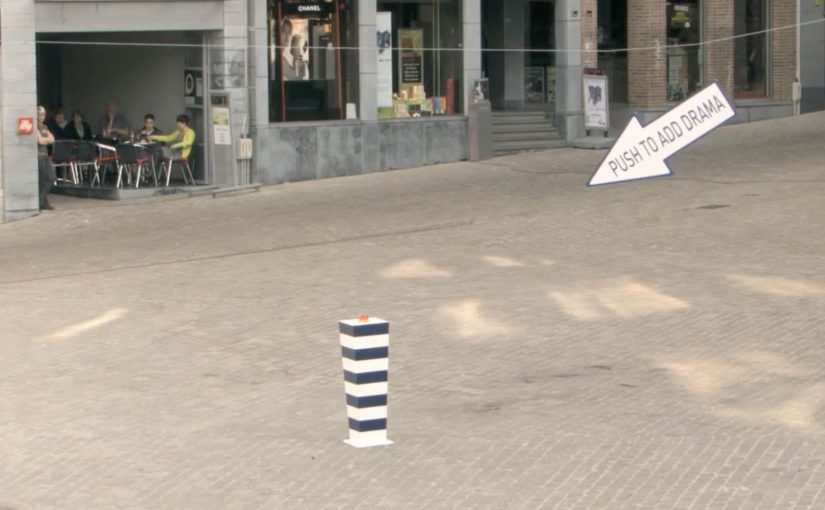
A big red push button sits in a quiet Flemish square. A sign says “Push to add drama”. Someone presses it, and the street turns into a live TV scene.

Flashmob marketing has been quite a fad in the last weeks. If you are unfamiliar with the concept, a flashmob is a large group of people who assemble suddenly in a public place, perform an unusual and pointless act for a brief time and then disperse. The whole act is normally recorded on video and then put on the web to generate more buzz.

Flash mobs can convert physical spectacle into shareable media without buying every impression. Here, “earned attention” means reach generated by people choosing to watch and share, rather than by paid placement.

Three street moments worth watching again

Daily dose of drama

To launch their new digital channel in Belgium, TNT placed a big red push button in a quiet Flemish square. A sign with the text “Push to add drama” invited people to use the button. And then the “ordinary day” collapses into staged chaos.

Why it lands: the invitation is frictionless, the payoff is immediate, and the viewer at home gets the same shock that the passer-by gets on the street.

The worst breath in the world

Tic Tac turns a simple “can you help me with directions” moment into social dread. A lost tourist asks for help in a busy square. Then, one person after another reacts as if the breath is so bad it triggers an apocalyptic chain reaction.

Why it lands: it weaponizes a universal fear, then exaggerates it so far that embarrassment becomes comedy. The crowd reaction becomes the story.

The Wouaaah Effect

For its Q10 Plus product, NIVEA in France creates a playful attention ambush on the streets of Paris. An unsuspecting woman tries a cream sample, walks on, and is suddenly met by a sequence of people lavishing her with attention.

Why it lands: it makes a product promise feel physical. The benefit is not “told”. It is acted out as a mini social fantasy.

Why the pattern behind the fad travels

The mechanism is simple. Create a one-line invitation, trigger a public spectacle, and film genuine reactions from the “mark” (the unsuspecting participant who triggers the stunt) and the bystanders. The distribution is the video, not the street corner. The street corner is the credibility engine because the live setting makes the reactions feel real, which makes the clip easier to share.

Extractable takeaway: If the trigger is simple and the payoff is instantly legible, real human reactions carry the persuasion when the video leaves the street.

In European consumer marketing teams trying to earn reach through social sharing, the street is only the proof point, not the media plan.

The real question is whether your spectacle earns a story people want to retell, or just a clip they scroll past.

What the brands are buying

These are not careful, message-heavy campaigns. They are attention accelerators. Flash mob-style stunts are worth doing only when the payoff embodies a brand promise you can show through human reactions. The business intent is to earn reach through surprise and shareability, then let the brand borrow the emotional afterglow of the moment.

How to steal the good parts without copying the gimmick

  • Start with a legible trigger. One button. One question. One sampling moment.
  • Design the escalation curve. The first five seconds decide if people stay for the next thirty.
  • Make reactions the hero. The crowd is your proof and your punchline.
  • Give the video a clean “retell”. If the concept cannot be explained in one sentence, it will not travel fast.

A few fast answers before you act

What qualifies as a flash mob in marketing terms?

A staged public action that appears spontaneous to bystanders, is filmed for real reactions, and is distributed primarily as a video asset to generate buzz.

Why do flash mob videos spread more than many traditional ads?

They feel like captured reality. The viewer gets surprise, spectacle, and social proof in the same clip, which makes sharing feel like passing on entertainment, not advertising.

What is the biggest creative risk with flash mob marketing?

People can read it as forced or manipulative. If the trigger feels like a trick, the audience turns on it and the brand takes the hit.

How do you keep a flash mob idea brand-relevant?

Make the payoff embody the brand promise. Drama for a drama channel, breath anxiety for mints, and attention for a beauty benefit are all direct translations.

What is the practical “steal” for marketers who cannot stage a street stunt?

Borrow the structure. A simple trigger, a clear escalation, and authentic human reactions, then build it for a format that you can execute safely and repeatedly.