How do you communicate attractive prices when people are bored of tactical campaigns and ignore yet another “deal” message? KLM answers that by making the price story behave like culture instead of advertising.
Turning fares into a city-wide art moment
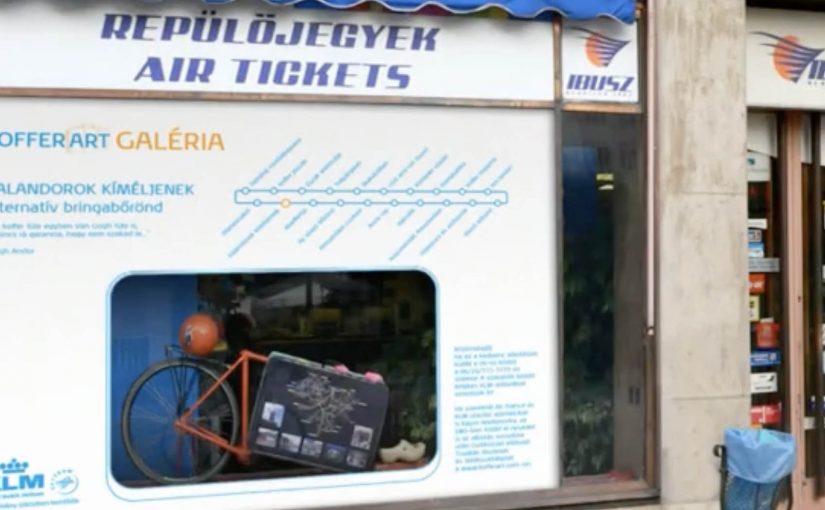
KLM and Leo Burnett Budapest invite Hungary’s most talented young artists to create artworks inspired by KLM destinations, then place those works around the city so the environment itself becomes an urban gallery. The result is described as a tactical campaign that people treat like an event.
The mechanism: destination inspiration, public display, social talk value
Mechanically, the work shifts “price communication” into a set of visual anchors that are easier to notice, photograph, and discuss than conventional fare banners. Instead of asking audiences to care about numbers first, it earns attention through craft, then lets the brand and destinations ride that attention. Because the visual anchors are built to be noticed and shared, the offer benefits from social talk value instead of competing for banner attention.
In European travel marketing, reframing a tactical offer as a public experience can restore attention without changing the offer itself.
Why it breaks through when tactical work gets ignored
Most price-led creative competes in the same visual language: small type, disclaimers, urgency cues. Art flips the hierarchy. It gives people a reason to stop that is not the price, then makes the price message feel like a discovery rather than an interruption. This is a stronger play than trying to out-urgency every other fare banner.
Extractable takeaway: When your message is tactical by nature, earn the first second with something people would choose to notice, then let the offer land as the payoff.
What KLM is really buying
The business intent is not only incremental ticket consideration. It is mental availability. By mental availability, I mean being the brand that comes to mind in a destination or booking moment without needing a hard sell. KLM shows up as a brand that puts something into the city, not just a brand that takes attention out of it. That association can make the next tactical message feel less disposable.
The real question is whether your next “deal” message can earn attention before it asks for action.
Steal this when deal messages get ignored
- Wrap the tactical truth in a non-tactical container. Put the deal inside a format people would choose to engage with.
- Design for public visibility. If it looks good in the street, it travels further online with less paid support.
- Use craft to earn the first second. Attention is the gate. Price can come second.
- Make the brand additive. The activation should feel like it contributes to the audience’s day, not like it interrupts it.
A few fast answers before you act
What is the Suitcase Art Project in one line?
A fare communication idea that uses destination-inspired artworks displayed across the city, turning a tactical message into a cultural moment people want to notice and share.
What problem is it solving for KLM?
Banner blindness and fatigue around price-led messaging. It creates attention through art first, then lets the offer benefit from that attention.
Why does “art in public space” help price communication?
Because it changes the viewer’s mindset from “being sold to” into “discovering something”. That shift makes the message more memorable and less ignorable.
What is the most transferable principle?
If your message is inherently tactical, change the format and context so people approach it with curiosity instead of resistance.
What can you do if you cannot run a city-wide activation?
Use the same pattern at a smaller scale. Create one distinctive artifact people would still choose to photograph or share, then let the offer ride the attention that artifact earns.