

WestJet Flight Light

WestJet creates a small device with a big emotional job. WestJet Flight Light is a nightlight that uses live flight data to project a parent’s WestJet flight path onto a child’s bedroom ceiling, turning the wait into a visual, interactive countdown of hours and minutes until the parent returns.

In airlines and other service businesses, more brands move beyond selling a product and start designing convenience services that drive repeat usage and loyalty by solving real-life friction.

By convenience services, I mean a branded layer that uses operational data to make a recurring job easier for the customer.

Here, the friction is business travel. WestJet wants frequent travellers to pursue work opportunities without losing connection with the people waiting at home. Flight Light makes the journey feel present. Not abstract.

Why the concept works

The power is not the hardware. It is the experience design. A child’s instinct is to count down. Flight Light makes that countdown tangible and playful by projecting the route in the place where bedtime routines already happen, which turns waiting into anticipation.

Extractable takeaway: If you can turn operational data into a repeatable ritual in the customer’s real environment, you create loyalty that feels like care, not marketing.

The service logic

This is a brand service that behaves like a product. A brand service is a repeatable utility that makes the brand part of a real-life routine. Live flight data becomes a family connection layer. The airline becomes part of the at-home story, not just the transport provider.

The real question is whether your operational data can earn a role in the customer’s routines, not just inside your app.

Brands should treat data as experience material when it reduces anxiety or effort in a moment that already exists in the customer’s life.

Beta-testing and what it signals

WestJet says a prototype of Flight Light exists, with beta testing scheduled to begin later this year. That is the bridge between a cute concept and something that can be operated, supported, and scaled.

Borrowable moves from Flight Light

  • Start with a real-life routine. Bedtime already has attention and emotion. Place the experience there.
  • Use operational data as story material. Flight status becomes a shared narrative the family can follow.
  • Make the countdown visible. Turn “when are you home?” into a simple, comforting visual progression.
  • Design for repeat trips. The value compounds when the service works the same way every time the parent travels.

A few fast answers before you act

What is WestJet Flight Light?

A nightlight concept that uses live WestJet flight data to project a parent’s flight path onto a child’s bedroom ceiling as an interactive countdown to their return.

Who is it designed for?

Business travellers and frequent flyers with families, especially parents who travel regularly for work.

What is the core experience design move?

It turns live flight status data into a comforting, visible bedtime ritual that makes the trip home feel real and close.

What problem is it solving?

It reduces the emotional friction of business travel by making a parent’s trip home visible and countable during a child’s bedtime routine, instead of feeling distant and abstract.

Why is it a brand service, not just a gadget?

The value comes from turning live flight data into an at-home experience a family can reuse on every trip. The nightlight is the interface. The service is the connection layer.
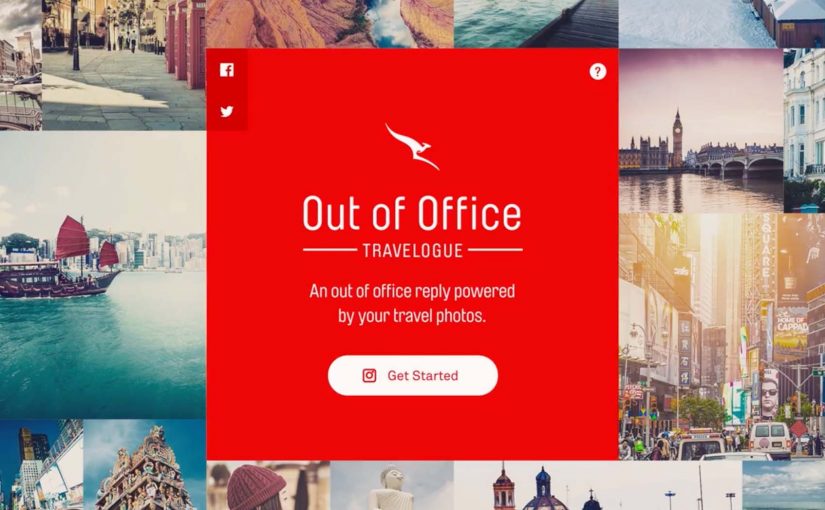
Qantas Out Of Office Travelogue

Qantas, Australia’s national airline, wants a new way to inspire travel with an increasingly younger audience. Their answer is a smart twist on a familiar behaviour. The out-of-office email. Instead of the usual “I’m away” message, Qantas turns it into a personalised travelogue powered by the user’s Instagram photos.

The mechanism is simple and effective. Qantas’ research shows that tips from friends and colleagues are a major driver for choosing the next holiday. So the brand uses Instagram’s API to transform a mundane autoresponder into something people actually want to read. A short visual story of where you are, what you are doing, and why it might be worth visiting.

What elevates the idea is the commercial bridge. The email does not just inspire. It incentivises recipients to book flights directly from the out-of-office message. This is social proof plus direct response, built into a format people already accept as normal workplace etiquette. The business intent is clear. Convert social inspiration into attributable flight demand inside the same interaction.

As a result, users created over 10,000 Out of Office Travelogues. The activity generated 100 million media impressions worldwide for Qantas.

Why this works as modern email strategy

Most marketing emails fight for attention in an overcrowded inbox. This one arrives with a built-in reason to be opened and read. It is a message you expect when you email someone who is travelling.

Extractable takeaway: When a brand can place a commercial message inside a communication people already expect, the marketing feels useful before it feels promotional.

It also uses the strongest distribution channel many brands overlook. People’s real networks. When your colleague shares their trip, even passively via an autoresponder, it carries more credibility than a brand-led destination ad.

This is one of the smarter ways to turn routine email behaviour into demand generation because it adds commerce without breaking the social norm that makes the message welcome.

The real innovation is the data-to-story pipeline

At a tactical level, the campaign is “just” an API integration. In practice, it is a reusable pattern. Here, data-to-story pipeline means turning user-owned content and simple signals into a coherent, bookable story unit.

  • Pull customer-owned content from a platform they already use.
  • Convert it into a lightweight narrative unit that fits a communication norm.
  • Add a clear, transactional next step without breaking the tone.

If you can operationalise that pattern, you can treat email not as static creative, but as a dynamic surface where personal context becomes relevant storytelling. Because the story is generated from a person’s real context, it feels more relevant and more trustworthy than static promotional creative.

In travel and hospitality categories where peer recommendation shapes intent, that makes email a distribution surface, not just a notification channel.

The real question is how far a brand can turn trusted everyday communication into measurable distribution without damaging the trust that makes it work.

What to watch if you replicate this pattern

The moment you use personal photos and automated messaging, the trust layer matters.

  • Permissioning and transparency. Make it obvious what is being pulled and why.
  • Control. Users need an easy way to curate what appears.
  • Brand safety. You need guardrails so the travelogue stays on-message without becoming intrusive.

What to steal for email-powered demand generation

  • Hijack a legitimate email type. Out-of-office replies get opened because the recipient expects them.
  • Turn personal content into a controlled story unit. User photos feel authentic, but only work when users can curate the output.
  • Embed the commercial action inside the narrative. Inspiration and booking sit in the same interaction, so intent has no time to cool down.
  • Use networks as distribution, not “audiences”. Colleagues and friends are higher trust than any destination banner.

A few fast answers before you act

What is the Qantas Out of Office Travelogue?

A personalised out-of-office email reply powered by the user’s Instagram photos, designed to inspire travel and drive bookings.

Why is the out-of-office format such a good carrier?

It arrives with intent and legitimacy. People expect it, and it is naturally tied to travel.

What is the core growth loop?

One person travels. Their network sees the travelogue via everyday email behaviour. The recipient gets inspired, and is pushed toward booking directly from the message.

What has to be true for this to scale?

Users need clear permissioning, easy curation, and a direct booking path that feels like a natural next step rather than a hard sell.

What results does Qantas report?

Over 10,000 travelogues created and 100 million media impressions worldwide.

KLM Messenger: Travel Updates in Chat

Facebook wants to transform their Messenger platform into an all-encompassing utility, where people will be able to conduct virtually any interaction, from buying products to paying bills to various other customer service related queries and tasks.

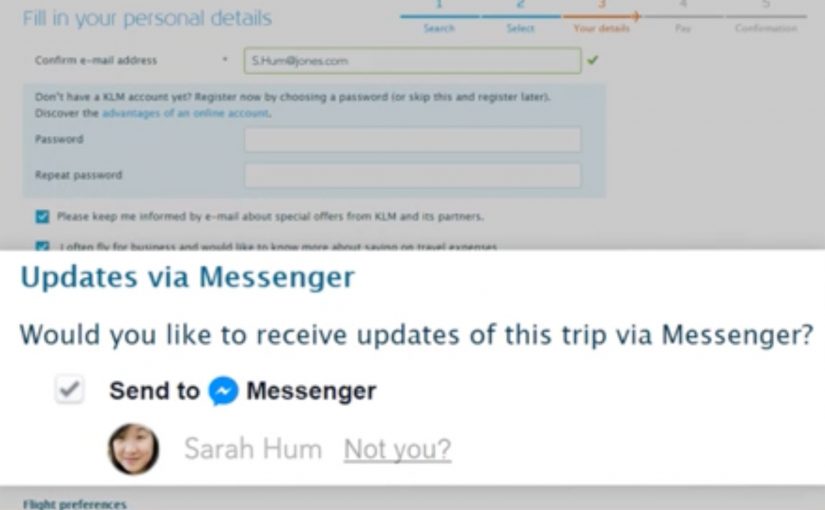
So together with KLM they have launched a new Messenger service. Travellers who book their flight on klm.com can now choose to receive booking confirmation, check-in notification, boarding pass and flight status updates all via Facebook Messenger.

For further questions they can also contact KLM directly through the Messenger, 24/7.

Why this is a meaningful shift in airline service

In service-heavy journeys like air travel, messaging becomes valuable when it carries the essential trip artifacts and keeps help in the same thread. This takes airline communication out of the inbox and into a channel people already use all day. The value is not novelty. The value is reduced friction, because the boarding pass and status updates stay findable inside one conversation.

Extractable takeaway: Move high-frequency journey updates into one persistent thread customers already use, so the essential artifacts stay retrievable at the moment of need.

  • Proactive updates. Confirmation, check-in prompts, and status changes arrive automatically.
  • One thread per trip. The travel journey stays readable in a single conversation.
  • Service in context. Questions can be asked and answered where the information already lives.

Messenger as a utility layer

If Messenger becomes a place where you can transact, track, and solve problems, then brands that show up with real utility earn repeat usage. Here, “utility layer” means the messaging channel carries the task flow and the core artifacts, not just promotional messages. In this case, KLM turns Messenger into a travel companion, not a marketing channel.

The real question is whether your messaging channel can hold the full journey without pushing customers back into apps, email, and account logins.

The more predictable the updates, the more likely customers are to opt in, and the more valuable the channel becomes for both sides.

What to take from Messenger-first travel updates

  1. Meet customers where they already are. Messaging reduces the cognitive load of managing travel.
  2. Design for opt-in value. People accept notifications when they are clearly helpful and timely.
  3. Keep the thread “service-first”. Utility collapses if the channel gets flooded with promotion.
  4. Support matters. Proactive notifications plus 24/7 human help (or well-designed escalation) is what makes it credible.

A few fast answers before you act

What did KLM launch on Facebook Messenger?

A Messenger service that delivers booking confirmation, check-in notifications, boarding passes, and flight status updates for travellers who book on klm.com, with the option to contact KLM through Messenger 24/7.

Why use Messenger for travel updates?

Because it reduces friction. Customers receive timely information in a channel they already use, without searching email or opening an airline app repeatedly.

Is this a chatbot initiative or customer service?

At its core it is customer service and trip management delivered through messaging. The key value is proactive updates plus the ability to ask questions in the same thread.

What is the main CX benefit?

One continuous conversation that contains the essential trip artifacts. Confirmation, reminders, boarding pass, and live updates in a single place.

What is the transferable lesson for other brands?

If you can deliver high-frequency, high-value updates through a messaging channel with clear opt-in, you can increase satisfaction by making the journey easier to manage.