
Shell: Pedestrian Ghost

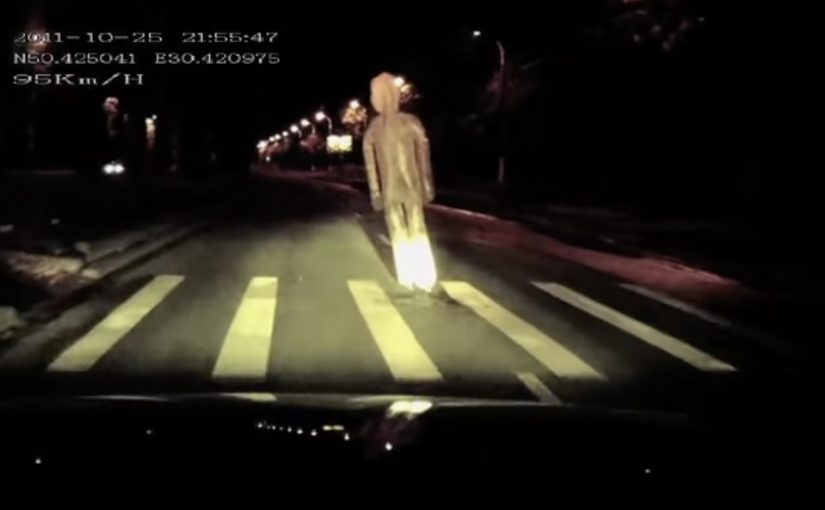
A driver approaches a crosswalk too fast. A “pedestrian” suddenly appears from a manhole cover, then shoots up into the sky like a soul escaping. The only sane response is to slow down.

Speeding cars and pedestrian safety is a huge problem in Ukraine. Ukraine is described as having the highest percentage of pedestrian collisions in Eastern Europe at 56%. To make people think twice about speeding, Shell along with JWT Ukraine created an ambient campaign called the Pedestrian Ghost, a person-shaped helium decoy that appears only when a driver is speeding. The campaign ran during Halloween and generated a lot of buzz over the internet.

A ghost that only shows up when you speed

The mechanism is built for one job. A radar detects an approaching vehicle that exceeds the speed limit. When the threshold is crossed, a hidden device integrated into a manhole cover inflates a person-shaped “ghost” using helium-filled balloons. The figure rises fast and disappears upward, creating a moment that feels like you just hit someone, even though nothing living is harmed.

In dense city streets where drivers routinely treat crosswalks as negotiable, the sharpest safety interventions are the ones that create a visceral consequence in the exact second a bad decision is made.

The real question is how to make speeding feel consequential before harm happens.

Why it lands

It works because it weaponizes surprise without needing explanation. The ghost is unmistakably human-shaped, the timing is unmistakably linked to speed, and the “escape” into the sky reads like consequence. That instant cause-and-effect loop is what resets behavior, at least for the next few blocks. For road-safety messaging, this is the right trade-off: simulate consequence hard enough to reset behavior, but never create real danger.

Extractable takeaway: If you want to interrupt dangerous habits, trigger the intervention only at the violation moment, and make the feedback so immediate and legible that drivers connect cause and effect without being told.

What this crosswalk ghost gets right

  • Trigger only on the infraction. The selectivity makes the moment feel targeted, not random.
  • Use a single, readable symbol. A human silhouette beats a statistic for behavior change.
  • Design for “I have to tell someone”. A story people can repeat in one sentence becomes earned media.
  • Keep the intervention non-injurious. The fear is simulated, the outcome is safe.

A few fast answers before you act

What is “Pedestrian Ghost”?

An ambient road-safety stunt where a ghost-like pedestrian figure rises from a manhole cover at a crosswalk when a radar detects a speeding car, forcing drivers to slow down.

What is the core mechanism?

Radar detects speeding. A concealed device inflates a person-shaped helium “ghost” and releases it upward. The driver experiences an immediate, consequence-like shock without any real harm.

Why does it change behavior better than a warning sign?

Because the feedback is timed to the violation and feels personal. The driver is not being advised. They are being startled at the exact moment of risk.

What is the biggest failure mode if I copy this pattern?

Unreliable triggering. If the effect fires at the wrong time, or too often, people stop believing the cause-and-effect link and the intervention becomes noise.

What is the simplest modern variant?

A violation-triggered intervention that is immediate, physical, and unmistakably tied to speed. For example light, sound, or motion that only activates above a threshold at the crosswalk.
ETN: The Howling Football

The European Football Championship is going to kick off in a few months, and brands are already getting ready with their advertising pitch. However the brands are not the only ones who want to grab people’s attention.

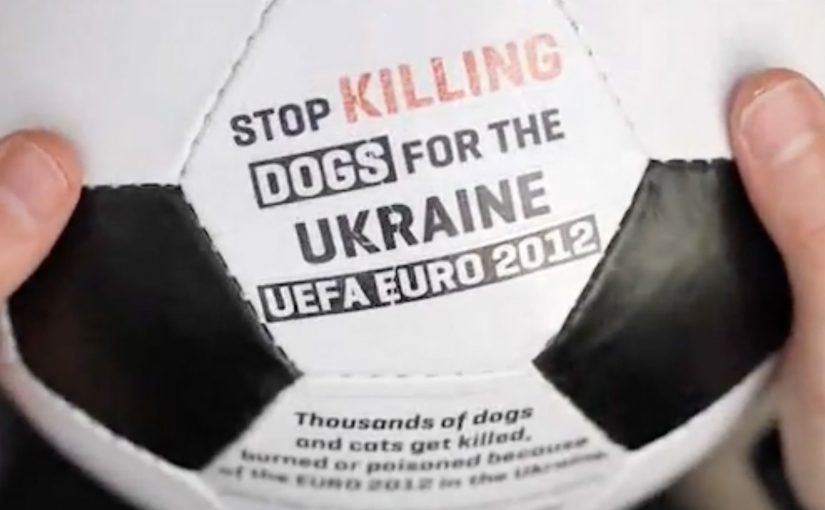
In Ukraine there are street dogs and cats that are reported to be being killed to make the country cleaner and ready to welcome thousands of football tourists. So pan-European animal charity ETN has conceived an attention grabbing ambient campaign in Hamburg to get people involved in its animal protection program.

A football that stops being fun for a second

The execution borrows the most universal gesture around the tournament. A casual kick. Then it interrupts that habit with a jolt that does not belong on a pitch, pulling a distant issue into the middle of the street.

How the mechanism works

The campaign is built around a physical football installation placed in public space. When someone kicks it, the “game” produces an unexpected emotional cue, and the surrounding prompts push you toward a simple next step to support ETN’s protection work. The route to action is designed to be immediate, not research-heavy.

In European cause marketing, the fastest way to mobilize help is to turn a distant issue into a local, physical moment that asks for one simple response.

Why it lands

Football creates permission. People approach without suspicion, because the object feels familiar and playful. The switch from play to discomfort is what makes the message stick. The moment re-frames “preparation for a tournament” as something with consequences, then it uses that heightened attention window to ask for help while the feeling is still fresh.

Extractable takeaway: If you can hijack a familiar public behavior and replace its expected feedback with a values signal, you get instant comprehension and a much higher chance of follow-through than a poster ever delivers.

What ETN is really trying to achieve

This is not awareness for awareness’ sake. The real question is whether a street encounter can convert concern into immediate support before attention fades. It is a conversion play, meaning the point is to turn attention into donations or sign-ups. Make the issue legible in ten seconds, then make support doable in the next ten. The ambient moment is the top of funnel. The donation and sign-up paths are the business end.

What to steal from ETN’s street intervention

  • Use a culturally loaded object. Football already carries meaning during a tournament build-up.
  • Change the feedback, not the instruction. The surprise does the teaching.
  • Design the “next step” to be instant. If action requires effort, the moment evaporates.
  • Keep the story single-threaded. One cause, one emotion, one ask.
  • Place it where the behavior naturally happens. Public space is the medium and the distribution.

A few fast answers before you act

What is “The Howling Football”?

An ambient street installation that uses a football-triggered moment to spotlight a reported animal-welfare issue and direct people to support an animal protection program.

Why tie an animal charity message to a football tournament?

Because the tournament creates attention and shared behavior. The campaign uses that attention to make a neglected topic visible to people who otherwise would not seek it out.

What makes this different from a normal charity poster?

It interrupts a real action in real space. That interruption creates emotional salience, then it immediately offers a next step while attention is still high.

What is the biggest execution risk with shock-based ambient?

If the moment feels gimmicky or unclear, people disengage. The cue has to be instantly interpretable, and the path to help has to be frictionless.

How do you measure success for a campaign like this?

Track conversions first. Donations, sign-ups, and cost per action. Then look at earned reach and press as secondary amplification.