
fiftyfifty: Frozen Cinema

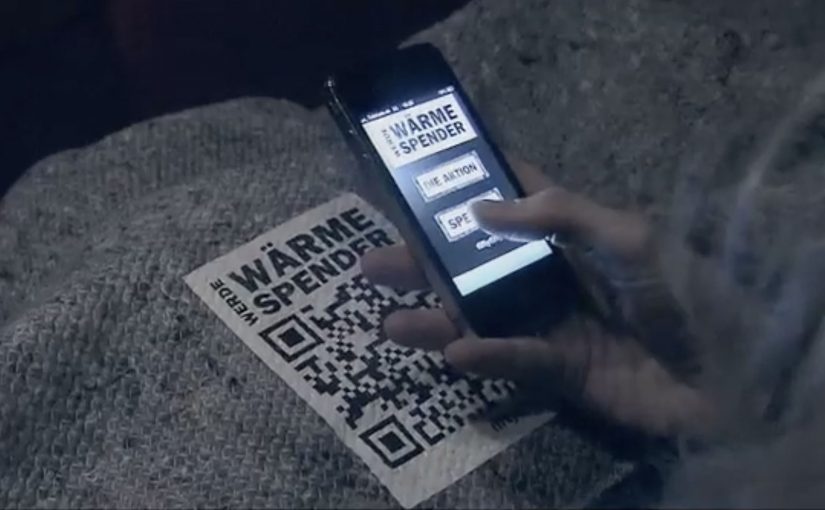
A cinema in Germany is set to a brutal 8°C. The audience starts to shiver, then notices blankets placed on the seats. A short film begins, and homeless people on screen comment on the “cold cinema experience”. For them, 8°C is described as cozy.

That contrast is the reality check. It turns “winter hardship” from an abstract idea into a physical sensation you cannot ignore, even if only for a few minutes.

How the donation loop is built

The mechanism is tightly engineered. Lower the temperature. Hand out blankets. Add QR codes to the blankets so the audience can donate instantly while the emotional context is still fresh. Here, the donation loop means a felt trigger, an instant prompt, and a friction-light way to give before the moment fades. The cold primes empathy. The QR code removes friction. That sequence works because the physical cue creates urgency and the QR code captures intent before it cools.

In European urban environments where most people only glimpse homelessness in passing, empathy campaigns land harder when they translate a daily reality into a shared, felt moment.

The real question is how to turn sympathy into immediate action before comfort returns and attention drifts.

Why it lands

This works because it is not just a message. It is a sensory demo. The audience experiences discomfort, then immediately hears the perspective of people who live with worse, for longer, with no quick “rewarm” button.

Extractable takeaway: If your cause depends on empathy, build one controlled, temporary experience that lets people feel a fraction of the problem, then put the simplest possible action in their hands while they still care.

What to reuse in empathy activations

  • Use the environment as media. A small physical change can do more than a big headline.
  • Pair feeling with explanation. The “why” must arrive before people rationalize the discomfort away.
  • Make the action immediate. Donations work best when there is no extra search, form, or delay.
  • Keep it respectful. The goal is recognition and support, not spectacle.

A few fast answers before you act

What is “Frozen Cinema”?

It is a charity awareness and donation activation that chills a cinema to 8°C and uses a short film plus QR-coded blankets to trigger immediate donations for homeless support.

What is the core mechanism?

Physical discomfort creates attention. Context from homeless voices creates meaning. QR codes on blankets remove friction so people can donate on the spot.

Why does the temperature change matter?

It turns an intellectual topic into a bodily experience. That shift makes the message harder to dismiss and easier to remember.

Why put the QR code on the blanket?

It places the donation action inside the experience itself, so people do not have to search for the next step after the emotional moment has passed.

What is the most reusable lesson?

When you need action, design a moment that people can feel, then make the response path effortless and immediate.
MCSC: World’s Most Valuable Social Network

When a child goes missing, the first hours matter. The problem is that the people who could help are often nearby, busy, and scrolling.

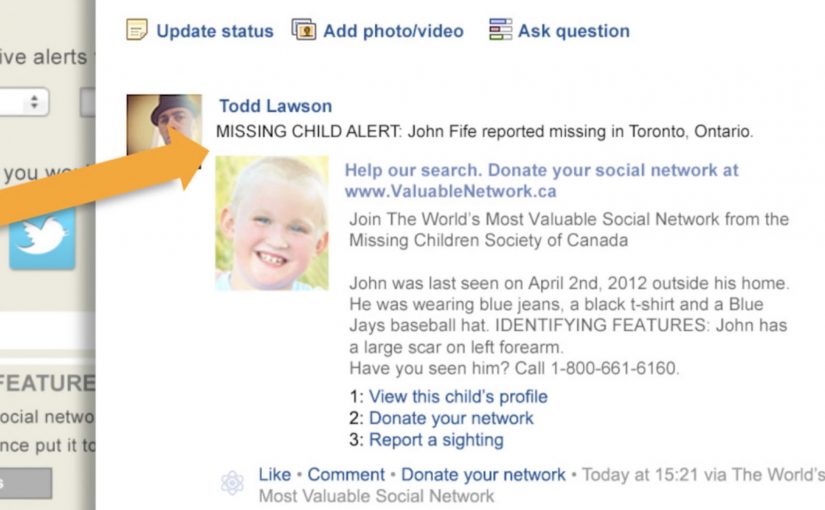
The Missing Children Society of Canada, with Grey Canada, asks people to “donate” their Facebook and Twitter news feeds. By opting in, a person allows missing-child alerts to be posted directly into their feed, turning everyday social reach into a public-safety broadcast layer.

The distribution logic is local. Alerts are geographically coded, so someone in Toronto sees posts about missing children in their area, not a national firehose.

Turning social feeds into an emergency surface

The mechanism is permissioned publishing. Here, “permissioned” means people explicitly opt in to let the program post on their behalf. Instead of asking people to remember to share posters or retweet at the right moment, the campaign uses opt-in account access to place alerts where attention already lives. Because the alert is published automatically into feeds people already check, it moves faster than a request that depends on manual sharing.

In Canadian public-safety communications, speed and local relevance determine whether a message gets acted on or ignored.

Why this lands better than a generic awareness push

Most “support the cause” messaging competes with everything else in the feed. This flips the frame. The feed itself becomes the tool, and the content is time-sensitive and action-oriented. This is a stronger model than a generic awareness push because it routes attention into action without extra steps.

Extractable takeaway: If the mission depends on time, do not optimize for “awareness.” Optimize for distribution mechanics that reduce steps at the moment of need, and constrain the message to the people who can realistically act.

Geo-coding is the quiet hero here. Locality reduces fatigue, increases perceived responsibility, and makes the alert feel like a neighborhood problem, not distant tragedy content.

What the campaign is really building

Beyond any single case, this creates a repeatable digital volunteer layer. Every donated feed is a standing commitment, and every local alert becomes a test of whether the network can mobilize attention fast enough to matter.

The real question is whether you can convert passive sympathy into permissioned, local distribution during the first hours.

Design moves worth borrowing

  • Make opt-in feel like “donation.” People understand giving reach the way they understand giving money.
  • Automate the share. Remove the “I should post this” friction.
  • Localize by default. Relevance is the difference between help and noise.
  • Keep the message actionable. Clear identifiers and a next step beat emotional copy in urgent scenarios.

A few fast answers before you act

What does it mean to “donate” your social media feed in this campaign?

You opt in so missing-child alerts can be posted directly to your Facebook or Twitter feed, using your reach to distribute time-sensitive information.

Why use geo-coded alerts?

It keeps the feed relevant and increases the chance someone nearby recognizes the child or has useful information, while avoiding national alert fatigue.

What problem is this solving compared to posters or standard PSAs?

Speed and placement. It puts alerts into a high-attention channel immediately, without relying on people to take an extra step to share.

What should a program like this measure?

Opt-in volume, local reach per alert, time-to-first-distribution, engagement actions that indicate reading, and downstream reporting behavior where available.

What’s the smallest version you can pilot?

Start with a single opt-in flow, a clear local targeting rule, an approval workflow for posting, and one simple call to action that tells people exactly what to do if they have information.

ETN: The Howling Football

The European Football Championship is going to kick off in a few months, and brands are already getting ready with their advertising pitch. However the brands are not the only ones who want to grab people’s attention.

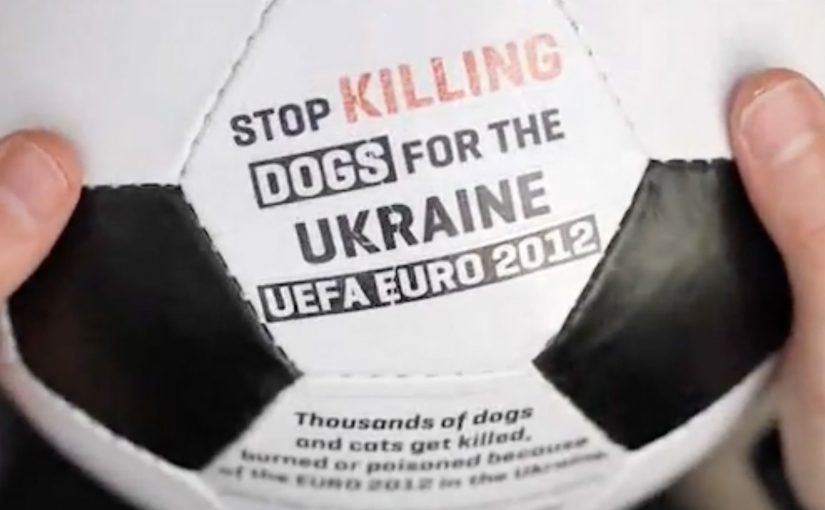
In Ukraine there are street dogs and cats that are reported to be being killed to make the country cleaner and ready to welcome thousands of football tourists. So pan-European animal charity ETN has conceived an attention grabbing ambient campaign in Hamburg to get people involved in its animal protection program.

A football that stops being fun for a second

The execution borrows the most universal gesture around the tournament. A casual kick. Then it interrupts that habit with a jolt that does not belong on a pitch, pulling a distant issue into the middle of the street.

How the mechanism works

The campaign is built around a physical football installation placed in public space. When someone kicks it, the “game” produces an unexpected emotional cue, and the surrounding prompts push you toward a simple next step to support ETN’s protection work. The route to action is designed to be immediate, not research-heavy.

In European cause marketing, the fastest way to mobilize help is to turn a distant issue into a local, physical moment that asks for one simple response.

Why it lands

Football creates permission. People approach without suspicion, because the object feels familiar and playful. The switch from play to discomfort is what makes the message stick. The moment re-frames “preparation for a tournament” as something with consequences, then it uses that heightened attention window to ask for help while the feeling is still fresh.

Extractable takeaway: If you can hijack a familiar public behavior and replace its expected feedback with a values signal, you get instant comprehension and a much higher chance of follow-through than a poster ever delivers.

What ETN is really trying to achieve

This is not awareness for awareness’ sake. The real question is whether a street encounter can convert concern into immediate support before attention fades. It is a conversion play, meaning the point is to turn attention into donations or sign-ups. Make the issue legible in ten seconds, then make support doable in the next ten. The ambient moment is the top of funnel. The donation and sign-up paths are the business end.

What to steal from ETN’s street intervention

  • Use a culturally loaded object. Football already carries meaning during a tournament build-up.
  • Change the feedback, not the instruction. The surprise does the teaching.
  • Design the “next step” to be instant. If action requires effort, the moment evaporates.
  • Keep the story single-threaded. One cause, one emotion, one ask.
  • Place it where the behavior naturally happens. Public space is the medium and the distribution.

A few fast answers before you act

What is “The Howling Football”?

An ambient street installation that uses a football-triggered moment to spotlight a reported animal-welfare issue and direct people to support an animal protection program.

Why tie an animal charity message to a football tournament?

Because the tournament creates attention and shared behavior. The campaign uses that attention to make a neglected topic visible to people who otherwise would not seek it out.

What makes this different from a normal charity poster?

It interrupts a real action in real space. That interruption creates emotional salience, then it immediately offers a next step while attention is still high.

What is the biggest execution risk with shock-based ambient?

If the moment feels gimmicky or unclear, people disengage. The cue has to be instantly interpretable, and the path to help has to be frictionless.

How do you measure success for a campaign like this?

Track conversions first. Donations, sign-ups, and cost per action. Then look at earned reach and press as secondary amplification.