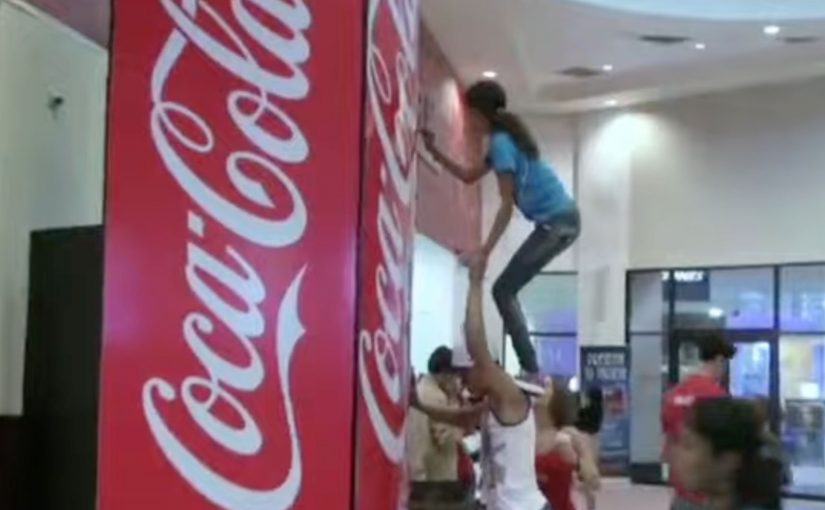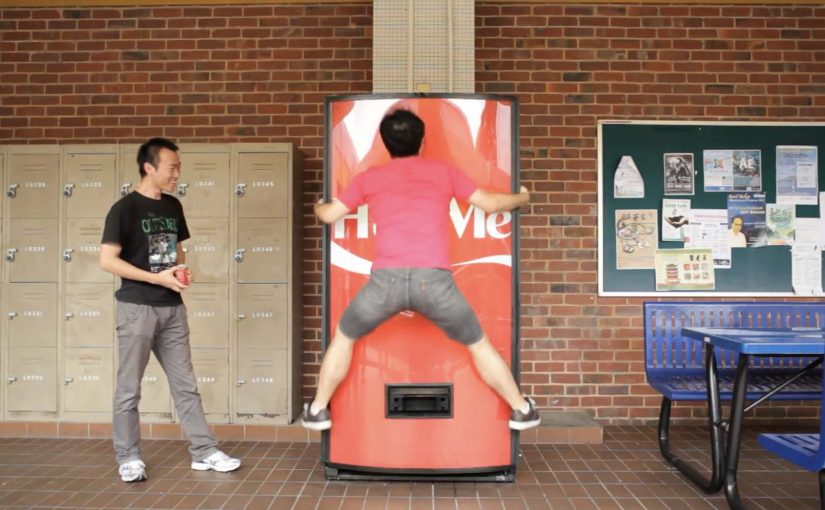
As part of its global “Open Happiness” campaign, Coca-Cola set up a vending machine at the National University of Singapore that doesn’t take coins or any other cash. It only takes hugs. For every public display of machine love, the Coca-Cola “Hug Me” machine gifts the person a free can of Coca-Cola.
A vending machine that runs on human behavior
The mechanism is a single, universal trigger. Instead of payment, the machine asks for a hug. That one action creates a public moment, signals the brand promise instantly, and makes the reward feel earned through emotion rather than money.
In FMCG sampling and brand experience work, replacing “transaction” with a simple human gesture is a repeatable way to turn distribution into a story.
Why it lands
This works because it transforms a functional object into a social catalyst. A vending machine is normally private and transactional. A hug is public and disarming. That contrast generates smiles, draws a crowd, and makes the brand feel like the instigator of the moment rather than the sponsor of a giveaway. The real question is whether the brand can make the giveaway feel like a public act people want to witness and copy. Coca-Cola gets this right because the machine itself turns sampling into visible, social participation.
Extractable takeaway: If you can swap payment for a simple, universally understood gesture, you turn sampling into participation. Participation creates social proof, and social proof is what makes the experience travel beyond the physical location.
The machine is one of a number of Happiness Machines Coca-Cola has deployed around the world since 2009.
What to steal from the Hug Me machine
- Pick one obvious action: the trigger should be instantly understood without instructions.
- Make the behavior visible: public participation is the engine for attention and sharing.
- Keep the reward immediate: the dispense moment is the payoff that seals the memory.
- Design for bystanders: the crowd reaction is part of the product.
- Let the object carry the message: the machine itself should explain the campaign in one glance.
A few fast answers before you act
What is the Coca-Cola “Hug Me” machine?
It is a branded vending machine that dispenses a free Coke when a person hugs it, turning sampling into a public, playful interaction.
Why use a hug as the trigger?
A hug is universally understood, emotionally positive, and visibly social. It signals “happiness” faster than copy, and it recruits bystanders naturally.
What’s the marketing job this format does best?
It converts distribution into a shareable moment. The product is delivered, but the real value is the public reaction and the story people retell.
Where does this work well outside campuses?
Any high-footfall environment where people are open to playful participation. Events, malls, transit hubs, and city centers.
What is the biggest risk with this kind of activation?
If the gesture feels awkward or culturally mismatched, participation drops. The trigger has to feel comfortable, obvious, and safe for the audience.