
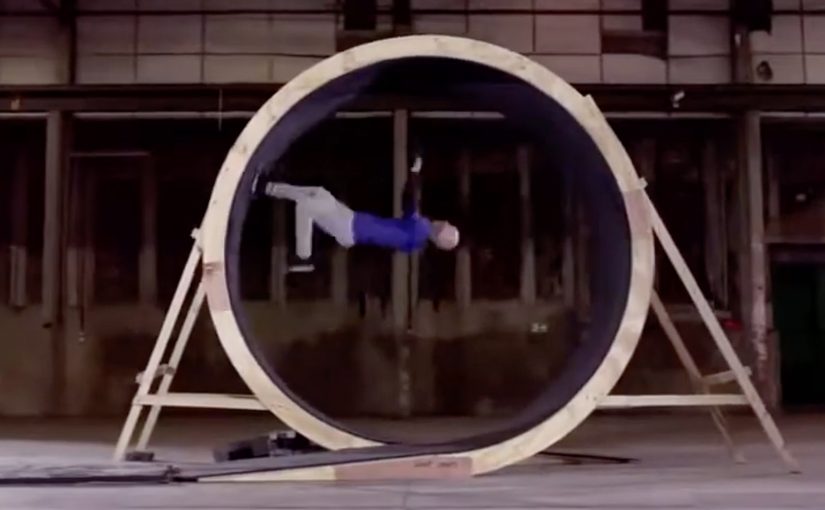
Pepsi Max: Human Loop

Last year, Pepsi Max for its ongoing #LiveForNow campaign created an unbelievable bus levitation stunt. Now continuing this “unbelievable feats and experiences” brand positioning, they challenged daredevil stuntman, Damien Walters to do another unbelievable stunt for them. Here, positioning means the single promise the brand wants people to remember and retell.

Pepsi Max provided Damien with a human-sized loop-the-loop in an abandoned warehouse and then got him to defy gravity for them…

In global FMCG marketing, stunts like this earn value when they reinforce an existing brand platform, not when they try to create one from scratch.

Why this stunt fits the brand

The mechanism is simple. A clearly defined physical challenge, executed by credible talent, makes the “unbelievable” promise feel real because the payoff is visible without narration.

Extractable takeaway: If your positioning is a claim, design one repeatable moment that functions as proof, then film it so the viewer can verify it without explanation.

  • It commits to the promise. “Unbelievable” is not a line here. It is the product.
  • It is instantly legible. You understand the challenge in one second, then you watch to see if it is possible.
  • It is built for replay. Stunts invite rewatching, pausing, and sharing because people want to verify what they saw.

How to make the stunt behave like proof

The real question is whether your brand promise can be proven in one obvious moment on camera.

This kind of spectacle earns its keep only when it is a direct proof point for an ongoing platform, not a disconnected attempt at “random viral”.

If your positioning is about experiences, you need executions that behave like proof. This kind of spectacle works when the idea is simple, the talent is credible, and the payoff is visible without explanation.

  • Make the promise behave like proof. If positioning is about experiences, the execution should demonstrate it, not describe it.
  • Keep the idea simple and the payoff visible. The viewer should understand the challenge instantly and see the outcome without explanation.
  • Use credible talent, then shoot for replay. Stunts invite rewatching, pausing, and sharing when people want to verify what they saw.

A few fast answers before you act

What is Pepsi Max “Human Loop”?

It is a Pepsi Max #LiveForNow stunt featuring Damien Walters attempting a human-sized loop-the-loop setup inside an abandoned warehouse.

Why does a loop-the-loop stunt perform so well in video?

The challenge is obvious, the risk feels real, and the outcome is visually conclusive, which makes it highly shareable.

What is the core pattern behind this kind of campaign?

Make the brand promise measurable in one moment, then capture it cleanly so the viewer does not need context to understand it.

How do you keep stunts from feeling like “random viral”?

Anchor them to an ongoing brand platform, use consistent talent and tone, and make each execution feel like a credible next chapter.

When should you avoid a stunt-led proof moment?

Avoid it when the idea cannot be understood instantly, the talent is not credible, or the execution does not ladder up to an ongoing brand platform.
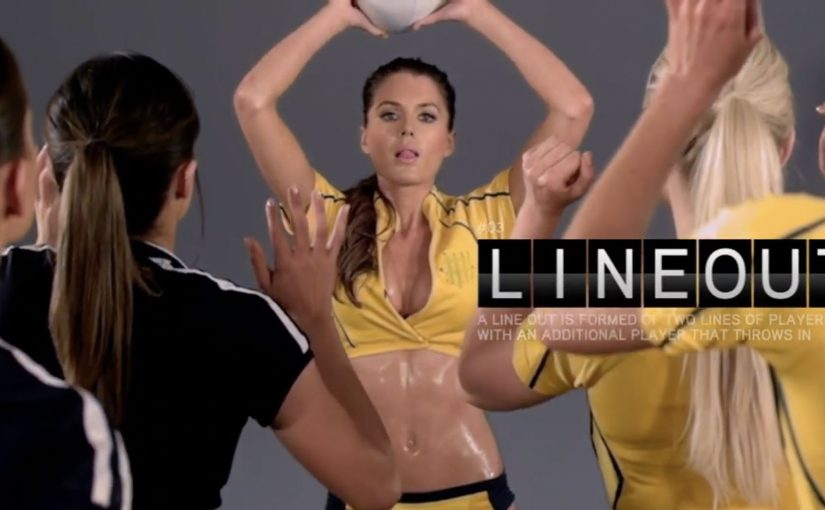
Lynx Sexy Rugby Rules: Rugby 101

The Rugby World Cup is currently underway in New Zealand, and there is no better time than now for Lynx to do what they do best in their advertising: push sex appeal front and center. Reportedly passing 600,000 views in its first week, it suggests plenty of people are “learning” the rules of rugby.

Mechanically, it is Rugby 101 delivered as a faux-serious, straight-faced rules explainer, with the on-field demonstrations staged for maximum attention rather than maximum clarity. Because the familiar explainer wrapper is instantly legible, viewers click quickly, and the cheeky demonstrations give them a reason to forward it.

In mass-reach men’s grooming marketing, this kind of “rules explained” format is a reliable way to ride a cultural moment and turn it into shareable entertainment.

The real question is whether you can borrow a “helpful explainer” wrapper without damaging trust when the content is really designed for provocation.

This works for Lynx because provocation is already part of its brand contract, but it is a poor fit for brands that need to be taken literally.

Why this is timed to the tournament

When a big tournament is on, casual viewers suddenly need a quick refresher. Lynx hijacks that natural demand with a piece of content that looks like a helpful explainer, but behaves like a viral film.

Why it spreads even if you already know rugby

The viewing motivation is not really education. It is surprise, cheek, and the simple social impulse to forward something that feels slightly taboo, especially when it is framed as “sport content” during a major sports moment.

Extractable takeaway: If you can wrap a bold brand move inside a familiar utility format, you lower the friction to watch, and you increase the odds that people share it as “useful” instead of “an ad.”

What Lynx is actually reinforcing

This is classic Lynx branding: confidence, flirtation, and provocation, packaged into a format that is easy to justify watching because it is “about rugby rules.” The product is not the story. The personality is the product.

What to borrow from the “rules refresher” wrapper

  • Attach to a live moment. The closer you are to the cultural peak, the less explanation you need.
  • Use a familiar wrapper. A “rules refresher” is instantly understood, so the audience knows what they are getting.
  • Design for forwarding. If the content is made to be shown to a friend, distribution becomes part of the creative.
  • Keep the premise simple. One joke, one format, one payoff. No extra plot required.

A few fast answers before you act

What is Lynx “Sexy Rugby Rules”?

It is a Rugby 101 style explainer video released during the Rugby World Cup that uses provocative on-field demonstrations to turn a rules refresher into viral entertainment.

Why launch something like this during the Rugby World Cup?

Because more people are searching for quick rules explanations during a tournament, so the format earns attention without needing heavy media spend to explain itself.

Is this meant to genuinely teach rugby?

Not primarily. The “rules” wrapper gives it a reason to exist, but the real goal is shareable entertainment that fits the Lynx brand tone.

What makes this kind of content travel?

Simple premise, instantly recognizable format, and a payoff that people feel compelled to forward as a joke or talking point.

What is the key lesson for campaign timing?

If you can piggyback on a live cultural event, you can spend less time building context and more time maximizing the share moment.