
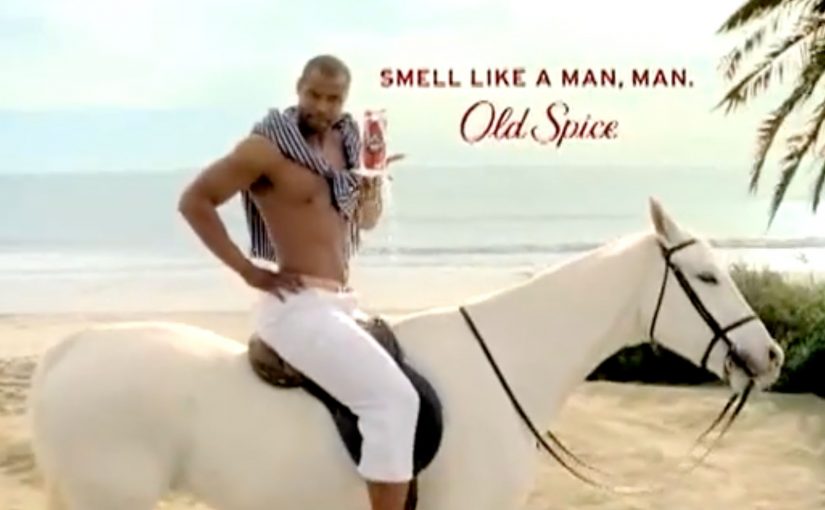
One body wash campaign that owned the conversation
This Old Spice case study takes us through the insight around targeting men and women at the same time to generate conversation around body wash. When it launched, the campaign managed to capture 75% of all conversations in the category.
To continue the success, Old Spice & Wieden + Kennedy created the next level, where Mustafa, now a household hero, a character people recognized instantly, engaged with the fans directly. The response campaign consisted of around 180 customized videos which engaged the fans directly. Thus it became the best social campaign ever to have been created.
Here are some stats of the campaign.
- On day 1 the campaign received almost 6 million views (that’s more than Obama’s victory speech)
- On day 2 Old Spice had 8 of the 11 most popular videos online
- On day 3 the campaign had reached over 20 million views
- After the first week Old Spice had over 40 million views
- The Old Spice Twitter following increased 2700% (probably off a lowish base)
- Facebook fan interaction was up 800%
- Oldspice.com website traffic was up 300%
- The Old Spice YouTube channel became the all time most viewed channel (amazing)
- The campaign has generated 1.4 billion impressions since launching the ads 6 months ago
- The campaign increased sales by 27% over 6 months since launching (year on year)
- In the last 3 months sales were up 55%
- And in the last month sales were up 107% from the social responses campaign work
- Old Spice is now the #1 body wash brand for men
And without further a-due. The best social campaign ever.
The real shift: from broadcast to back-and-forth
The original idea did something rare. It spoke to men and women at the same time. Then it did the smarter thing. It treated the public reaction as the next creative brief. 180 customized responses turn attention into participation.
Because the replies are both personal and public, each interaction creates a reason for more people to watch, share, and join in.
In FMCG categories where products are similar, a brand character plus high-volume two-way interaction can turn attention into a defensible advantage.
The real question is whether you are willing to treat audience reaction as the next creative brief, not a comment thread to manage.
Why this still feels like a blueprint
Most campaigns stop when the film launches. This one starts there. When the character becomes a “household hero,” the brand gains a voice people want to talk to. Brands should treat the response layer, meaning the rapid stream of direct-to-person reply videos, as first-class creative, not post-launch community management.
Extractable takeaway: If a character and tone can scale, rapid, personalized public replies convert one-time views into repeat participation.
What the numbers are really doing here
The stats are not just bragging rights. They are proof that conversation can move the entire system. Views, follows, site traffic, impressions, and ultimately sales. All tied to a campaign designed to travel socially.
Old Spice’s response playbook you can borrow
- Build for both sides of the purchase conversation. The user. And the influencer in their life.
- Treat launch day as the start, not the finish line. Plan the response layer.
- Create a character and tone that can scale. Dozens or hundreds of variations should still feel instantly recognizable.
A few fast answers before you act
What was the core insight in this Old Spice campaign?
Target men and women at the same time to generate conversation around body wash, then use that conversation to fuel the next wave of content.
What made the “response campaign” different?
Mustafa engaged fans directly through around 180 customized videos, turning audience attention into two-way interaction.
What results did the post claim?
The post cites rapid view growth over the first week, large jumps in social following and interaction, major traffic increases, and significant sales lifts over months.
What is the core mechanic behind the success?
A launch film that sparks broad conversation, followed by high-volume personalized responses that keep the conversation accelerating instead of fading.
What should you copy if you cannot produce 180 videos?
Copy the structure. Launch a character-led idea that invites replies, then publish a smaller set of fast, direct responses that keep the conversation moving.
