

CES 2026: Robots, Trifolds, Screenless AI

CES 2026. The signal through the noise

If you want the “CES executive summary,” it looks like this:

  • Health gets quantified hard. A new class of “longevity” devices is trying to become your at-home baseline check. Not a gimmick. A platform.
  • Displays keep mutating. Fold once. Fold twice. Roll. Stretch. The form factor war is back.
  • Robots stop being cute. More products are moving from “demo theatre” to “do a task repeatedly.”
  • Smart home continues its slow merge. Locks, sensors, ecosystems. Less sci-fi. More operational.
  • AI becomes ambient. Not “open app, type prompt.” More “wear it, talk to it, let it see.”

Watch the highlights here:

Now the real plot twist. The best AI announcements at CES 2026

CES is not an AI conference, but CES 2026 made one thing obvious: the next interface is not a chat box. It is context. That means cameras, microphones, on-device inference, wearables, robots, and systems that run across devices. That brings us to the most stunning AI announcements from CES 2026.

Watch the highlights here:

The 5 AI patterns CES 2026 made impossible to ignore

  1. Physical AI becomes the headline
    Humanoid robots were no longer treated purely as viral content. The narrative moved toward deployment, safety, scaling, and real-world task learning.
  2. Wearable AI is back, but in more plausible clothing
    The “AI pin” era burned trust fast. CES 2026’s response was interesting: build assistants into things people already wear, and give them perception.
  3. “Screenless AI” is not a gimmick. It is a strategy.
    A surprising number of announcements were variations of the same idea: capture context (vision + audio + sensors), infer intent, act proactively, and stay out of the way until needed.
  4. On-device intelligence becomes a product feature, not an engineering detail
    Chips and system software matter again because latency, privacy, and cost matter again. When AI becomes ambient, tolerance for “wait, uploading” goes to zero.
  5. The trust problem is now the product problem
    If devices are “always listening” or “always seeing,” privacy cannot be a settings page. It must be a core UX principle: explicit indicators, on-device processing where possible, clear retention rules, and user control that does not require a PhD.

In consumer technology and enterprise product organizations, CES signals matter less as individual gadgets and more as evidence of where interfaces and trust models are heading next.

Wrap-up. What this means if you build products or brands

CES 2026 made the direction of travel feel unusually clear. The show was not just about smarter gadgets. It was about AI turning into a layer that sits inside everyday objects, quietly capturing context, interpreting intent, and increasingly acting on your behalf. Robots, wearables, health scanners, and “screenless” assistants are all expressions of the same shift: computation moving from apps into environments. The remaining question is not whether this is coming. It is how quickly these experiences become trustworthy, affordable, and normal, and which companies manage to turn CES-grade demos into products people actually keep using.


A few fast answers before you act

What was the real AI signal from CES 2026?

The signal was the shift from “AI features” to AI-native interaction models. Products increasingly behave like agents that act across tasks, contexts, and devices.

Why are robots suddenly back in the conversation?

Robots are a visible wrapper for autonomy. They make the question tangible. Who acts. Under what constraints. With what safety and trust model.

What does “screenless AI” mean in practice?

It means fewer taps and menus, and more intent capture plus action execution. Voice, sensors, and ambient signals become inputs. The system completes tasks across apps and devices.

What is the biggest design challenge in an agent world?

Control and confidence. Users need to understand what the system will do, why it will do it, and how to stop or correct it. Trust UX becomes core UX.

What is the most transferable takeaway?

Design your product and brand for “context as the interface.” Make the rules explicit, keep user control obvious, and treat trust as a first-class feature.
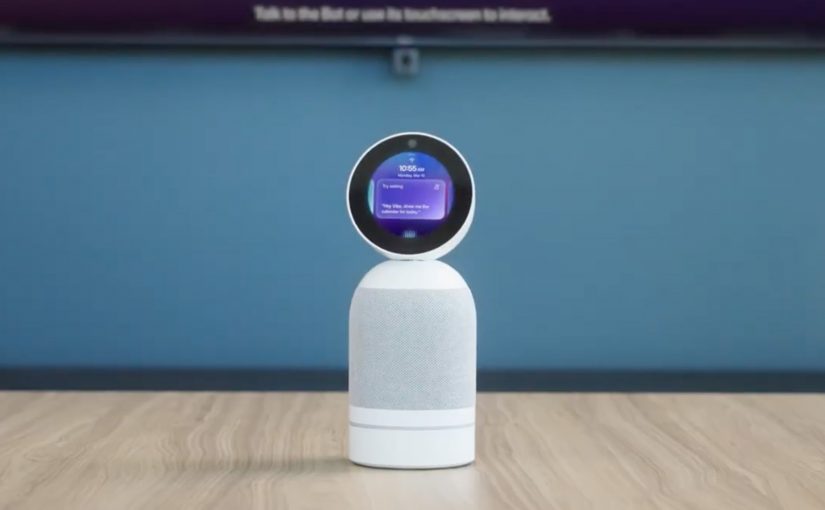
Vibe Bot: AI Meeting Assistant With Memory

At CES 2026, I am seeing a familiar pattern. Earlier AI bot ideas are returning with a new coat of paint, powered by stronger models, better microphones, better cameras, and much tighter product positioning.

Razer’s Project AVA is one example. It reads like a modern update of the “companion in a box” category, echoing Japan’s Gatebox virtual home robot from 2016. Think less novelty bot, more designed product, with better sensing, better personalization, and clearer use cases.

And then there is Vibe Bot. It is not a “robot comeback story” in the literal sense, but it does feel like a spiritual successor to Jibo. The social robot pitched for the family back in 2014. Same emotional shape. Different job to do. This time, the target is the meeting room and the problem is continuity.

What is Vibe Bot?

Vibe Bot is an in-room AI meeting assistant with memory. It captures room-wide audio and video, generates transcripts and summaries, and supports conversation continuity by carrying decisions forward so meetings do not reset every week.

What Vibe Bot is trying to own

In other words, it is meeting intelligence plus decision logging, packaged as AI hardware built for real rooms.

  • Capture meetings with room-wide audio and video
  • Generate speaker-aware transcripts, summaries, and action items
  • Track decisions and surface prior context on demand
  • Sync with calendars and join Zoom, Google Meet, or Teams with minimal setup
  • Connect to external displays and pair wirelessly as a camera, mic, and casting device

This is not just meeting notes. It is a product trying to own the layer between conversation and execution. The strategic bet is continuity. Less rehashing, fewer resets, more forward motion.


What I find strategically interesting is that:

  1. Hardware is back in the AI conversation. We went from bots, to apps, to copilots. Now we are circling back to room-based systems because the capture layer matters.
  2. Context is the moat. Summaries are table stakes. The defensible value is continuity over time, across people, decisions, and follow-ups.
  3. Meeting tools are becoming workflow tools. The winners will connect decisions to action, not just document what happened.
  4. Privacy is now a product feature. If a device sits in a room, trust is part of the user experience, not a compliance footnote.

Vibe Bot fits a broader CES 2026 pattern. AI agents are evolving from chat windows into systems that live where work happens. In this case, the bet is that the meeting room becomes a persistent context engine. If this category gets it right, teams will spend less time reconstructing the past and more time executing the next step.

If Vibe succeeds, it becomes a small but important building block of a contextual AI workspace where teams can retrieve “what we decided and why” on demand. More product info at https://vibe.us/products/vibe-bot/


A few fast answers before you act

What is Vibe Bot and what problem does it solve?

Vibe Bot is an AI meeting assistant designed to capture, remember, and surface context across meetings. It addresses a common failure point in modern work: decisions and insights get discussed repeatedly but are rarely retained, connected, or reused.

What does “AI with memory” actually mean in a meeting context?

AI with memory goes beyond transcription. It stores decisions, preferences, recurring topics, and unresolved actions across meetings, allowing future conversations to start with context instead of repetition.

How is this different from standard meeting transcription tools?

Most meeting tools record what was said. Vibe Bot focuses on what matters over time. It connects meetings, tracks evolving decisions, and helps teams avoid re-litigating the same topics week after week.

Why is memory becoming more important than note-taking?

Knowledge work has shifted from isolated meetings to continuous collaboration. Without memory, teams lose momentum. Memory enables continuity, accountability, and faster decision-making across complex organizations.

What risks should leaders consider with AI meeting memory?

Persistent memory raises governance and trust questions. Teams must define what is remembered, who can access it, how long it is retained, and how sensitive information is protected. Without clear rules, memory becomes a liability instead of an asset.

Where does an AI meeting assistant deliver the most value?

The highest value appears in leadership forums, recurring operational meetings, and cross-functional programs where context is fragmented and decisions span weeks or months.

What is a practical first step before rolling this out broadly?

Start with one recurring meeting type. Define what the AI should remember, what it should ignore, and how humans validate outputs. Measure whether decision velocity and follow-through improve before scaling.

The Moby Mart

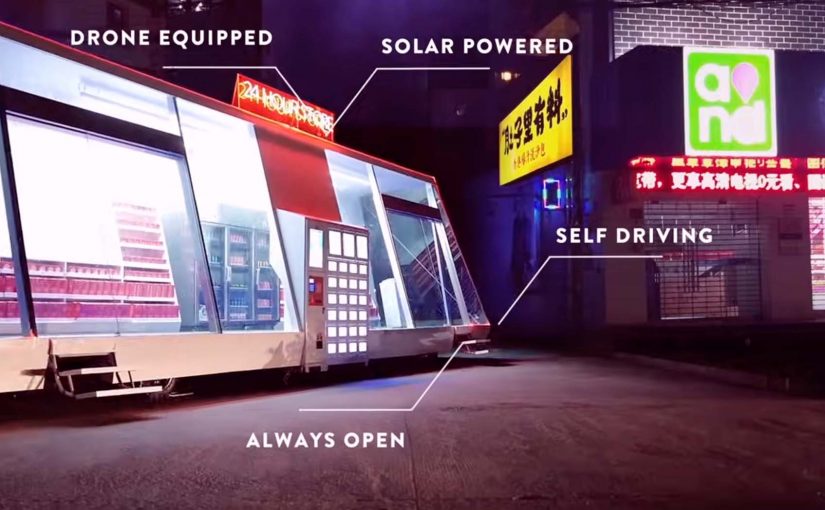
Every parking space becomes a 24-hour store. The Moby Mart is designed to turn ordinary parking spots into always-on retail. Roughly the size of a small bus, it carries everyday products such as snacks, meals, basic groceries, and even shoes. To use it, you download an app, register as a customer, and use your smartphone to unlock the doors.

The idea is in trial mode. The store is undergoing trials in Shanghai through a collaboration between Swedish startup Wheelys Inc and China’s Hefei University. For now, the trial prototype is stationary, based permanently in a car park. But the company says it is working with technology partners to develop the self-driving capability, as shown in the video.

What this concept makes tangible

Retail flips from “go to store” to “store comes to you”

The provocation is simple. If the unit can be deployed anywhere, then proximity becomes a variable you can design, not a constraint you accept.

Friction reduction becomes the product

The app unlock and self-service flow compresses the journey. Entry, selection, payment, exit. Less waiting, less staffing, less handoff.

Mobility creates new placement logic

A store on wheels changes what “location strategy” means. Instead of long-term leases, the unit can be positioned where demand spikes, or where fixed retail is uneconomical.

The reusable pattern

  1. Start with a familiar format. People immediately understand a convenience store. That lowers cognitive load.
  2. Make access the first experience. App unlock is the “moment of truth.” If that step is seamless, everything downstream feels modern.
  3. Design for unattended trust. Clear rules, clear prompts, and a clear “this worked” confirmation prevent anxiety in a staffless space.
  4. Prototype the operating model early. Mobility, restocking, and support are not secondary. They are the offering.

A few fast answers before you act

What is the Moby Mart?

A bus-sized, staffless, mobile convenience store concept that aims to turn parking spaces into 24-hour retail, accessed via a smartphone app.

How do customers use it?

They download an app, register, and unlock the doors with their phone to shop inside.

Where is it being tested?

It is undergoing trials in Shanghai through a collaboration between Wheelys Inc and China’s Hefei University.

Is it already self-driving?

The trial prototype is stationary in a car park. The company says it is working with partners on self-driving capability.

What is the core lesson for marketers and innovators?

Move the experience to the moment and place of demand. Then design the access, trust, and operations as the real product.