
Manus AI: Action Engine for Marketing

Manus AI: Action Engine for Marketing

Manus AI is interesting because it changes the unit of AI adoption in marketing. The useful question is no longer whether AI can write better copy, but whether it can safely execute repeatable marketing work across tools, accounts and output formats.

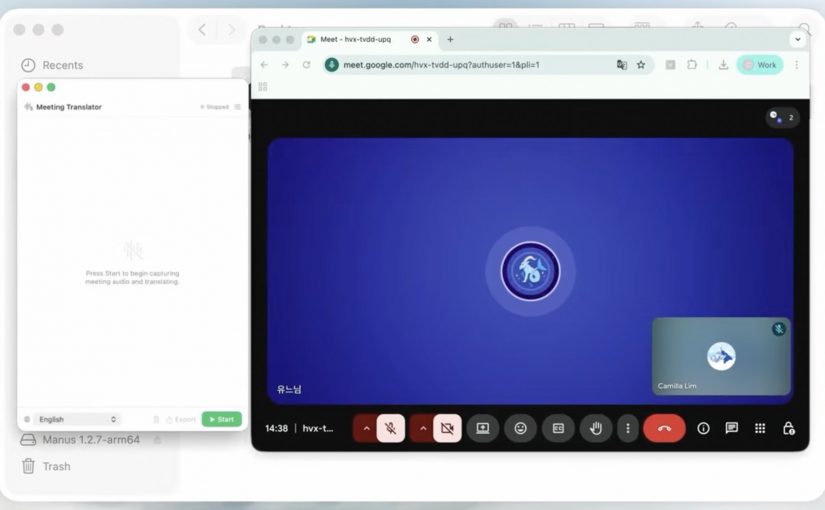
Vaibhav Sisinty, founder of GrowthSchool, frames the hype in the video, but the useful part is the work pattern: browser shopping, download cleanup, Meta ads analysis, Slack triage, influencer research, prototype building and Telegram-based task handoff.

These are not glamorous use cases. They are the small operational gaps that make marketing teams slower than they should be: extracting data, checking dashboards, comparing options, building lists, scanning messages, formatting outputs and turning loose requests into usable artefacts.

The operating shift: from answer to action

Most marketing teams still use AI as an answer layer. They ask for ideas, summaries, drafts, research angles, prompt variants or campaign copy, and then people still move the work manually through browsers, spreadsheets, CMS workflows, ad platforms, project tools and approval chains.

Manus describes itself as an action engine. An action engine is an AI layer that can plan, execute and package work across tools, rather than only generate recommendations.

The mechanism is straightforward: Manus combines planning, browser operation, connectors, file access, code generation and output packaging, so a marketing request can move from prompt to finished artefact without being manually rebuilt in five separate tools.

For marketing teams, that puts the pressure point on operating model design, not on prompt novelty.

This mechanism matters because execution creates real business value only when the system can reach the right tools, use the right data, follow the right rules and hand back something a team can trust.

The marketing question: control before scale

The real question is whether a marketing organization can give any agent safe enough access, clear enough tasks and strong enough controls to make the output usable.

The stance here is clear: treat Manus as a workbench for bounded execution, not as a replacement for marketing judgment.

In a real marketing stack, that distinction matters because the work crosses content systems, asset libraries, product data, CRM, analytics, ad platforms, consent, identity and approval workflows.

The Meta angle matters, but not as gossip

Manus still presents itself as part of Meta, while recent reporting says China has blocked the acquisition or ordered the transaction unwound. That tension deserves a brief mention, but it should not dominate the argument.

The business signal is not the takeover drama. It is that the market is moving from AI tools that advise marketers to AI systems that can sit closer to actual work.

That is why the Meta connection is relevant: ads, creators, messaging and business pages are workflow surfaces, not just media surfaces.

If an execution agent can sit near those surfaces, the commercial value is not another content generator. The value is shorter distance between insight, action, packaging and follow-up.

Governance decides whether this scales

An agent that can open browsers, read accounts, analyze campaigns, create files, draft replies and ship prototypes is useful only when access rights, approval steps and logs are explicit. Before scaling it, marketing teams need to define which accounts can be touched, which actions are read-only, which outputs require human approval, which data is excluded and which records prove what happened.

Without this, the failure mode is obvious. The agent becomes another shadow workflow, fast enough to bypass controls and persuasive enough to hide weak evidence.

That is also where adoption gets decided. People will not use an agent because it is magical; they will use it because it removes low-value work without making them responsible for invisible risk.

What marketing teams should operationalize

The practical move is not to connect everything at once. Start with bounded, reversible work: campaign monitoring, reporting summaries, initial lists of potential creators and influencers, content calendars, competitive scans, meeting follow-ups, prototype briefs and internal workflow cleanup. These jobs have enough friction to matter, enough structure to test, and low enough downside if a human reviewer stays in the loop.

Takeaway: Offerings like Manus AI are useful for marketing when they are treated as execution layers for controlled workflows, with clear access rules, human approval points, source checks, output QA and measurable time saved.


A few fast answers before you act

What is Manus AI?

Manus AI is a general-purpose AI agent designed to execute tasks, not just answer prompts. In marketing, that means it can support research, reporting, campaign analysis, workflow automation and prototype creation when access and review are controlled.

How is Manus different from ChatGPT or Claude?

ChatGPT and Claude are usually used as reasoning and drafting interfaces. Manus is positioned closer to an execution environment because it can use browser operation, connectors and output generation to turn a request into a finished artefact.

Should marketing teams connect Manus to real accounts?

Not without data governance and security review. Start with read-only access where possible, confirm what data leaves your environment, exclude sensitive customer or employee data, require human approval before external actions, and keep logs for every workflow that affects campaigns, customers or brand assets.

Does the Meta acquisition story change the marketing argument?

Only slightly. The ownership story is unstable, but the operating lesson is stable: AI agents are moving closer to ads, creators, messaging, commerce and business workflows.

What is the best first use case for Manus in marketing?

Start with recurring analysis and packaging work. Weekly campaign summaries, potential creator and influencer lists, competitor scans and meeting-to-action-plan workflows are easier to govern than live publishing or customer-facing execution.

The Ford Vending Machine

The Ford Vending Machine

A glass “vending machine” in Guangzhou holds 42 cars. You choose a Ford model, pay a deposit in the Tmall app, schedule pickup, snap a selfie, and the machine recognises you when you arrive. Then it releases the car for a three-day test drive.

How the car vending machine flow works

Alibaba and Ford build this as a Super Test Drive Center. Think of it as a self-service test drive hub that compresses selection, deposit, scheduling, and pickup into one digital-to-physical flow. It turns the usual dealership steps into a clean sequence. Select the car model. Put down the deposit electronically via the Tmall app. Book a pickup slot. Use a selfie as identity confirmation at the moment of collection.

In high-density cities where e-commerce behaviours are habitual, self-serve pickup expectations spill into high-consideration products too.

The real question is how you remove dealership-shaped friction without removing trust.

Why this matters for test drives and conversion

The innovation is not the building. It is the removal of friction around intent. By compressing selection, deposit, scheduling, and identity confirmation into one predictable sequence, the concept reduces drop-off between “I want a test drive” and “I am in the car”. Here, “friction” is the waiting, paperwork back-and-forth, and sales pressure that makes people abandon the step entirely. This pattern is worth copying when your goal is more completed test drives, not more showroom theatre.

Extractable takeaway: If you can make “try before you buy” feel as immediate as e-commerce while keeping identity confirmation lightweight, you increase the odds that intent turns into action.

What the selfie step signals

The selfie is a simple trust layer. It connects the digital reservation to the physical handover. It also reinforces the theatre of the experience. You do not just pick up a car. You unlock it.

Stealable moves from this flow

  • Turn the test drive into checkout: Make selection, deposit, and scheduling a single, self-serve sequence.
  • Remove sales pressure by default: Let customers start with intent and time-on-product, not negotiation.
  • Use lightweight identity at pickup: Tie the digital reservation to the physical handover without adding paperwork loops.
  • Design for story, not just logistics: The unlock moment makes the handover feel earned and shareable.

A few fast answers before you act

What is a car vending machine?

It is a vertical, automated car storage and handover system that lets customers reserve and collect a vehicle via a digital flow, instead of a traditional showroom process.

How does the three-day test drive booking work in this concept?

You select a model, place a deposit electronically in the Tmall app, schedule a pickup time, and then collect the car for a three-day test drive at the vending machine site.

Why use a selfie for pickup?

It provides a lightweight identity confirmation step that ties the digital booking to the physical release, without adding visible friction for the customer.

What should brands measure if they copy this pattern?

Test-drive completion rate, conversion rate after the test period, time from reservation to pickup, repeat bookings, and the share of customers who choose this flow over a dealership visit.

The Moby Mart

The Moby Mart

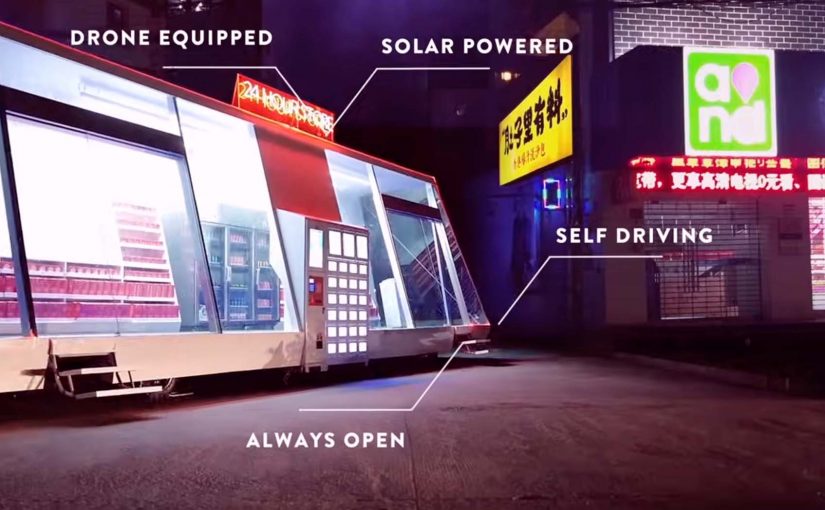
Every parking space becomes a 24-hour store. The Moby Mart is designed to turn ordinary parking spots into always-on retail. Roughly the size of a small bus, it carries everyday products such as snacks, meals, basic groceries, and even shoes. To use it, you download an app, register as a customer, and use your smartphone to unlock the doors. Here, “always-on” means open around the clock without staff on site.

The idea is in trial mode. The store is undergoing trials in Shanghai through a collaboration between Swedish startup Wheelys Inc and China’s Hefei University. For now, the trial prototype is stationary, based permanently in a car park. But the company says it is working with technology partners to develop the self-driving capability, as shown in the video.

The mechanism behind the parking-space store

The mechanism is app-gated access plus self-service. Entry, selection, payment, exit. When that first unlock step feels safe and effortless, an unattended unit starts to feel like normal retail, not a gimmick.

In urban convenience retail, reducing the distance and time between intent and purchase is often the real differentiator.

The real question is whether you can move retail to the moment of demand without breaking trust, support, and replenishment.

If the access and “this worked” confirmation are not rock-solid, mobility and novelty will not save the experience.

What this concept makes tangible

This lands because it reframes “location” as something you can deploy and operate, not just something you lease and staff. The store becomes infrastructure, and the app becomes the front door.

Extractable takeaway: When you make access the first experience, trust and operations become part of the product, not back-office details.

Retail flips from “go to store” to “store comes to you”

The provocation is simple. If the unit can be deployed anywhere, then proximity becomes a variable you can design, not a constraint you accept.

Friction reduction becomes the product

The app unlock and self-service flow compresses the journey. Entry, selection, payment, exit. Less waiting, less staffing, less handoff.

Mobility creates new placement logic

A store on wheels changes what “location strategy” means. Instead of long-term leases, the unit can be positioned where demand spikes, or where fixed retail is uneconomical.

What to copy from Moby Mart

  • Start with a familiar format. People immediately understand a convenience store. That lowers cognitive load.
  • Make access the first experience. App unlock is the “moment of truth.” If that step is seamless, everything downstream feels modern.
  • Design for unattended trust. Clear rules, clear prompts, and a clear “this worked” confirmation prevent anxiety in a staffless space.
  • Prototype the operating model early. Mobility, restocking, and support are not secondary. They are the offering.

A few fast answers before you act

What is the Moby Mart?

A bus-sized, staffless, mobile convenience store concept that aims to turn parking spaces into 24-hour retail, accessed via a smartphone app.

How do customers use it?

They download an app, register, and unlock the doors with their phone to shop inside.

Where is it being tested?

It is undergoing trials in Shanghai through a collaboration between Wheelys Inc and China’s Hefei University.

Is it already self-driving?

The trial prototype is stationary in a car park. The company says it is working with partners on self-driving capability.

What is the core lesson for marketers and innovators?

Move the experience to the moment and place of demand. Then design the access, trust, and operations as the real product.