
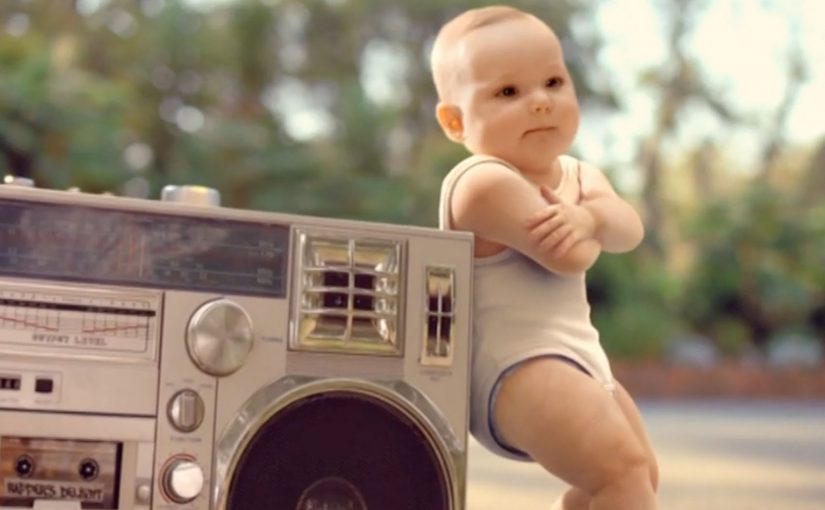
Evian: Roller-skating Babies

A viral ad that hit Guinness-level scale

Evian’s “Roller-skating Babies” viral ad, created by Euro RSCG, has been recognised by the Guinness Book of Records as the most viewed online ad to date.

Adding up views for various versions of the ad across video sharing websites, the ad has got 45,166,109 views as of 9 November 2009.

How “viral” is engineered when the idea is instantly repeatable

The mechanism is concept compression. By concept compression, I mean reducing the whole hook to a phrase people can repeat accurately. “Roller-skating babies” is a one-line idea that travels intact. You do not need explanation, context, or a brand preamble to understand why you should click. Because the hook survives in one line, it removes explanation friction, which is why forwarding feels effortless.

Across global FMCG brands, the difference between “viral” and bought reach is whether people willingly forward the idea as social currency, a quick signal of taste or humour.

The real question is whether your idea can be retold in one line, so people share it as a signal, not as a favour.

Why it lands: novelty, craft, and the urge to pass it on

It works because it is strange enough to be worth sharing and polished enough to reward rewatching. The viewer gets an immediate payoff, then uses the link as a way to say, “you have to see this”.

Extractable takeaway: Shareability increases when the payoff arrives immediately and the idea can be recommended in a sentence without explanation.

The business intent: fame that feels earned, not placed

This is not a conversion mechanic. It is a reach and memorability play. The goal is to make the brand part of a piece of entertainment people choose to spread, so the exposure feels voluntary rather than interrupted.

What to steal if you want scale without buying it all

  • Build a one-sentence idea. If the concept cannot be repeated accurately in one line, it loses speed.
  • Design for sharing friction. The viewer should know what it is and why it is fun within seconds.
  • Make it rewatchable. Repeat viewing is a multiplier for social forwarding.
  • Measure across versions. If the asset spreads in multiple uploads, track the total footprint, not just one link.

A few fast answers before you act

What is Evian’s “Roller-skating Babies” in one sentence?

A highly shareable online film built on a single, instantly repeatable concept: babies roller-skating, executed with polished craft for rewatch value.

What is the core mechanism behind its scale?

Concept compression. The idea travels intact in a few words, so people can forward it as social currency without needing explanation.

Why does it land so reliably with viewers?

It combines novelty with high production value. The viewer gets an immediate payoff, then uses the link as a quick “you have to see this” recommendation.

What should marketers learn about measuring “viral”?

Track across versions and re-uploads. When a film spreads in multiple places, total footprint matters more than one canonical link.

What is the most transferable takeaway?

Build a one-line idea that is easy to retell, then execute it well enough that people want to rewatch and pass it on.

Hyundai Canada: Worst Parking Job Ever

A parked 2004 Hyundai Elantra gets crushed in a parking lot incident captured on security footage. The clip is framed as the “worst parking job ever,” and it quickly becomes the kind of viral story that spreads because the outcome is so brutally clear.

The footage is dated October 22, 2009 in Ontario, Canada, and it puts the owner, Todd Jamison, at the center of an internet pile-on he did not ask for.

Then Hyundai Canada steps into the story. Instead of treating it as someone else’s bad day, they decide to become the helpful brand in the comments section, in real life. On October 30, 2009, they surprise Jamison with a brand new 2010 Hyundai Elantra Touring and capture the handover on film.

How the brand response is engineered

The mechanism is fast, simple, and camera-friendly. A widely shared piece of user-discovered content creates attention. The brand responds with a real-world act that resolves the narrative tension, then publishes the “resolution” as a second video that is just as easy to share as the original. Because the second video closes the loop on the first, it spreads as payoff, not PR.

In automotive PR and brand storytelling, this is the cleanest form of earned media: a human problem, a timely intervention, and a documented payoff that feels generous rather than scripted.

In North American automotive marketing, these moments recur, so the only scalable advantage is showing up with a real fix fast.

The real question is whether you can resolve the tension with a meaningful action before the internet moves on.

Why it lands

Because it completes the story people were already watching. The first video triggers disbelief and sympathy. The second video rewards that emotion with a satisfying outcome. Hyundai does not try to outshout the internet. It aligns with what viewers already want to see happen next, then makes that ending real.

Extractable takeaway: When a viral moment creates an obvious “someone should help” impulse, the best brand move is to deliver a concrete fix fast, then tell the story as a continuation, not a campaign. The sequel is the strategy.

Steal the “unexpected hero” play

An “unexpected hero” play is when a brand solves a real problem for a real person in public, and lets the action carry the story.

  • Respond to the narrative, not the metrics. If the situation has a clear moral shape, your action will travel further than your media spend.
  • Make the intervention unambiguously useful. A replacement car is simple to understand. Complexity dilutes goodwill.
  • Publish the resolution, not the process. Viewers want the moment of surprise and relief, not a corporate explainer.
  • Keep the tone human. The brand should feel like it is helping a person, not exploiting an incident.

A few fast answers before you act

What is the core story arc here?

A widely shared security clip shows a parked car being crushed. Hyundai Canada follows up by replacing the car and filming the surprise, turning shock into closure.

Why is the follow-up video essential?

Because it converts attention into meaning. Without the sequel, the story is only misfortune. With it, the story becomes relief and brand goodwill.

What makes this feel authentic instead of opportunistic?

The action is tangible and directly benefits the person who suffered the loss. The brand is not adding commentary. It is changing the outcome.

How do you decide whether to engage at all?

Engage only if you can improve the outcome for the affected person in a way that is clear on first viewing. If you cannot deliver a meaningful fix, the safest move is to avoid turning someone else’s misfortune into content.

What is the biggest risk when brands copy this approach?

Performative help. If the intervention is small, conditional, or self-serving, the audience will treat it as exploitation of someone else’s bad day.