
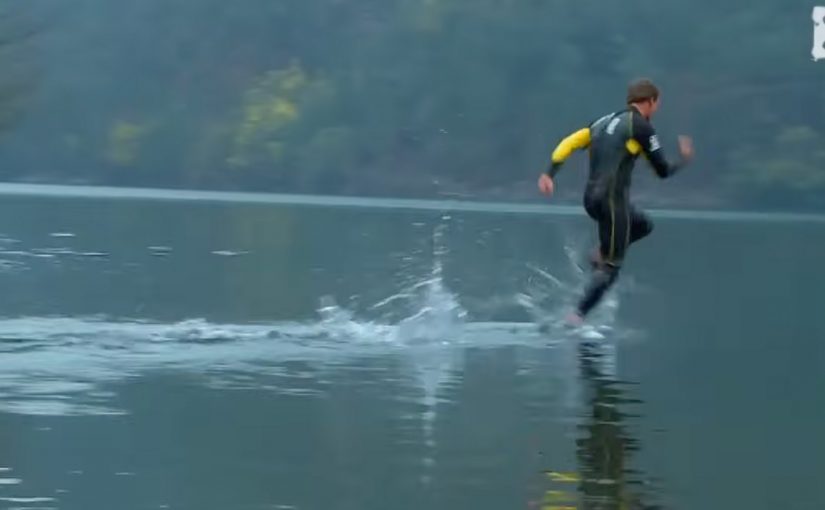
Hi-Tec: Liquid Mountaineering

Liquid Mountaineering is a “new sport” attempting to achieve what man has tried to do for centuries: walk on water. To be more precise: run on water.

In the video, the guys claim that with the right water-repellent equipment one can run across bodies of water, like a stone skimming the surface. It is staged as a breakthrough you could learn with practice and the right kit.

How the trick is framed

The mechanism is classic pseudo-documentary: a new “discipline”, a simple sounding explanation, and footage that feels handheld enough to be believable. By pseudo-documentary, I mean it borrows documentary cues so fiction feels observed rather than advertised. The promise is deliberately literal. Not “waterproof”. “Run on water”.

In consumer sportswear marketing, a product story spreads faster when it is packaged as a spectator-proof (easy to describe in one line) “did you see that?” moment rather than a feature list.

The real question is whether viewers still associate the brand with repellency after they learn the stunt was staged.

Why it lands

It uses an impossible goal to make a real benefit memorable. You might not remember the technical claim, but you will remember the visual metaphor for repellency.

Extractable takeaway: Viral product films travel when they dramatize a benefit as an “impossible” demonstration, then let audience debate do the media buying. The trick is to make the metaphor sticky even after the reveal.

It invites disbelief and debate. The campaign gains reach because viewers argue about whether it could be real. That conversation is the distribution.

It turns product performance into myth. Hydrophobic gear becomes a superpower. The exaggeration is the hook. The brand benefit is the association with extreme performance.

Borrowable moves

  • Lead with a single outrageous claim. One sharp premise beats three sensible points.
  • Wrap the story in familiar documentary cues. “New sport” framing makes viewers do the work of believing.
  • Make the benefit visual. If the viewer can describe it instantly, they will share it.
  • Plan the reveal timing. If it is a hoax, decide when you want the truth to surface and what you want people to remember afterward.

This definitely makes a really cool viral video promoting a waterproof line of clothing, shoes and accessories that are supposedly so water repellent that you can literally run on water with them. After some training of course.

PS: The video is fake. It is a viral ad for Hi-Tec water-resistant running shoes.


A few fast answers before you act

What is “Liquid Mountaineering”?

It is presented as a new extreme sport where people can run on water with special water-repellent gear.

Is the video real?

No. The clip is a staged viral advertisement, as stated in the post’s PS.

Why make it a hoax instead of a normal product demo?

Because the “is this even possible?” question creates conversation and sharing. The debate becomes the distribution channel.

What is the product message underneath the stunt?

That the brand’s footwear and gear are highly water resistant. The film uses an exaggerated metaphor to make repellency feel dramatic.

What is the main risk of this approach?

If audiences feel deceived, the emotional swing can flip from delight to annoyance. The campaign has to make the reveal feel playful, not manipulative.

Erdinger: Drinking and Driving, the 0% Twist

A car rolls through the city. A police stop follows. The officers lean in, looking for the usual “roadside donation” and the driver plays along, calmly offering a beer.

Then comes the punchline. The beer is positioned as 0% alcohol, so the “gotcha” is not that the driver outsmarts the law, it is that the product truth flips the entire situation into a clean reveal.

The prank is the plot, the product truth is the twist

This is staged like a short documentary. A mockumentary, meaning it borrows the signals of documentary realism to make a scripted idea feel “found” instead of “made.” The setting is described as a downtown South American city where traffic stops double as bribe fishing.

In consumer marketing, the fastest path to shareable attention is often a single product truth turned into a public situation people can retell.

How it works: build tension, then release it safely

The mechanism is simple and replicable:

  • High-stakes setup: alcohol control and a police stop.
  • Social friction: the uncomfortable “what will they do” moment.
  • Unexpected compliance: the product is positioned as 0%, so the driver is not “escaping,” he is “within the rules.”
  • Clean release: viewers get to laugh without carrying guilt, because the punchline is anchored in the product claim, not reckless behavior.

In regulated categories and global consumer marketing, this kind of “responsible twist” lets you stage tension without training the audience to celebrate harm.

The real question is whether your product truth can carry the punchline without turning the audience into accomplices.

Why it spreads: it gives viewers a story, not a slogan

People do not forward “great taste” claims. They forward a scene they can summarize in one line. “These guys offer beer at a breath test, and it is fine because it is 0%.” That is the whole viral unit. It also lands because the audience recognizes the broader trope of roadside authority and awkward power, then the brand resolves it with a disarming, responsible reframing.

Extractable takeaway: Build the retell first, then design the twist so it resolves on a defensible truth that gives the audience a guilt-free reason to share.

What the brand is really selling

The visible message is “0% alcohol.” The deeper intent is permission. This is the right move because it makes responsibility the payoff, not a disclaimer.

It positions the beer as a choice that fits social moments where you want the ritual, not the alcohol.

That matters because “non-alcoholic” is not only a functional attribute. It is a situational benefit: it lets the product show up in contexts where a normal beer is a bad idea.

Steal the 0% twist structure

  • Start from a product truth that can survive scrutiny, not a vague brand value.
  • Choose a situation with instant stakes so the first five seconds do the work.
  • Design a moral “safe landing” where the audience can enjoy the twist without endorsing harm.
  • Make the retell obvious by ensuring the story fits in one sentence.

A few fast answers before you act

Is this encouraging drunk driving?

No. The joke is engineered to resolve on “0% alcohol,” so the brand can claim compliance rather than celebrate recklessness.

What is the core creative mechanic here?

It converts a product attribute into a plot device. The “0%” is not a line at the end, it is the hinge that changes what the scene means.

Why does the documentary style matter?

Mock-documentary cues create believability quickly. Viewers process it as “something that happened,” which increases watch-through and sharing.

What makes the idea portable to other categories?

The structure is generic: tension, social friction, twist, relief. Any brand with a defensible “safety” or “permission” truth can map onto that arc.

What is the biggest risk when copying this approach?

If the “safe landing” is weak, the audience reads it as promoting harmful behavior. The twist must clearly reframe the situation as responsible, not as a workaround.

Microsoft Office Project 2007: Mega Woosh

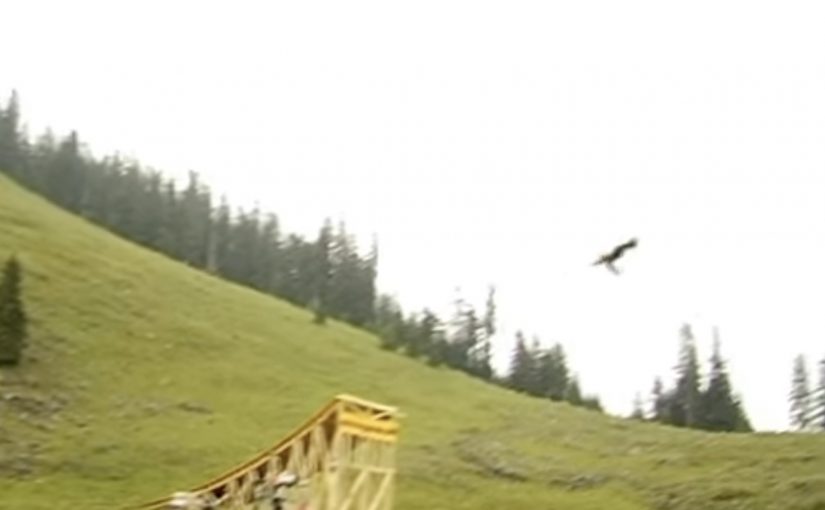
Microsoft created a viral featuring Bruno Kammerl, described as building the biggest waterslide on earth. The test run was more than successful, and the film leans into that “did I just see that” energy from the first second.

A stunt film that behaves like a project story

The mechanism is classic viral bait. A bigger-than-life engineering build. A simple premise. A single high-risk moment. Then just enough mystery around “who is this” and “why does this exist” to make people share it while they debate whether it is real.

In enterprise project-management software marketing, a bold proof-like narrative can communicate “we make impossible plans doable” faster than feature lists ever will.

Why it lands

It uses constraint and payoff. The build feels specific enough to be plausible, and the jump delivers an instant, physical climax. Even if viewers suspect it is staged, the film still works because the emotion is the product. Surprise, disbelief, and the urge to forward it.

Extractable takeaway: If you want a product that sells “capability” to feel memorable, show one exaggerated outcome, then let the audience connect the dots back to the promise.

What this says about the brand

The strategic intent is to borrow the energy of ambitious personal projects and map it onto a tool used for complex planning. The viral creates a mental shortcut. Big plan. Bold execution. Managed outcome.

The real question is whether this kind of spectacle makes enterprise planning feel ambitious enough to remember. It does, because the campaign turns project management into a visible, shareable outcome instead of a software demo.

What to steal from Mega Woosh

  • Make the promise physical. If your product sells “capability”, dramatize it with a single, extreme outcome people can picture instantly.
  • Lock one simple story rule. Big build. One test. One payoff. The simpler the rule, the easier the share.
  • Use specificity to create plausibility. Named protagonist, concrete build details, and a clear “test run” moment make the film feel real enough to debate.
  • Let the audience connect the metaphor. Do not over-explain the product. Give them the leap from “impossible project” to “project management”.
  • Design the talk trigger. The best virals are built around a single question people argue about. “Is this real” is a distribution engine.
  • Keep the brand cue clean and minimal. Too much branding breaks the spell. Too little branding loses the credit.

A few fast answers before you act

What is Mega Woosh in one line?

A viral stunt film built around an oversized waterslide jump, used to signal “anything is possible” as a metaphor for managing big projects.

Why does this work as marketing for project software?

Because it dramatizes planning and execution as a single, bold narrative. The story does the positioning work without needing specs.

What makes it so shareable?

One premise, one payoff, and a high-disbelief moment that triggers debate and forwarding.

What is the risk of this approach?

If the audience feels tricked rather than entertained, trust can take a hit. The framing needs to stay playful, not deceptive.

What should marketers copy from this format?

Use one extreme, easy-to-explain outcome to embody the promise, then keep the branding light enough for the spectacle to travel.