
Coca-Cola Light: The Return of Love in Brazil

A relaunch built on memory. And a ritual

In 2009 Coca-Cola Light was taken out of the Brazilian market. But even after its five year absence, 99% of Brazilians still had the brand in their minds.

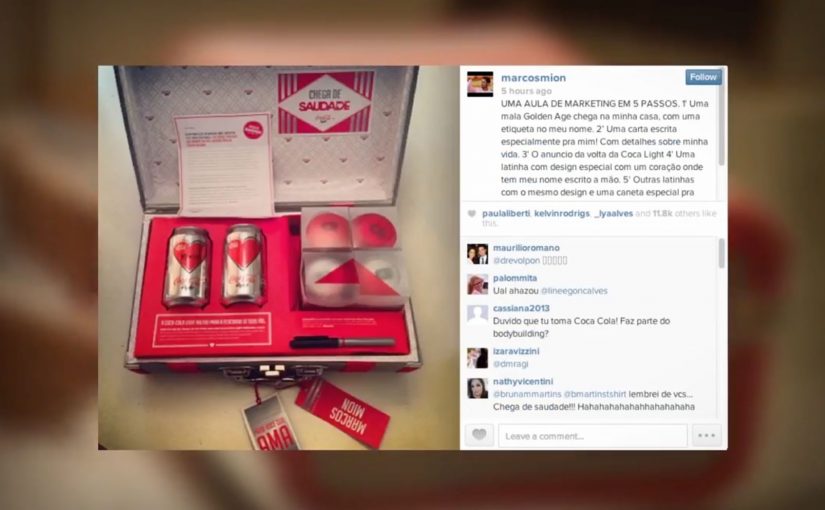
So for their 2014 relaunch they identified 150 influencers that were also real Coca-Cola Light lovers. Here, “influencers” means people with an audience and social credibility who already loved the product. Then a special handmade suitcase was delivered to each one of them. The suitcase contained a personal letter with the relaunch news and a ritual to send Coca-Cola Light cans to special friends with their names handwritten on it. Here, “ritual” means a simple, repeatable set of steps that makes the sharing happen. The results:

The move: turn influencers into messengers, not media

The suitcase is not “merch.” It is a delivery mechanism for a story and a behavior. For relaunches, believers telling believers beats paid amplification. The influencer receives the relaunch news. Then immediately passes it on, name-by-name, to people who matter to them.

In consumer brands with high mental availability, relaunches win when you turn memory into a concrete, shareable action.

The real question is whether your relaunch can ship with a behavior fans can perform immediately, not just a message they can repeat.

Why this feels like love, not marketing

Handwritten names shift the tone. You are not forwarding an ad. You are sending a personal gift with someone’s identity on it. Because the act is one-to-one and named, the relaunch travels through trust and attention, not through reach.

Extractable takeaway: If you want people to carry your message, give them a named, one-to-one action they would feel proud to do, not a generic post they would feel obliged to share.

The relaunch job-to-be-done

Restart conversation and consumption fast by activating people who already love the brand, and giving them a simple way to recruit other “special friends” into the comeback.

Steal this play

  • When a brand returns, start with believers. Then give them a repeatable sharing ritual.
  • Use personalization as the transmission fuel. Names beat slogans.
  • Package the behavior, not just the product. The “how to share” should be inside the box.

A few fast answers before you act

What did Coca-Cola Light do for the 2014 relaunch in Brazil?

They identified 150 influencers who were genuine Coca-Cola Light lovers and delivered handmade suitcases containing a personal letter and a sharing ritual.

What was inside the suitcase?

A personal letter announcing the relaunch and a ritual for sending Coca-Cola Light cans to special friends with names handwritten on the cans.

Why use handwritten names?

It turns distribution into a personal gesture. The relaunch message travels as a named gift rather than a generic announcement.

What is the core mechanic behind the campaign?

Activate true fans first, then convert them into one-to-one distributors by giving them a simple ritual to pass the product on to friends.
Back to Vinyl: The Office Turntable

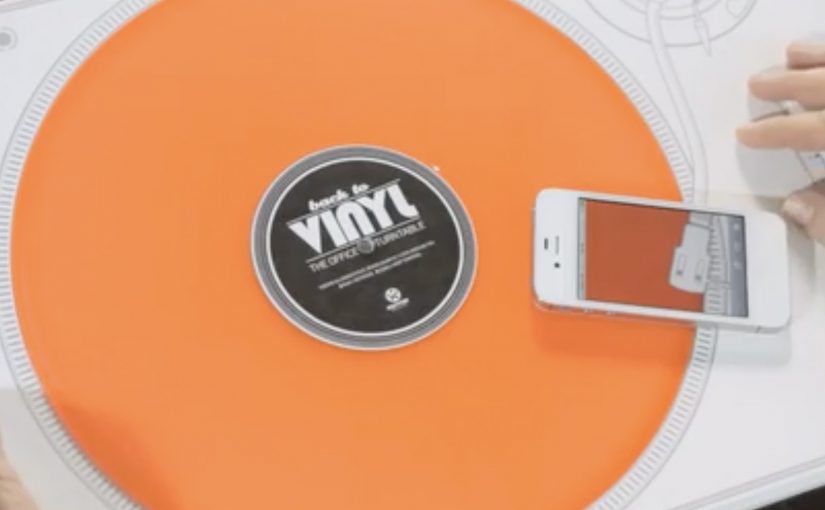
Demo CDs created by music labels are often treated like spam. So to promote a new track from DJ Boris Dlugosch, Kontor Records decided to send out a bright orange vinyl along with a 2D turntable as part of a direct mailing.

The people who received the mailing activated the turntable by scanning the QR code on it. That simple action enabled the missing piece of the turntable on the user’s smartphone, which then allowed them to play the music by placing the phone over the “deck”.

Making the mailer do the work

The mechanism is a tight little trick. The envelope becomes the turntable. The QR code becomes the start button. The smartphone becomes the “needle”. It is analogue theatre powered by a digital unlock, meaning the physical format itself becomes a short performance the recipient has to complete, and it forces the recipient to complete the experience instead of ignoring it.

In B2B marketing where your audience is drowning in promos, the fastest way to earn attention is to turn the first interaction into a short, satisfying action that cannot be skipped.

Why it lands

This works because it turns listening into participation. You do not just receive a track. You assemble the moment, and the novelty is directly tied to the product. The design also flatters the target. It treats creative directors like DJs. People with taste and a fondness for well-made objects. Because the recipient has to scan, place, and play, the mechanic turns passive exposure into participation, which makes the track harder to ignore and easier to remember.

Extractable takeaway: If your content is easy to ignore, do not beg for attention with more messaging. Engineer a simple physical or digital action that unlocks the content, and make that action feel like a reward rather than a chore.

The real question is how you make the format itself impossible to ignore before the message even starts. This is a stronger approach than sending another promo that asks for attention without earning it.

The numbers are the proof

According to campaign case-study reporting, 71% of 900 mailings were activated via the QR code. The same reporting notes that 42% of recipients also visited the Kontor site. For a target group known for deleting promos on sight, that is the clearest signal that the mechanic did its job.

How to make direct mail behave like a product

  • Build a “first step” that is irresistible. If the first step is fun, the rest of the funnel happens almost accidentally.
  • Fuse the medium and the message. Here, the packaging is the product experience, not just a container.
  • Use phones as functional components. Not as a second-screen gimmick, but as a literal missing part.
  • Target the ego carefully. Positioning recipients as tastemakers, not “buyers”, increases the odds they will engage.

A few fast answers before you act

What is “The Office Turntable”?

It is a direct mail piece for Kontor Records where the envelope folds into a paper turntable, and a smartphone activated via QR code completes the player so the recipient can listen to a vinyl release.

Why use vinyl instead of a promo CD?

Because vinyl is a status object and a curiosity trigger. It signals “this is different” before any copy is read.

What role does the QR code play?

It is the activation switch. Scanning it unlocks the mobile component that makes the paper turntable usable.

What results were reported?

Case-study reporting cites 71% activation across 900 mailings, and 42% of recipients visiting the Kontor site.

How do you apply this pattern without copying it?

Turn your distribution format into a usable object, then make one simple action unlock the content. The best versions feel like a clever tool, not a stunt.

Billboard Brasil: On Hold Jam Session

You call a magazine subscription line and get put on hold. Instead of elevator music, you get a prompt that turns your phone keypad into an instrument, so you can jam along while you wait.

Turning hold time into play time

Billboard Magazine features the best of pop music and entertainment in Brazil and, as they frame it, waiting on hold is one of the most boring music moments ever. So their ad agency AlmapBBDO creates the “On Hold Jam Session”, which makes the moment into a fun interactive experience and reflects the magazine’s concept of music and entertainment.

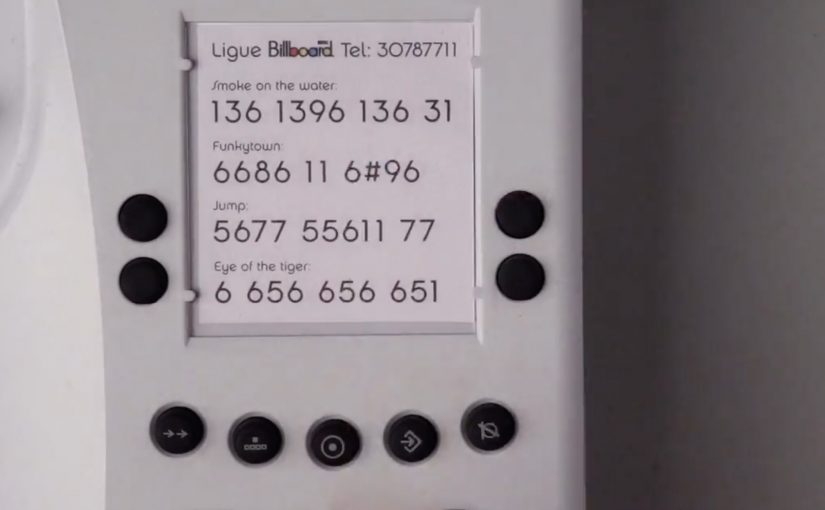
To make the magazine subscribers aware of this new on-hold feature, they send direct mail explaining how one could jam along with their phone buttons when they are put on hold at Billboard Magazine.

Why the mechanic is so effective

The mechanism is simple. Use the tones behind the phone keypad to trigger musical parts, so every button press feels like progress. It replaces passive waiting with viewer control, meaning the caller can shape what they hear in real time. That changes the emotional quality of the same time slice.

Extractable takeaway: If you cannot remove a wait, give people one simple action that produces immediate feedback, so the time feels shorter and more personal.

Definition-tightening: this works because phone buttons generate distinct audio tones that can be mapped to beats, riffs, or samples. The caller does not need instructions beyond “press keys to play”.

In subscription media and entertainment brands, turning unavoidable waiting into a participatory moment is a direct way to make the brand feel lived, not just consumed.

What Billboard is really buying

This is not a content campaign in the usual sense. It is a brand behavior demonstration. If Billboard is about music culture, the brand should show up even in the most unmusical moment, customer service hold time. The real question is whether your brand shows up when the customer is stuck, not only when the customer is browsing.

It also reframes a service weakness into a memorable touchpoint. The caller is more likely to tolerate the wait, and more likely to talk about the experience afterward.

Patterns for turning dead time into play

  • Target dead time. Waiting, queuing, loading, and holding are underused attention windows.
  • Make the first interaction obvious. One prompt, one action, instant feedback.
  • Turn friction into a feature. If the wait cannot be removed, redesign what the wait feels like.
  • Promote it with a physical cue. Direct mail works here because it sets expectation before the call happens.

A few fast answers before you act

What is the “On Hold Jam Session” idea?

It turns phone hold time into a playable music moment by letting callers create beats or melodies using their keypad while they wait.

Why does interactivity matter when someone is on hold?

Because it converts passive waiting into active participation, which reduces boredom and makes the time feel shorter.

How do phone buttons become a music controller?

Each keypad press produces a distinct tone that can be mapped to sounds. The system listens for the tones and triggers matching audio parts.

What is the business benefit beyond “fun”?

A better service experience, higher memorability, and a stronger brand association, plus increased word of mouth because the moment is easy to describe.

What is the main execution risk?

If the audio feedback is delayed or confusing, callers will abandon the interaction and it becomes just another frustrating hold.