
100 000 Books: Books-Fresheners

100 000 Books: Books-Fresheners

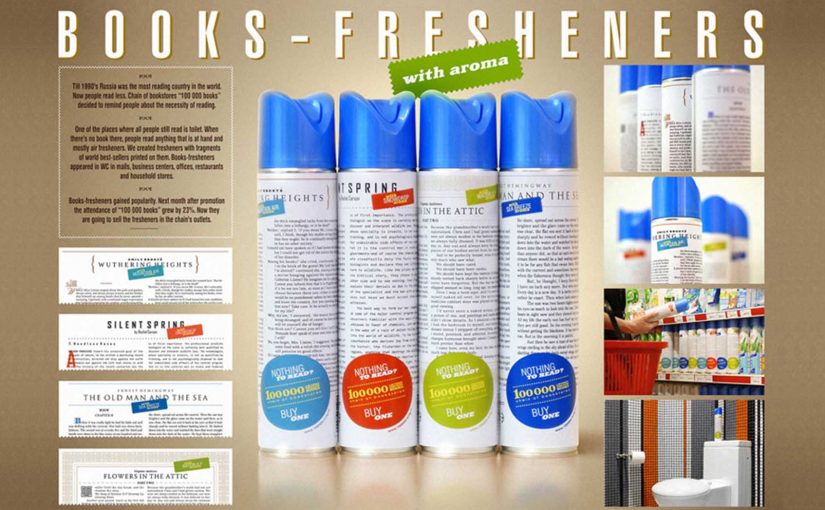
A chain of bookstores called “100 000 books” wanted to remind people to read more. The idea they shipped is blunt and situational. Put fragments of world best-sellers on the one “reading material” people often reach for in a toilet. Air fresheners.

These Books-Fresheners appeared in toilets across malls, business centers, offices, restaurants, and household stores. The campaign narrative says they gained popularity quickly, and the brand later chose to sell them in-store as well.

How Books-Fresheners turns a dead moment into reading

The mechanism is a point-of-need intervention. By that, the campaign places the reading trigger exactly where boredom already exists. Identify a context where people are bored and will read anything available. Replace the default object with something that carries real text, in a format that is impossible to ignore because it is already in your hand. That works because it removes the need to persuade people to start reading from scratch and attaches the prompt to a behavior that is already happening.

In mass retail environments, behavior-change prompts work best when they are embedded in an existing habit, not when they ask people to form a new one.

Why it lands

It is funny, but it is also practical. It acknowledges how people behave when they have a few idle minutes and nothing else to do. The creative choice, printing literature on a disposable object, creates contrast that makes the message stick, and it directs attention back to books without preaching.

Extractable takeaway: If you want to revive a declining habit, do not only market the habit. Place a small, high-quality sample inside a moment where the audience is already receptive, and let the sample create the itch for more.

What the bookstore is really buying

This is an offline distribution hack for a reading brand. The campaign story also reports a measurable store attendance lift after a month of placements.

The real question is whether a bookstore can turn an idle, forgettable minute into a prompt that restarts the act of reading.

The freshener format spreads through everyday locations, generates talk value, and creates a physical reminder that books exist.

What to borrow from Books-Fresheners

  • Start from a real micro-behavior. “People read whatever is nearby” is a better foundation than “people should read more”.
  • Use a familiar object as media. The medium already has permission in the environment, so the message gets read.
  • Sample the product, not the slogan. A book excerpt is a product sample, not a claim.
  • Design for portability. If people can take it, show it, or talk about it, it becomes distribution.

A few fast answers before you act

What are Books-Fresheners?

Air fresheners printed with fragments of well-known books, placed in public toilets to trigger reading in a moment when people are likely to read anything available.

Why choose toilets as the placement context?

Because it is one of the few everyday moments where people are idle, captive, and willing to read short text without needing a pitch.

What makes this more effective than a standard reading poster?

It puts the text in someone’s hands rather than on a wall. That physical contact increases the chance the excerpt is actually read.

How does this drive bookstore traffic?

The excerpt creates a “continue reading” impulse and links the act of reading back to a store that sells books, using repeated exposure across many locations.

Why use an excerpt instead of a slogan?

An excerpt samples the product itself. That is stronger than a reading message because it lets the audience experience the habit, not just hear about it.
iFOLD: Fold More, Save Paper

iFOLD: Fold More, Save Paper

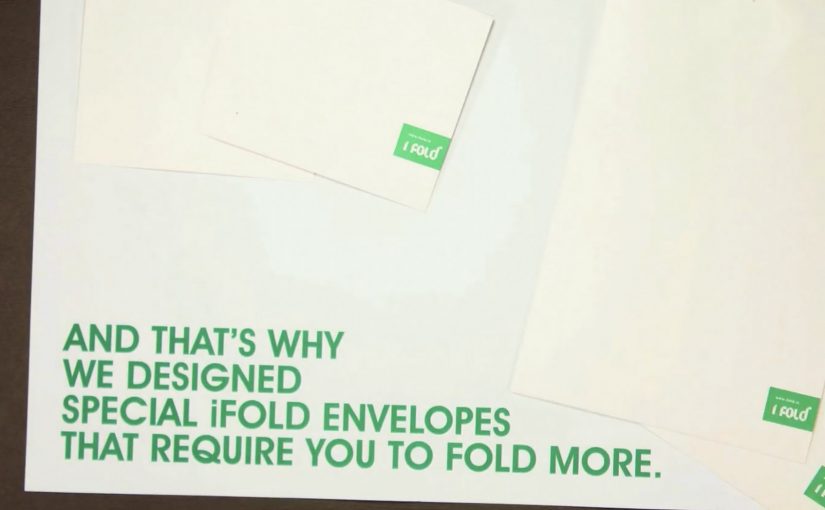
Billions of business envelopes are used every day. Imagine how much paper can be saved if we just halved their size.

So while posting a letter, ask: can it be folded once more. If it can, fold more.

Use a smaller envelope. Save trees. It’s that simple. It’s called iFOLD.

A tiny behavior change, packaged as a system

The mechanism is effort-to-impact math: a simple rule where one extra fold creates a visible downstream saving. One extra fold reduces envelope size. Reduced envelope size reduces paper consumption. That works because the cause and effect are easy to understand immediately, so the behavior feels practical rather than preachy. The campaign frames this as a repeatable rule anyone can apply without new infrastructure or technology.

In high-volume corporate mailrooms and customer communications, small process changes compound into meaningful material savings.

The real question is how to turn a trivial action into a default business habit. The smart move is to build the fold into standard mailing practice, not treat it as a one-off reminder.

Why it lands

This works because it does not ask for a lifestyle shift. It asks for a micro-habit that fits inside existing routines. The instruction is binary, memorable, and immediately testable. You can literally try it with the next letter in your hand.

Extractable takeaway: When you want behavior change at scale, give people a single, repeatable decision rule that requires almost no extra effort, and make the benefit feel cumulative and obvious.

Steal this envelope logic

  • Make the rule portable: one sentence people can remember and repeat.
  • Target a high-frequency routine: boring, repetitive processes are where scale lives.
  • Prefer “do this instead” over “stop doing that”: substitution habits stick better than abstinence messages.
  • Connect the micro to the macro: one fold feels trivial. Aggregate savings makes it feel worth doing.
  • Design for adoption inside organizations: the best ideas fit procurement, operations, and compliance realities.

A few fast answers before you act

What is iFOLD?

iFOLD is a paper-saving idea that encourages people to fold letters one extra time so they can be mailed in smaller envelopes.

Why focus on envelope size?

Because envelopes are used at massive volume in business and government. Small reductions per unit add up quickly at scale.

What makes this a strong sustainability message?

It is a concrete action, not an abstract appeal. People can do it immediately without buying anything new.

Where does this work best?

In organizations that send large quantities of letters and statements, where a standard change in folding and envelope formats can be implemented consistently.

What could prevent adoption?

Template constraints, inserts that cannot be folded further, window placement, and operational inertia. The idea works best when mail formats are designed with folding flexibility in mind.

Mercedes-Benz Sprinter applies for a job

Mercedes-Benz Sprinter applies for a job

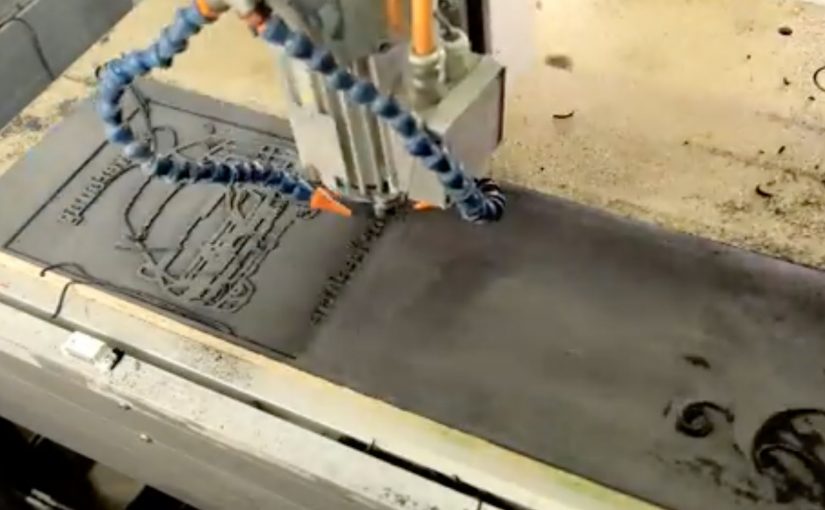
In order to get more companies to buy the Mercedes-Benz Sprinter, German ad agency Lukas Lindemann Rosinski actually got the Sprinter to apply for a job. To do this, they came up with the world’s first printing tyre. This enabled the Sprinter to write its own letters of application, all on its own.

Why this direct marketing idea lands

The power is in the role reversal. Instead of telling fleet managers that the Sprinter is a hard worker, the campaign makes the vehicle behave like one. It “applies”. It shows initiative. And it creates something physical that naturally gets noticed on a manager’s desk. The real question is how you make a product claim feel self-evident before a sales conversation even starts. The strongest B2B ideas do not decorate the claim, they stage the proof.

Extractable takeaway: When you can turn a product benefit into a behavior buyers can witness, the message becomes easier to remember and harder to dismiss.

What makes the execution feel credible

The printing tyre is not a metaphor. It is the proof. It turns the van into the production tool, which makes the claim harder to ignore. Because the mechanism produces the message, the proof feels native to the product, which is why the claim lands harder than copy alone.

What the business is really doing

The business intent is to position the Sprinter as the hard-working choice for fleet buyers by making the vehicle demonstrate initiative instead of just being described that way.

In B2B fleet marketing, this kind of idea works especially well when buyers are comparing similar offers and need one proof point that cuts through routine sales material.

What to borrow for B2B marketing

  • Make the product do the talking. Let capability show up as a concrete action.
  • Put the idea into the buyer’s workflow. A real letter in a real office beats another brochure.
  • Design for desk gravity. That means making the asset look like it belongs in the buyer’s everyday workflow, which makes it harder to dismiss.

A few fast answers before you act

What did Mercedes-Benz do here?

They had a Mercedes-Benz Sprinter “apply for a job” to companies as a way to drive interest and consideration.

Who created the campaign?

German ad agency Lukas Lindemann Rosinski created the campaign.

What was the core mechanic?

A custom printing tyre enabled the Sprinter to write its own letters of application.

Why is it effective as direct marketing?

It works because it places a physical proof point into a business context, and the product itself delivers the message.

What is the main lesson for B2B campaigns?

Turn product benefit into a behavior buyers can witness, not just a claim they are asked to believe.